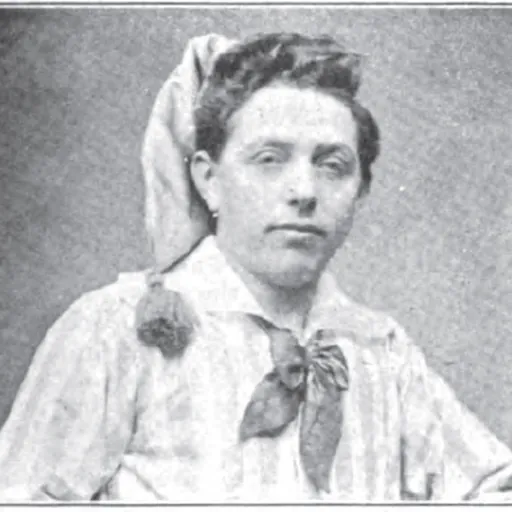
About Bernardo de Pace
Lived 1881 – 1966 (aged 85). Bernardo de Pace was an Italian mandolinist, actor, composer and vaudeville performer.
Bernardo De Pace (March 31, 1881 – June 15, 1966) was an actor, musician and comedic vaudeville entertainer of the 1910s and 1920s, billed as "the Wizard of the Mandolin". He learned to play mandolin in the Italian tradition under Francesco Della Rosa. De Pace's repertoire and technique was described in the Brooklyn Life as involving "the most difficult violin and piano compositions, executed at inconceivably rapid tempi demanding an uncanny technique seldom heard on fretted instruments". In 1927 the Minneapolis Star said that he had been recognized as one of the best mandolinists in the United States. He worked in England for nearly 10 years, starting in 1900, playing with the Blackpool Winter Gardens' Orchestra for 3 seasons and touring the country for nearly 7 seasons with his brother Nicolas, until 1909 when they emigrated to the United States from Italy.
By 1921 he had toured extensively both as a musician and a vaudeville performer.
European tours Bernardo moved to Naples with his family when he was two. He began to play the mandolin at five years of age and it became his passion "to the exclusion of all else". He impressed Luigi with his musical aptitude and received lessons for free, but when it was apparent that he was more interested in the mandolin, to the disgust of his teacher, the lessons ended.
Bernardo won an international competition for mandolin players in Europe in 1899. Born in 1881, he would have been 18. He then won similar contests of musical skill in Naples, Paris, London, Berlin, and St. Petersburg.
Adeline Dossena, an Italian opera singer who was credited in American newspapers as having sung in La Scala opera house in Milan. From San Bernardino Daily Sun, 1913. She appeared with the De Pace brothers in acts from 1914 through 1919.
Beginning in 1914 they performed under the name De Pace Opera Company, a cast of 6 or 7 accomplished singers, whose performance included instrumentals and vocal numbers. Their lead singer was the soprano Adeline Dossena, who had performed at the La Scala theater in Milan. Both brothers sang in operatic style as well as played their instruments. They were also billed the De Pace Sextet, playing classical and popular selections. In Akron the group was labeled one of the most "finished groups" to have performed there. Sometime between 1920 and 1930, the brothers began to perform separately. By 1930, Nicolas was living in Queens, working as a musician in a theater. Bernardo began to branch out into other performance venues. In 1931, he gave a performance over the Blue radio network. thumb leftHe also branched into the movie and recording industry, doing work for Vitaphone in 1927 and Metro-Movietone in 1929. With Vitaphone, Bernardo performed in a short film called The Wizard of the Mandolin on April 4, 1927. The films of the time were silent films, but Vitaphone tried to change that by synchronizing a recording to play while the silent movie rolled. De Pace was the subject of the short film, and his music was recorded live, even as the 35mm was being exposed. The short film was also known as Bernardo De Pace in the Wizard of the Mandolin Plays Morning, Noon, and Night in Vienna. As he played, he used exaggerated facial expressions as part of his Pierrot pantomime-act. He used similar "contortions" in his live acts as well. A reviewer for the Des Moines Register saw the performance in 1925, two years before it was filmed.
Films of Bernardo De Pace showed variations on his act with the clown costume as late as 1935, when his performance with the Andrini Brothers was briefly reviewed in Minneapolis. The performers were wearing white chalk makeup and Pagliacci costumes. The Minneapolis Star Tribune commented then that the group "clowned feebly" and "raised no blood pressure." However, his work may no longer have been steady, as he was 59 and had only worked a few weeks the previous year.
Compositions His composed works were characterized my music historian Paul Sparks as pieces in the Italian traditions he grew up with and light classical music, although he did write some serious works, including a mandolin concerto. 1920 (Sept 21) Little Joe, words by W. A. Edwards, music by Bernardo De Pace 1920 (Sept 14) You remind me of someone I knew, words by W. A. Edwards, music by Bernardo De Pace 1920 (Oct 28) Hairy (the) Toupee of the Laddie O'Lea, words by W. A. Edwards, music by Bernardo De Pace 1921 (June 10) Neapolitan Mazurka 1921 (June 10) Red Devil Polka No. 1 1921 (June 10) Serenata 1921 (June 10) Valse Modern 1921 (Dec 28) Marcia America 1921 (Dec 28) Re-Union Waltz 1924 You're never going to fool me again, words by Fanny Watson, music by Fanny Watson and Bernardo De Pace 1926 (Jan 8) Capricciosa tarentella 1928 (Feb 1) Take and Give: foxtrot 1951 (Feb 27) Bouquet of Flowers mandolin solo 1959 (Oct 19), You're not the girl for me, words Nick De Pace, music Bernardo De Pace
Discography Audio recordings Bernardo Di Pace and his brother Nicholas Di Pace performed on records sold by Columbia, Pathé Frères, Actuelle (another label of Pathé Frères ) and Victor. Fratelli De Pace is Italian for the De Pace brothers. Nicholas was called Nino on the Columbia records. When they played together, Bernardo played his mandolin and Nicolas, the guitar.
Columbia Records 1917 – Di Pace brothers, Berceuse (from Jocelyn by Godard) 1917 – Di Pace brothers, Humoreske (Dvořák) Valse Moderne (De Pace) 1921 – Moon River, waltz, by Lee David (1891–1978)
Victor Records 1924 – Bernardo De Pace, Hungarian lustspiel 1924 – Bernardo De Pace, Neapolitan mazurka 1924 – Fratelli De Pace, Mazurka napoletana 1924 – Bernardo De Pace, Diavoli rossi polka 1924 – Fratelli De Pace, Serenata espanola 1924 – Fratelli De Pace, La Paloma 1924 – Bernardo De Pace, William Montague, Harry Lauder, Love makes the world a merry-go-round 1927 – Bernardo De Pace, La capricciosa 1927 – Bernardo De Pace, Souvenir, barcarolle, humoresque 1927 – Bernardo De Pace, Mattino, pomeriggio e sera a Vienna 1927 – Bernardo De Pace, Neapolitan caprice 1928 – Bernardo De Pace and Nicola De Pace, Meditation 1928 – Bernardo De Pace and Nicola De Pace, Take and give 1928 – Bernardo De Pace and Nicola De Pace, The bridal rose : Overture 1928 – Bernardo De Pace and Nicola De Pace, Silver bells
Vitaphone
Bernardo De Pace, The Wizard of the Mandolin Plays Morning, Noon and Night in Vienna (Warner Brothers, 1927) Bernardo De Pace, The Wizard of the Mandolin Plays Caprice Viennois (and Others) (MGM, 1929) Bernardo De Pace, The Wizard of the Mandolin Plays Thaïs (and Others), (MGM, 1929)
Don’t just read it —
keep it.
Full-length biographies made to live with: read them, listen on the way to work, watch them tonight.
- E-book
- Audio
- Video
Instant download · yours to keep · every purchase keeps this site free
Important facts
People in Bernardo de Pace's life
Named in this biography and alive at the same time
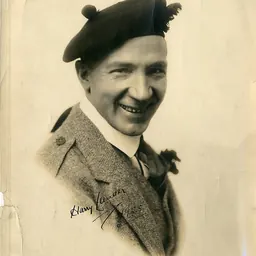

Related people
Same field, nearest in time


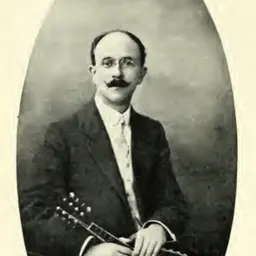
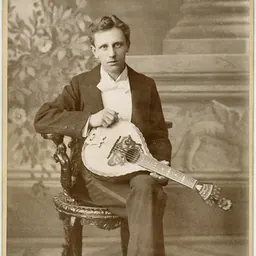

Contemporaries
People whose lives overlapped Bernardo de Pace's


Frequently asked questions
Who was Bernardo de Pace?
vaudeville performer
When was Bernardo de Pace born?
Bernardo de Pace was born on 31 March 1881 in San Ferdinando di Puglia.
When did Bernardo de Pace die?
Bernardo de Pace died on 15 June 1966 in Brooklyn.
What was Bernardo de Pace's occupation?
Bernardo de Pace was a mandolinist, actor, composer and vaudeville performer.
What nationality was Bernardo de Pace?
Bernardo de Pace was Italian.
Sources & further reading
Cite this page
APA: Biography.guide. (2026). Bernardo de Pace. https://biography.guide/bernardo-de-pace/
MLA: "Bernardo de Pace." Biography.guide, https://biography.guide/bernardo-de-pace/.
Chicago: "Bernardo de Pace." Biography.guide. https://biography.guide/bernardo-de-pace/.
Data last updated: 2026-09-20 · Spot an error? Report a correction.
Portrait: Wikimedia Commons · author & licence
Page generated 2026-09-27 04:58 UTC