
About Bernard Rwehururu
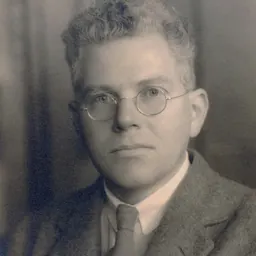
Lived 1941 – 2015 (aged 73–74). Bernard Rwehururu was an Ugandan military personnel.
Bernard Rwehururu ( – 26 February 2015) was a Ugandan military officer and author. He served in various Ugandan militaries from 1965 until 2013, including under the governments of Milton Obote, Idi Amin, Tito Okello, and Yoweri Museveni.
After initially studying to become a Catholic priest, Rwehururu became a soldier to financially support his family. In the Uganda–Tanzania War of 1978–79, he rose to command a Uganda Army battalion and fought in several battles. Alongside other remnants of the Ugandan military, he retreated into exile in 1979 and subsequently became part of a rebel group attempting to overthrow the government in Uganda. In 1985, the new Ugandan government was overthrown by its own military; Rwehururu subsequently returned from exile and joined the Uganda National Liberation Army (UNLA). In the following year, the UNLA-backed regime was also overthrown, whereupon Rwehururu became part of the National Resistance Army (NRA). He rose through the ranks of the NRA and its successor, the Uganda People's Defence Force (UPDF), over the next decades. In 2002, he authored an autobiography, titled Cross to the Gun, which detailed his experience in the various Ugandan militaries, particularly the 1971–79 period.
Biography Early life Bernard Rwehururu was born to Nathan Kyamwonyo around 1941 in Ruhoko, Rugarama Sub-county, Ntungamo District. His parents were Protestant Christians, but he defied them to convert to Catholicism when he was 15. At first, he attended a four-month training course in Jinja. After completing the course at Jinja, he was sent on a training mission in India. Upon returning to Uganda, he served at Moroto Town. In October 1978, the Uganda Army launched an invasion of Tanzania under disputed circumstances, resulting in open war. A few weeks later, Rwehururu was called by Lieutenant Colonel Tom Asiki in Masaka; he was ordered to oversee the "guarding and patrolling the border as well as training the recruits" in the border town of Mutukula. There were also accounts that the Suicide Battalion mutinied during the battle. The unit rallied outside Masaka, and then retreated to the north.
In his autobiography, Rwehururu claimed that he and the Suicide Battalion were later involved in the Battle of Sembabule from March to April 1979, However, journalists Tony Avirgan and Martha Honey –who accompanied Tanzanian troops during the war– stated that the Ugandan Tiger Regiment, not the Suicide Battalion, had fought at Sembabule. Journalist Joshua Kato also claimed that the Suicide Battalion was involved in the Battle of Lukaya during March 1979.
On 11 April, Uganda's capital of Kampala fell to the Tanzanians and their rebel allies; Amin subsequently fled into exile. Unlike most of the Uganda Army soldiers, Rwehururu and his troops did not surrender or flee upon hearing of this. He opted to keep fighting, later stating that he "was not defending [Amin's] government. I was defending Uganda from invasion." Alongside the Suicide Battalion and other Uganda Army contingents, he retreated to the western city of Masindi. When the Uganda Army troops in Masindi heard that the TPDF had also captured Hoima, most of them panicked and fled for Kigumba. Believing that he had to delay the Tanzanian advance to ensure a more orderly retreat of the UA troops, Rwehururu rallied the Suicide Battalion and set up an ambush on the Masindi-Hoima Road. For this plan, he placed his troops at Bulindi and successfully ambushed the TPDF forces. he published an autobiography, titled Cross to the Gun, in which he detailed his experiences during Amin's rule and, according to the Daily Monitor, attempted to "decipher what went wrong with the country's political and military class". From July 2009 to 2011, he served as the chairman of the General Court Martial in Makindye. His last military post was chief advisor to UPDF commander Aronda Nyakairima.
Retirement and death Rwehururu retired from the military with the rank of brigadier in November 2013. He had long suffered from hypertension and diabetes, and these ailments worsened in his last years. On 26 February 2015, he died of heart and diabetic complications in his home in Jinja. He was buried in his birthplace of Ruhoko. He was survived by his wife Rosemary and eight children. His eldest son, Paul, had died three months before him.
After his death, Rwehururu was lauded by UPDF spokesperson Paddy Ankunda as someone "who spoke his mind". Ankunda also highlighted the importance of his book Cross to the Gun as detailing Uganda's historical development. UPDF commander Katumba Wamala praised Rwehururu as "a knowledgeable, and smart officer".
Personal life Rwehururu married his wife Rosemary in 1969; the two were temporarily separated from 1979 into the 1980s due to his exile.
None of Rwehururu's children opted to join the military, a decision he respected. By 2009, two of his sons were "doing private work", one worked as a physician, one studied in Egypt, and one was a Catholic priest in Europe. In his later life, he also reconciled with his parents over his conversion to Catholicism.
Don’t just read it —
keep it.
Full-length biographies made to live with: read them, listen on the way to work, watch them tonight.
- E-book
- Audio
- Video
Instant download · yours to keep · every purchase keeps this site free
Important facts
People in Bernard Rwehururu's life
Named in this biography and alive at the same time


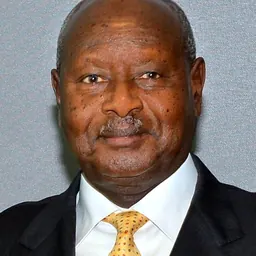
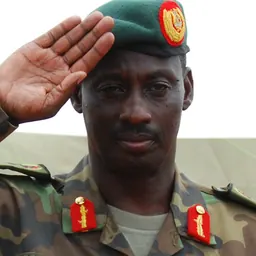



Related people
Same field, nearest in time

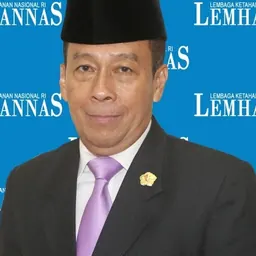
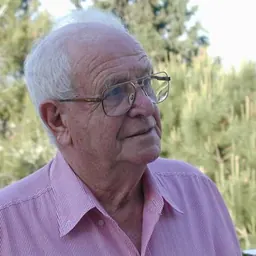
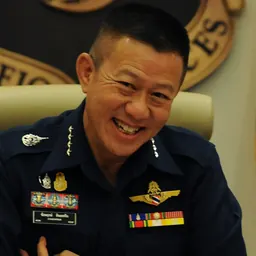
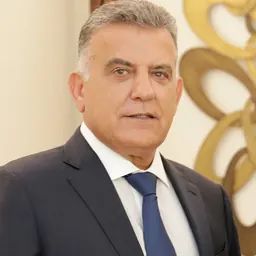
Contemporaries
People whose lives overlapped Bernard Rwehururu's
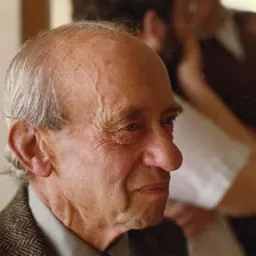

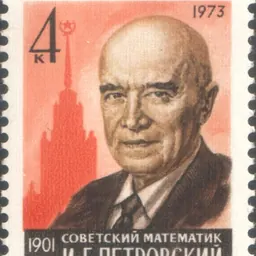


Frequently asked questions
Who was Bernard Rwehururu?
Ugandan military officer
When was Bernard Rwehururu born?
Bernard Rwehururu was born in 1941.
When did Bernard Rwehururu die?
Bernard Rwehururu died on 26 February 2015.
What was Bernard Rwehururu's occupation?
Bernard Rwehururu was a military personnel.
What nationality was Bernard Rwehururu?
Bernard Rwehururu was Ugandan.
Sources & further reading
· Wikipedia: Bernard Rwehururu
Cite this page
APA: Biography.guide. (2026). Bernard Rwehururu. https://biography.guide/bernard-rwehururu/
MLA: "Bernard Rwehururu." Biography.guide, https://biography.guide/bernard-rwehururu/.
Chicago: "Bernard Rwehururu." Biography.guide. https://biography.guide/bernard-rwehururu/.
Data last updated: 2026-09-20 · Spot an error? Report a correction.
Page generated 2026-09-27 05:16 UTC