
About Bernard Grasset
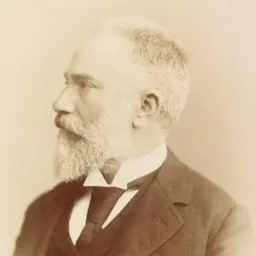
Lived 1881 – 1955 (aged 74). Bernard Grasset was a French editor, publisher and opinion journalist.
Bernard Grasset (6 March 1881 – 20 October 1955) was a French publisher. He was an innovator in publishing and played an important role in distributing works of contemporary French authors. He invented a new form of literary publicity, modernized typography, and also increased the print runs to 10,000 books on average from the runs of 2,000 that were previously customary.
However, his accomplishments were diminished after World War II, when he was arrested as a collaborator during the German occupation of France.
Early life Bernard Grasset was born at Chambéry to Eugène Grasset, a lawyer originally from Montpellier, and Marie Ubertin, daughter of a tax registrar. On the death of his father in 1896, Bernard was brought to live in Montpellier by his uncle Joseph Grasset, neurologist and professor of medicine. There he obtained a doctorate in economics, then moved to Paris, where he frequented the Café Vachette, located at 27, boulevard Saint-Michel.
Career
Publishing In 1907, Bernard Grasset founded "Éditions Nouvelles" at 49, rue Gay-Lussac (where he took up residence on arriving in Paris). In July of that year, the company published its first book, Mounette, a novel by Henry Rigal. From 1908 on, the publishing house changed its name and became "Bernard Grasset, éditeur." It also moved to 7 rue Corneille.
In 1910, Grasset became the representative of Thomas Nelson. In August 1917, Grasset resumed publication of the periodical Le Fait de la semaine, which had ceased in August 1914.
The year 1920 marked a prosperous period for him as he launched the "Four Ms"—André Maurois, François Mauriac, Henry de Montherlant, and Paul Morand. In addition, he established a company called Le Livre and opened several bookstores in Paris and Poznań, raising capital of 450,000 francs.
Numerous authors signed onto éditions Grasset: Raymond Radiguet with Le Diable au corps, Blaise Cendrars with L’Or. La merveilleuse histoire du général Johann August Suter, Jean Guéhenno with Caliban Parle, Jean Giono with Colline, Philippe Soupault with Les Frères Durandeau, Joseph Delteil with Sur le fleuve Amour, Ramuz with La Grande Peur dans la montagne, ou encore André Malraux et La Tentation de l'Occident, Joseph Peyré who signed a contract with the publisher for nine works, among which was Sang et lumières, awarded the prix Goncourt for 1935.
World War II During World War II, like most French publishers, Grasset complied with the German occupation; publishers who refused to collaborate faced prohibition of their books or were deprived of paper. Among compliant publishers, however, Grasset stood out for his zeal. In 1940, he wrote (but did not send) three letters defending German censorship, declaring: "I am an authentic Frenchman with none of the unhealthy adulterations that Germany rightly condemns." In 1940, he launched the collection "In Search of France" (French: "À la recherche de la France"), which featured five authors prized by the Nazis, such as Pierre Drieu la Rochelle. Grasset's defenders claim that this was intended to mollify the Gestapo. In the Combat, Grasset wrote in his defense, "I never believed the first word of what I wrote. My only aim was to reconstitute my publishing house. I wrote nonsense, because it was in my interest to do so".
According to historian Pascal Fouché, "It is hard to absolve Grasset for certain, largely tendentious writings," notably depicting Adolf Hitler as "uniquely striving towards German order and glory," and, in an interview in the paper La Gerbe, wishing for the coming of a "new order." Fouché continues: "In going to Vichy to try to get himself named representative of French publishing, Grasset made himself more complicit than the others."
Legacy He was an innovator in the domain of publishing. After World War I, he played an important role in the distribution of the works of contemporary authors. He invented a new form of literary publicity, modernized typography, and also increased the print runs to 10,000 books on average from the runs of 2,000 that were previously customary.
In 1923, Grasset hired the 21-year-old son of a banker to teach him the trade, without paying him at first. This young man, Henry Muller, would write a memoir of Grasset in Trois pas en arrière (Three Steps Back), which received the Prix Marcelin Cazes in 1952.
In the 2010s, Grasset's grand-niece, Marie Liang, daughter of Bernard Privat, found in the family apartment after the death of her mother, documents concerning her great-uncle's trial along with the portrait that Jacques-Émile Blanche had made of him in 1924. Since then, she has tried to rehabilitate the memory of Bernard Grasset.
Don’t just read it —
keep it.
Full-length biographies made to live with: read them, listen on the way to work, watch them tonight.
- E-book
- Audio
- Video
Instant download · yours to keep · every purchase keeps this site free
Important facts
People in Bernard Grasset's life
Named in this biography and alive at the same time



Related people
Same field, nearest in time



Contemporaries
People whose lives overlapped Bernard Grasset's




Frequently asked questions
Who was Bernard Grasset?
French editor and publisher (1881–1955)
When was Bernard Grasset born?
Bernard Grasset was born on 6 March 1881 in Chambéry.
When did Bernard Grasset die?
Bernard Grasset died on 20 October 1955 in Paris.
What was Bernard Grasset's occupation?
Bernard Grasset was an editor, publisher and opinion journalist.
What nationality was Bernard Grasset?
Bernard Grasset was French.
Sources & further reading
Cite this page
APA: Biography.guide. (2026). Bernard Grasset. https://biography.guide/bernard-grasset/
MLA: "Bernard Grasset." Biography.guide, https://biography.guide/bernard-grasset/.
Chicago: "Bernard Grasset." Biography.guide. https://biography.guide/bernard-grasset/.
Data last updated: 2026-09-20 · Spot an error? Report a correction.
Page generated 2026-09-27 05:23 UTC