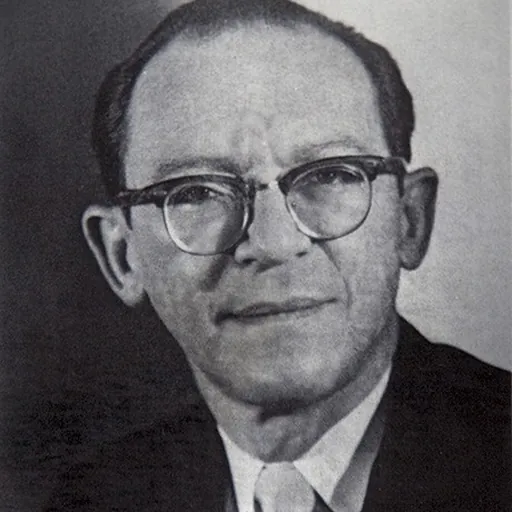
About Benjamin Steinberg
Lived 1915 – 1974 (aged 58). Benjamin Steinberg was an American musician and violinist.
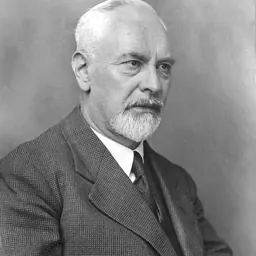
Benjamin Steinberg (March 15, 1915 – January 29, 1974) was an American concert violinist, conductor, and civil rights activist, who is best remembered as the founding artistic director of the Symphony of the New World, the first racially integrated orchestra in the United States, its premiere concert was at New York City's Carnegie Hall on May 6, 1965.
Early years
Benjamin Steinberg was born in Baltimore, Maryland, on March 15, 1915, to Moses and Annie Steinberg. His parents were from Odessa (then part of Czarist Russia, now Ukraine) and had fled to the United States following the anti-Jewish Odessa pogrom of 1905 and the failed Russian Revolution that year. Benjamin first performed violin on the concert stage as an 11-year old in 1927.
As early as 1940, Benjamin Steinberg began to work with black conductors Dean Dixon and Everett Lee to establish the first fully integrated professional symphony orchestra in the U.S. It would take another two decades to be achieved, however.
Symphony of the New World
As the civil rights movement of the 1960s gained momentum in the US, Steinberg founded a committee to create a symphony orchestra of accomplished musicians and conductors, irrespective of race. The mission statement of the Symphony of the New World was written two months before the Civil Rights Act of 1964 was signed into law. Steinberg accepted the post of music director and obtained funding for the orchestra's first season. The debut concert of the first fully integrated orchestra in America was held at Carnegie Hall on May 6, 1965,
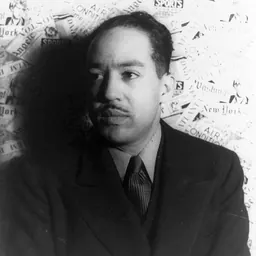
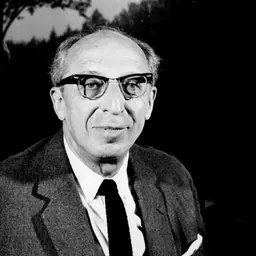
Sponsors included Samuel Barber, Leonard Bernstein, Ruby Dee, Langston Hughes, William Warfield, Aaron Copland, Duke Ellington, and Zero Mostel.
The symphony's musicians were graduates of such music schools as Juilliard (Elayne Jones), Eastman School of Music, the Manhattan School of Music, and the New England Conservatory. Its performances were broadcast on the Voice of America and Armed Forces Radio to audiences worldwide.
While music director of the Symphony of the New World, Steinberg collaborated with Pulitzer Prize-winning composer George Walker in the premiere of Walker's Address for Orchestra, performed by the Symphony of the New World in 1968. In 1970, Steinberg conducted the Symphony of the New World at the Lincoln Center, New York City, in a performance of I Have a Dream, a tribute to Martin Luther King Jr. Pulitzer Prize-winning music critic Donal Henahan said of the one-third black Symphony of the New World in 1970, "it regularly demonstrates the validity of its position in the largely lily-white symphonic world".
Steinberg continued as music director of the Symphony of the New World until October 1971, when he resigned after an acrimonious policy dispute with the orchestra's board. At the time of his resignation, the group had 80 musicians. The papers of the Symphony of the New World reside at the Schomburg Center for Research in Black Culture. Steinberg also did a South American tour with Ballet Russe de Monte-Carlo with Alonso and Youskevitch in the late 1940s, as well as with Melissa Hayden and Barbara Fallis, both of whom joined Alonso's ballet company in Cuba in 1959.
In 1959, Steinberg became the first music director and conductor of the Cuban National Ballet, the ballet company managed by Alonso, renamed when Fidel Castro came to power that year. Steinberg remained in that post until 1963, when he returned to the United States following a tour of the Soviet Union as conductor of the Cuban National Ballet Symphony Orchestra.
On Broadway
Steinberg conducted many Broadway musicals, including Leonard Bernstein's production of Peter Pan (1950), starring Jean Arthur and Boris Karloff. Others include The Golden Apple (1954), The Music Man (1957–1958), and A Funny Thing Happened on the Way to the Forum. Although he did not invoke the Fifth Amendment against self-incrimination in his own behalf, Steinberg said that to provide such information about others was an infringement of his right to freedom of association and freedom of speech:
In response to further questioning by Richard Arens, permanent secretary to the Committee from 1957 to 1960, Steinberg said, "It is now 11 years since the first investigation of cultural artists, and this is the fourth consecutive year in New York City. I consider this an illegal harassment of members of the entertainment industry".
He continued:
Personal life and death
Steinberg met his future wife, Pearl (born Sondak, 1918–1994), while they were both studying music at Curtis Institute. In later years, they made their home in Manhattan. Steinberg died on January 29, 1974, of pancreatic cancer and is survived by a daughter, Barbara.
Don’t just read it —
keep it.
Full-length biographies made to live with: read them, listen on the way to work, watch them tonight.
- E-book
- Audio
- Video
Instant download · yours to keep · every purchase keeps this site free
Important facts
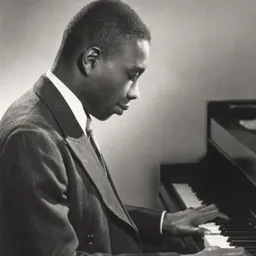
People in Benjamin Steinberg's life
Named in this biography and alive at the same time


Related people
Same field, nearest in time

Contemporaries
People whose lives overlapped Benjamin Steinberg's




Frequently asked questions
Who was Benjamin Steinberg?
American musician and civil rights activist (1915–1974)
When was Benjamin Steinberg born?
Benjamin Steinberg was born on 15 March 1915 in Baltimore.
When did Benjamin Steinberg die?
Benjamin Steinberg died on 29 January 1974 in New York City.
What was Benjamin Steinberg's occupation?
Benjamin Steinberg was a musician and violinist.
What nationality was Benjamin Steinberg?
Benjamin Steinberg was American.
Sources & further reading
· Wikipedia: Benjamin Steinberg
· DBpedia: Benjamin Steinberg (conductor)
Cite this page
APA: Biography.guide. (2026). Benjamin Steinberg. https://biography.guide/benjamin-steinberg/
MLA: "Benjamin Steinberg." Biography.guide, https://biography.guide/benjamin-steinberg/.
Chicago: "Benjamin Steinberg." Biography.guide. https://biography.guide/benjamin-steinberg/.
Data last updated: 2026-09-22 · Spot an error? Report a correction.
Portrait: Wikimedia Commons · author & licence
Page generated 2026-09-27 05:02 UTC