
About Benjamin Mills
Lived 1779 – 1831 (aged 52). Benjamin Mills was an American lawyer, politician and judge.
Benjamin Mills was a lawyer and judge who served in the Kentucky Circuit Courts and the Kentucky Court of Appeals. He also represented Bourbon County, Kentucky, in the Kentucky House of Representatives. Mills issued a significant ruling in the 1820 case of Rankin v. Lydia which dealt with the rights of slaves brought to the Northwest Territory, where slavery was illegal. Mills' opinion in Rankin established a precedent that was cited in U.S. courts until the abolition of slavery following the Civil War.
Later, Mills was ensnared in the state's Old Court – New Court controversy wherein the state legislature attempted to abolish the Court of Appeals in retaliation for its opinion overturning a piece of debt relief legislation. The legislature established a new Court of Appeals, and for a time, both courts claimed authority as the court of last resort in Kentucky. The controversial measure abolishing the old court was repealed in 1826, and Mills resigned from the court in 1828. He died suddenly of an apoplectic stroke on December 6, 1831.
Early life Benjamin Mills was born January 12, 1779, in Worcester County, Maryland. When he was young, the family moved to Washington, Pennsylvania, where Mills was educated and studied medicine.
Mills married Mary Read Thornton. One son, Thornton Anthony Mills, was born in September 1810.
Mills served for a time as president of Washington Academy (now Washington and Lee University). Later, he moved to Bourbon County, Kentucky, with his father. concerning the status of slaves born in the Northwest Territory where the Ordinance of 1787 outlawed slavery. In his opinion, Mills was careful to avoid judgments regarding the institution of slavery itself, but upheld the decision of the Shelby County circuit court that the slave (Lydia) ought to be freed under terms of an indenture she had agreed to in Indiana before being sold to a master in Kentucky. and Blair v. Williams. In both cases, the circuit courts had ruled the replevin law impaired the obligation of contracts in violation of the Contract Clause of the United States Constitution and similar language in the Kentucky Constitution. In October 1823, Mills and fellow justices John Boyle and William Owsley upheld the lower courts' rulings. An outraged General Assembly passed a measure abolishing the Court of Appeals and setting up a new Court of Appeals in its place, which pro-relief governor John Adair stocked with judges favorable to the debt relief cause. The Old Court considered the action illegal, and for a time, both the Old and New Courts claimed authority as the court of last resort in Kentucky.
As the state's economy began to recover, Old Court supporters made steady gains in the legislature. By late 1826, they commanded a veto-proof majority in the General Assembly and passed legislation abolishing the New Court and reinstating the Old Court. In 1828, Boyle resigned his seat on the Court of Appeals to accept a federal judgeship. In an attempt to placate the remaining New Court supporters that insisted the Old Court judges did not represent the will of the people, Owsley and Mills also resigned, hoping to be reappointed and reconfirmed to their posts. Governor Thomas Metcalfe reappointed both, but the Kentucky Senate would not confirm them. Thus ended Mills' tenure on the Court of Appeals.
Following his time on the bench, Mills moved to Frankfort, where he resumed his legal practice.
Don’t just read it —
keep it.
Full-length biographies made to live with: read them, listen on the way to work, watch them tonight.
- E-book
- Audio
- Video
Instant download · yours to keep · every purchase keeps this site free
Important facts
People in Benjamin Mills's life
Named in this biography and alive at the same time

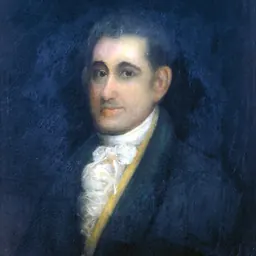

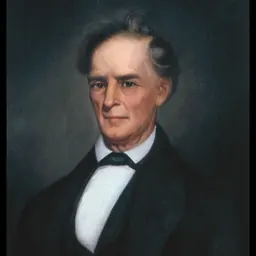
Related people
Same field, nearest in time

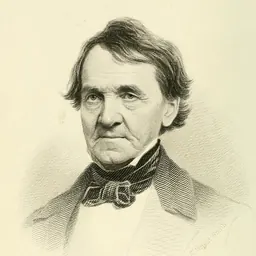



Contemporaries
People whose lives overlapped Benjamin Mills's




Frequently asked questions
Who was Benjamin Mills?
American politician (1779-1831)
When was Benjamin Mills born?
Benjamin Mills was born on 12 January 1779 in Worcester County.
When did Benjamin Mills die?
Benjamin Mills died on 6 December 1831 in Frankfort.
What was Benjamin Mills's occupation?
Benjamin Mills was a lawyer, politician and judge.
What nationality was Benjamin Mills?
Benjamin Mills was American.
Sources & further reading
Cite this page
APA: Biography.guide. (2026). Benjamin Mills. https://biography.guide/benjamin-mills/
MLA: "Benjamin Mills." Biography.guide, https://biography.guide/benjamin-mills/.
Chicago: "Benjamin Mills." Biography.guide. https://biography.guide/benjamin-mills/.
Data last updated: 2026-09-20 · Spot an error? Report a correction.
Page generated 2026-09-27 05:04 UTC