
About Benjamin Dann Walsh
Lived 1808 – 1869 (aged 61). Benjamin Dann Walsh was an American and British zoologist and entomologist.
Benjamin Dann Walsh (September 21, 1808 – November 18, 1869) was an English-born American entomologist who served as the first official state entomologist in Illinois. He was a leading influence during a time of significant transition in American entomology. Walsh championed the application of scientific methods to control agricultural pests. He was a proponent of biological control as an effective means to manage insects. He was also one of the first American scientists to support Charles Darwin's theory of evolution and was instrumental in securing its broad acceptance in the entomological community.
Biography Walsh was born in Hackney, which was then a small village outside of London. The son of Benjamin Walsh and Mary Bidwell Clarke, he was the fifth of thirteen children. When Walsh was a boy, his father, a member of parliament, was charged with embezzlement and caught attempting to flee to America without his wife and children. He was jailed at Newgate and saved from hanging by a royal pardon issued in 1812.
After graduation from St. Paul's School in 1827, Walsh entered Trinity College, Cambridge, receiving a B.A. degree in 1831 and a master's degree three years later. In 1833 he became a fellow of Trinity, where he resided for 12 years with the intention of entering the Anglican ministry. A scholar of classic languages and literature, Walsh wrote The Comedies of Aristophanes, Translated into Corresponding English Metres (the first of an intended three volumes). In addition he showed an interest in journalism and wrote numerous articles for newspapers and periodicals.
While at Cambridge, Walsh developed a great dislike for religion and in particular came to despise the clergy as hypocrites and fools. He was also critical of university policies and wrote a pamphlet in 1837, A Historical Account of the University of Cambridge and its Colleges, proposing changes that were considered radical at the time. His desire to live the solitary life of a philosopher-farmer came to an end when new settlements in the region brought about an outbreak of malaria. Worried for his health, Walsh moved to Rock Island, Illinois, in 1850 and started a successful lumber business. In 1860 Walsh delivered a very well-received lecture on insect pests to the Illinois State Horticultural Society. Later he wrote several articles for various farm periodicals. Initially, perhaps influenced by his own farming experience, Walsh focused on the practical aspects of insects as agricultural pests. However, starting in 1862 he published several scholarly papers in the journals of scientific societies such as the Boston Society of Natural History and the Entomological Society of Philadelphia. These works provided detailed observations of insect metamorphosis and natural history; compared morphological characters for a given taxon; or described new species. In September 1868 Walsh became senior editor of The American Entomologist, with C.V. Riley as junior editor. Targeting farmers, this monthly journal featured illustrations and clear descriptions to help readers identify insect pests and apply the most effective controls. Two significant findings by Walsh and Riley appeared in this journal: the discovery of the 13-year form of the periodical cicada, and the first reference to mimicry of the North American monarch butterfly by the viceroy. His position as state entomologist was replaced by William LeBaron.
Publications Walsh authored 385 works during his career and co-authored an additional 478 works with Charles V. Riley. Some of his more notable entomological works include: 1861. Insects injurious to vegetation in Illinois 1864. On dimorphism in the hymenopterous genus Cynips 1864. On certain entomological speculations of the New England school of naturalists 1865. On phytophagic varieties and phytophagic species, with remarks on the unity of coloration in insects 1866. Imported insects; the gooseberry saw-fly 1867. On the insects, coleopterous, hymenopterous, and dipterous, inhabiting the galls of certain species of willow 1867. First annual report on the noxious insects of the state of Illinois 1867. The apple-worm and the apple-maggot 1868. The periodical cicada (with Riley) 1869. Imitative butterflies (with Riley)
Don’t just read it —
keep it.
Full-length biographies made to live with: read them, listen on the way to work, watch them tonight.
- E-book
- Audio
- Video
Instant download · yours to keep · every purchase keeps this site free
Important facts
People in Benjamin Dann Walsh's life
Named in this biography and alive at the same time


Related people
Same field, nearest in time
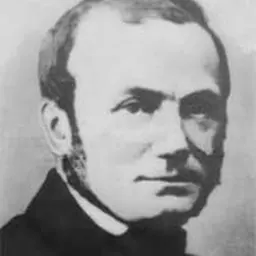

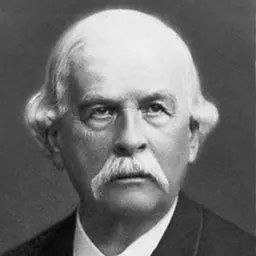
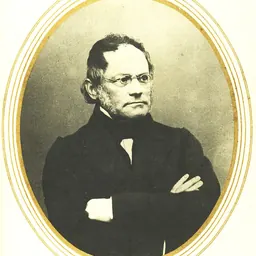

Contemporaries
People whose lives overlapped Benjamin Dann Walsh's






Frequently asked questions
Who was Benjamin Dann Walsh?
American entomologist (1808–1869)
When was Benjamin Dann Walsh born?
Benjamin Dann Walsh was born on 21 September 1808 in Hackney.
When did Benjamin Dann Walsh die?
Benjamin Dann Walsh died on 18 November 1869 in Rock Island.
What was Benjamin Dann Walsh's occupation?
Benjamin Dann Walsh was a zoologist and entomologist.
What nationality was Benjamin Dann Walsh?
Benjamin Dann Walsh was American and British.
Sources & further reading
· Wikipedia: Benjamin Dann Walsh
· DBpedia: Benjamin Dann Walsh
Cite this page
APA: Biography.guide. (2026). Benjamin Dann Walsh. https://biography.guide/benjamin-dann-walsh/
MLA: "Benjamin Dann Walsh." Biography.guide, https://biography.guide/benjamin-dann-walsh/.
Chicago: "Benjamin Dann Walsh." Biography.guide. https://biography.guide/benjamin-dann-walsh/.
Data last updated: 2026-09-25 · Spot an error? Report a correction.
Page generated 2026-09-27 05:12 UTC