
About Benjamin Brandreth
Lived 1809 – 1880 (aged 70). Benjamin Brandreth was an American politician.
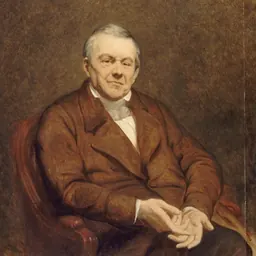
Benjamin Brandreth (June 23, 1809 – February 18, 1880) was a British-American businessman and politician. He was a 19th-century pioneer in the early use of mass advertising to build consumer awareness of his product, a purgative that allegedly cured many ills by purging toxins out of the blood. He became a successful and wealthy businessman, bank president, and New York State Senator.
Early life Brandreth was born at Newtown, Derbyshire, on June 23, 1809, the son of William Holmes (1775–1809) and Ann née Brandreth (1785–1877). His father abandoned the family while Benjamin was young, so he was raised by his mother and maternal grandfather William Brandreth (1743–1828), whose surname he adopted.
His cousin was Joseph Brandreth (1748–1815), now being represented by his great-nephew Mark Watson-Gandy.
Business career
Brandreth's Pills Brandreth emigrated to the United States in 1835 with his three children shortly after the death of his second wife, Harriet Smallpage, hoping to find a bigger market than he had in England for his "Vegetable Universal Pill" invented by his grandfather, William Brandreth. The formula was a powerful cathartic and played off the popular notion that impurity of the blood was the source of many ills.
Establishing himself on Hudson Street in New York City, Brandreth eventually found success marketing his pills, prompting a move to a larger facility which he built at Sing Sing (later Ossining, New York) in 1836.
Brandreth was a pioneer in using the then-infant technique of mass advertising in building brand awareness to create a mass market for his product. He created and published a wide variety of advertising material for his pills, including a 224-page tome entitled The Doctrine of Purgation, Curiosities from Ancient and Modern Literature, from Hippocrates and Other Medical Writers. His advertising copy had a distinctly literary flavor which found favor with the public. Brandreth widely distributed his books and pamphlets throughout the country as well as taking copious advertising space in newspapers.
Eventually his pills became one of the best-selling patent medicines in the United States. A congressional committee in 1849 reported that Brandreth was the nation's largest proprietary advertiser. Between 1862 and 1863, Brandreth's average annual gross income surpassed $600,000.
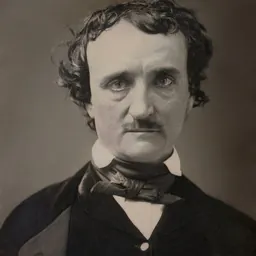
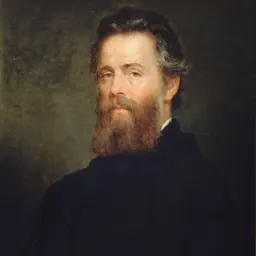
For fifty years, Brandreth's name was a household word in the United States. Indeed, the Brandreth pills were so well known they received mention in Edgar Allan Poe's satirical story "Some Words with a Mummy," Herman Melville's classic Moby-Dick, and P. T. Barnum's book The Humbugs of the World.
The Brandreth Pill Factory complex was added to the National Register of Historic Places in 1980.
Although his pills sold well to the public, they were described by medical experts and skeptics as an example of quackery. Brandreth and his pills are mentioned in Dan King's book Quackery Unmasked (1858).
In 1979, the Havahart trap business was sold to the Woodstream Corporation of Lititz, Pennsylvania, and the remaining property in Ossining was sold to Filex Steel Products Company. The remaining 34 employees at Ossining were offered jobs in Pennsylvania with the new owner, but many retired, thus ending the 142-year legacy of Brandreth's enterprise.
Other business interests A prominent businessman, Brandreth was among the original founders and was the first President of the Westchester County Savings Bank in Tarrytown, Westchester County, New York, in 1853.
In 1857, he built the Brandreth Hotel near Canal and Broadway in New York City.
Brandreth Park In 1851, Brandreth bought in the Adirondacks of New York State for 15 cents an acre, establishing the first private preserve in the Adirondack Park
Political career Brandreth was a prominent Democrat in Westchester County, New York, representing the district in the New York State Senate in 1850, 1851, 1858, and 1859.
In 1856, he narrowly lost election to the United States Congress to John W. Ferdon.
He was one of the founders of the New York Eclectic Medical College, which he supported financially throughout his life. In 1874, he presented the building used by the college to Dr. Robert S. Newton and his associates.
Brandreth was active in the Masons, who took charge of his funeral with full honors.
Personal life Brandreth was married three times: first to Susan Leeds, from whom he was divorced a few months after the marriage; second to Harriet Smallpage, to whom he was married seven years until her death; and third to Virginia Graham. and the great-great-great-grandfather of Gyles Brandreth.
Death Brandreth died on February 18, 1880. That morning he had risen early, reaching the plant with his eldest son at six-thirty. He had worked an hour or so in the mixing room. Then came a stroke of apoplexy and death. Thus, at the end as at the launching of his venture in America, Brandreth was mixing the purgative in which he so fervently believed.
Brandreth's funeral was held at Trinity Church, which could hold only a fraction of the mourners in attendance. Others lined the streets to Dale Cemetery, where he was buried. His body was in a wrought metal and bronze casket hermetically sealed with a full-length plate glass top. The procession to the cemetery included carriages for the clergymen and pallbearers, the 16th Battalion brass band, the hearse with a bodyguard of eight Masonic knights, and carriages for 150 friends and family, stretching out over a mile in length, so that the first carriages were arriving at the cemetery at about the same time as the last were leaving the church.
Don’t just read it —
keep it.
Full-length biographies made to live with: read them, listen on the way to work, watch them tonight.
- E-book
- Audio
- Video
Instant download · yours to keep · every purchase keeps this site free
Important facts
People in Benjamin Brandreth's life
Named in this biography and alive at the same time



Related people
Same field, nearest in time




Contemporaries
People whose lives overlapped Benjamin Brandreth's





Frequently asked questions
Who was Benjamin Brandreth?
American politician (1809-1880)
When was Benjamin Brandreth born?
Benjamin Brandreth was born on 23 June 1809 in Newtown.
When did Benjamin Brandreth die?
Benjamin Brandreth died on 18 February 1880 in Ossining.
What was Benjamin Brandreth's occupation?
Benjamin Brandreth was a politician.
What nationality was Benjamin Brandreth?
Benjamin Brandreth was American.
Sources & further reading
· Wikipedia: Benjamin Brandreth
Cite this page
APA: Biography.guide. (2026). Benjamin Brandreth. https://biography.guide/benjamin-brandreth/
MLA: "Benjamin Brandreth." Biography.guide, https://biography.guide/benjamin-brandreth/.
Chicago: "Benjamin Brandreth." Biography.guide. https://biography.guide/benjamin-brandreth/.
Data last updated: 2026-09-20 · Spot an error? Report a correction.
Page generated 2026-09-27 05:29 UTC