
About Benedito de Castro
Lived 1597 – 1684 (aged 86–87). Benedito de Castro was a physician.
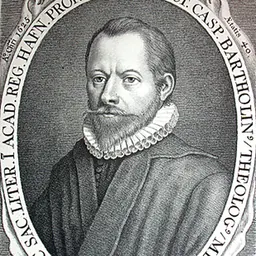
Benedictus de Castro (also Benedito de Castro and Baruch Nehemias; born – January 31, 1684) was a physician, author, and Jewish community leader in Hamburg.
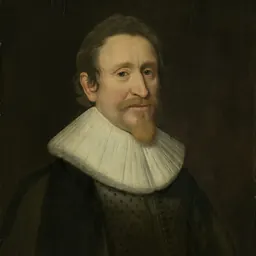
Early life De Castro was born in the late 1590s to , a physician, author, and a Portuguese Jewish emigrant to Hamburg who had fled in the late 16th century. In 1621, he graduated from the University of Leiden with a degree in medicine. His dissertation is considered lost. He additionally studied medicine at the University of Franeker and received a doctorate on September 3, 1624. He practiced medicine in Hamburg, and was described in his craft by Hugo Grotius as "vir humanissimus".
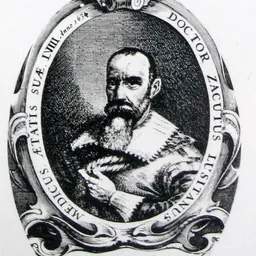
Career De Castro quickly became a well-respected doctor in his community. In 1645, he treated Christina, Queen of Sweden and was invited to stay in the royal palace. He is the first Jew known by name to have entered the Kingdom of Sweden. His 1647 book, Monomachia, was dedicated to her. Despite his overall success, he was attached by Christian doctors and Lutheran clergymen, among them Joachim Curtius (1585–1642). In 1631, Abraham Zacutus Lusitanus, another well-known physician, encouraged de Castro to take public action against such attacks. That year, de Castro wrote Flagellum calumniatium seu Apologia under the pseudonym Philotheo Castello. In the pamphlet, he criticized the "lies and slander" by Christian phyisicans against colleagues of Portuguese-Jewish descent where "the malicious charges against an anonymous author are refuted." In the writing, he additionally countered with many examples of the achievements of Jewish physicians in the field. It is often considered a supplement to the book Medicus Politicus, which was authored by his father, whom with he shared the ideal that doctors had a duty to heal the human soul and body so that they would be able to reflect the divine harmony of the universe as harmony among society.
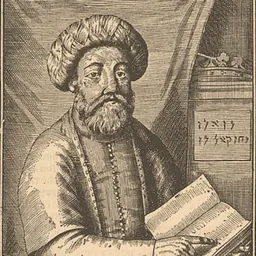
In 1652, he was one of the founders of the Portuguese-Jewish community "Beth Israel", of which he was a board member from 1654 onwards, and during which he took many honorary positions. He threatened that the community would withdraw from Hamburg if they were prevented from free practice of their religion and from full schooling. In 1666, he endorsed Sabbatai Zevi. In 1678, David de Pina dedicated his thesis, De Pleuritide, to de Castro. and is buried in the . He was married to a woman named Jael.
Works
Don’t just read it —
keep it.
Full-length biographies made to live with: read them, listen on the way to work, watch them tonight.
- E-book
- Audio
- Video
Instant download · yours to keep · every purchase keeps this site free
Important facts
People in Benedito de Castro's life
Named in this biography and alive at the same time
Related people
Same field, nearest in time




Contemporaries
People whose lives overlapped Benedito de Castro's




Frequently asked questions
Who was Benedito de Castro?
german-Jewish physician
When was Benedito de Castro born?
Benedito de Castro was born in 1597 in Hamburg.
When did Benedito de Castro die?
Benedito de Castro died in 1684 in Hamburg.
What was Benedito de Castro's occupation?
Benedito de Castro was a physician.
Sources & further reading
· Wikipedia: Benedito de Castro
· DBpedia: Benedictus de Castro
Cite this page
APA: Biography.guide. (2026). Benedito de Castro. https://biography.guide/benedito-de-castro/
MLA: "Benedito de Castro." Biography.guide, https://biography.guide/benedito-de-castro/.
Chicago: "Benedito de Castro." Biography.guide. https://biography.guide/benedito-de-castro/.
Data last updated: 2026-09-20 · Spot an error? Report a correction.
Page generated 2026-09-27 05:25 UTC