
About Bella Bellow
Lived 1945 – 1973 (aged 28). Bella Bellow was a singer and songwriter.
Bella Bellow (born Georgette Nafiatou Adjoavi Bellow; 1 January 194510 December 1973), was a Togolese singer-songwriter. Born in Tsévié, she died in a road accident in Lilikopé, a village between Tsévié and , at the age of 28.
From childhood, her talent for music and her voice were noticed at home and at school, where she performed at festivities. Her musical career began at the French Cultural Centre in Lomé before she was invited to perform at the Dahomey independence celebrations in 1965. The following year, her participation in the first World Festival of Black Arts in Dakar, representing Togo, brought her to international attention.
In 1968, her former teacher Paul Ahyi introduced her to Togolese singer Gérard Akueson, who became her producer. He put her in contact with Cameroonian saxophonist Manu Dibango, with whom she built her repertoire and recorded her first and only album, Rockia, released in 1969. Dibango also accompanied her in her early stage appearances and during the promotion of her album in France.
She performed on international stages, including the Olympia in Paris and the Maracanã stadium in Rio de Janeiro. Always dressed in wax print fabric, she sang mainly in her mother tongue, Mina (or Gen). With her husky voice, she helped spread Togolese and African music in the early 1970s. Returning to Togo in December 1973, she died the day after her arrival in a road accident at the age of 28. Although her career was brief, she influenced many artists, including Beninese singer Angélique Kidjo, who has covered Bella Bellow's songs such as Zelie and Blewu, performing the latter at the centenary of the 1918 Armistice. After her death, the BCEAO honoured her by printing her image on the 10,000 CFA franc banknote. She also appears on several Togolese stamps, and the anniversary of her death is commemorated each year in the country.
Biography
Childhood and education Georgette Nafiatou Adjoavi Bellow was born on 1 January 1945 in Tsévié, a town located north of Lomé, to a Togolese father of Nigerian descent and a mother of Ghanaian origins. Nicknamed toutouvi, before a large crowd.
Bella Bellow spent part of her childhood in Agoè-Nyivé, one of the 13 municipalities of Grand Lomé, and began her schooling in 1950 with the Sisters of the Catholic School Notre-Dame des Apôtres in Lomé. She obtained her primary school certificate (CEPE) in 1958. She enrolled for secondary school at the lycée in Sokodé and then at the Lycée Bonnecarrère in Lomé, completing her junior secondary certificate (BEPC) in 1966. From 1966 to 1968, she undertook secretarial training in Abidjan, Ivory Coast, where she also took solfège classes at the Institut des Arts.
Career
Early career alt=Colour photograph of a decorated hangar under which spectators are seated. In 1962, an artistic contest was organised between Bella Bellow and at the French Cultural Centre (CCF) in Lomé.
For the national independence celebrations in August 1965, Among those present at the festival were Josephine Baker, Langston Hughes, and Duke Ellington. She gained considerable recognition following the event.
While studying secretarial skills in Abidjan, she attracted the attention of Ivorian media through an appearance on a television show on the Radio-Télévision Ivoirienne. She also took part in a concert at the CCF in Lomé alongside Julien Clerc. who knew Akueson's Akue record label, asked him to meet her. She sang Zelie for Akueson, who stopped her after barely a minute and told Paul Ahyi that he had found a remarkable singer. Akueson praised her vocal qualities and subsequently signed a contract with her in Paris. At the end of his musical tour, and back in Paris, Akueson signed a contract with Bellow, who joined him in the French capital at the end of her studies in 1968. Akueson looked for a first name that would work better as a stage name internationally than her birth name "Georgette" and suggested "Bella", which she accepted.
Collaboration with Manu Dibango alt=Manu Dibango facing the camera with a saxophone over his shoulder, holding a standing microphone in his right hand, dressed in a purple and black coloured outfit. Manu Dibango (pictured in 2019), Bella Bellow's musical accompanist.
shortly afterwards asked Manu Dibango to record with Bella Bellow.
A secretarial job was arranged for her in Paris. During this period she spent a great deal of time with Dibango at his home, working on her songs with him at the piano, trying out different approaches — more of an exchange than a lesson, according to him — so that the final result would sound natural rather than rehearsed. Manu Dibango, in the documentary L'éternelle Bella Bellow, stated: "I took care of her musically [...]. She was like my daughter. My wife and I had adopted her."
Album Accompanied by Manu Dibango on keyboards, Slim Pezin on guitar, and Jeanot Mandengue on bass — musicians assembled by Akueson — Bella Bellow recorded her first and only album, Rockia, arranged by Manu Dibango. It was the first pop album in Ewe. The first song recorded for the album, "Zelie", was well-received upon release, as was the title track Rockia. These were followed by tracks such as Blewu, which addresses the themes of patience and life after death, and Denyigban, an ode to her homeland, Togo. The lyrics of her songs draw on traditional folk tales and biblical texts, and also explore psychological themes.
Manu Dibango noted that the album was not purely African but also contained American influences, the result being one that showcased her voice and set her apart. She sang in Mina, and her music was influenced by blues, gospel, and bossa nova.
On the back cover of the first single from the album, Gérard Akueson wrote:
International career In 1969, Bella Bellow released her first and only album hosted by Denise Glaser. He also organised concerts throughout France to raise her profile. She was among the very few artists from Francophone Africa to be broadcast on French radio at the time. They toured clubs and festivals together for two years.
In 1969, she took part in the "Night of Brotherhood" organised in tribute to Martin Luther King, held at the Olympia. alt=Aerial view of the covered Maracanã stadium and its surroundings, with the city's buildings in the background. Maracanã Stadium, Rio de Janeiro, the largest stage Bella Bellow performed on. At the in Algiers in 1969, Bella Bellow met her idol Miriam Makeba, who congratulated her warmly.
In 1971, she ended her collaboration with Gérard Akueson and took control of her own career. On 20 January 1972, in Atakpamé, she married Togolese magistrate Théophile Jamier-Lévy, and gave birth to their only daughter, Nadia Elsa. After a pause in her career, she returned with Dasi Ko, a song with a different artistic direction from Dibango that diverged from his usual style, and which was her last recorded song.
In November 1972, a Franco-Togolese evening was organised at the French Cultural Centre in Lomé. She presented her own orchestra, named Gabada — after a traditional Togolese rhythm in her Ford Capri on 10 December 1973 in Lilikopé, north of Lomé. She had been preparing to tour the United States with Manu Dibango. Years after the accident, Francis Bellow, Bella Bellow's brother, stated that the driver of her car had apologised to him: "I'm sorry, I fell asleep."
Bella Bellow was buried on 13 December 1973 at the Catholic cemetery of Bè-Plage in Lomé.
According to her producer Akueson, she died before African music became widely popular beyond folklore, particularly with the international success of Soul Makossa by Manu Dibango.
Influence and tributes
Influence Bella Bellow influenced many artists across the African continent, the most prominent of whom is Angélique Kidjo.
Angélique Kidjo alt=Angélique Kidjo in profile, wearing a predominantly orange wax print outfit, holding a wireless microphone in her right hand. Angélique Kidjo (pictured in 2014), who was profoundly influenced by Bella Bellow. Angélique Kidjo discovered Bella Bellow through the song Rockia, which was played everywhere on the radio and at celebrations in Benin. She then listened to the entire album of the same name, enraptured, wondering how she could ever sing like her.
When Angélique was thirteen years old, Bella Bellow went to Benin to perform at the Beach Club, a nightclub belonging to a friend of her father. She begged her father to let her go despite her young age and obtained his agreement on the condition that she remain at the bar to watch the performance. Angélique did not sleep that night and admitted defeat, feeling she could not pursue that career when others like Bella Bellow had such stage presence.
Other influenced artists Bella Bellow also influenced Togolese artists such as , , , and . Bella Bellow appears on the front of the former 10,000 CFA franc banknote, issued between 1979 and 1992 by the Central Bank of West African States (BCEAO). She is also depicted on several Togolese postage stamps.
On 10 December 2003, a major celebration was held in her honour. The Bella Bellow Cup, a women's football competition, was named after her to mark the occasion. The cup ran for four editions until 2007.
On the occasion of the fortieth anniversary of her passing, a foundation bearing her name was officially launched on 14 December 2013 in Lomé. The foundation, chaired by Nadia Elsa Agbodjan, Bella Bellow's only daughter, aims to promote the development and improvement of living conditions for Togolese youth and underprivileged children, as well as the emancipation of African women. It also promotes the development of music.
An orchestra named Bella Bellow, composed entirely of women, was created in her honour. It performs regularly on Togolese and regional stages, with the aim of paying tribute to heroines of the continent.
Beninese artist Angélique Kidjo performed Blewu at the ceremony marking the centenary of the 1918 Armistice on 11 November 2018 beneath the Arc de Triomphe, before approximately 70 heads of state.
In June 2019, the Bella Bellow University Stage, a seats , was inaugurated at the University of Lomé, Togo's main university.
During a national tribute organised to celebrate her memory, running from December 2023 into spring 2024, Kossi Gbényo Lamadokou, Togo's Minister of Culture and Tourism, announced that, through an emergency procedure, copyright protection over her works had been extended from fifty to seventy years post-mortem, in order to prevent them from entering the public domain in 2024. They are thus protected for an additional 20 years, until 2044. On the same occasion, the unveiled a new series of stamps bearing her image.
Notes and references
Don’t just read it —
keep it.
Full-length biographies made to live with: read them, listen on the way to work, watch them tonight.
- E-book
- Audio
- Video
Instant download · yours to keep · every purchase keeps this site free
Important facts
People in Bella Bellow's life
Named in this biography and alive at the same time

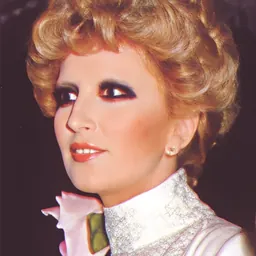


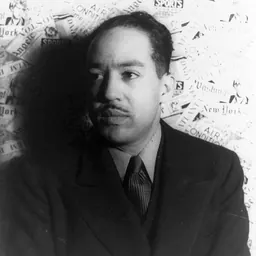



Related people
Same field, nearest in time
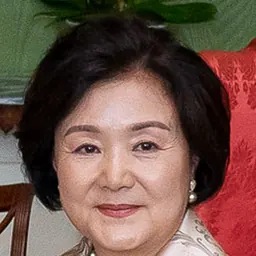


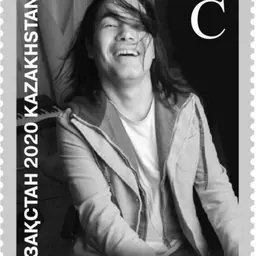

Contemporaries
People whose lives overlapped Bella Bellow's



Frequently asked questions
Who was Bella Bellow?
Togolese singer, songwriter
When was Bella Bellow born?
Bella Bellow was born on 1 January 1945 in Tsévié.
When did Bella Bellow die?
Bella Bellow died on 10 December 1973 in Togo.
What was Bella Bellow's occupation?
Bella Bellow was a singer and songwriter.
What nationality was Bella Bellow?
Bella Bellow's recorded nationality: Togo.
Sources & further reading
Cite this page
APA: Biography.guide. (2026). Bella Bellow. https://biography.guide/bella-bellow/
MLA: "Bella Bellow." Biography.guide, https://biography.guide/bella-bellow/.
Chicago: "Bella Bellow." Biography.guide. https://biography.guide/bella-bellow/.
Data last updated: 2026-09-20 · Spot an error? Report a correction.
Page generated 2026-09-27 05:03 UTC