
Belisarius
6th century Byzantine general instrumental in reconquest of much of the former Roman Mediterranean territories
About Belisarius
Lived 505 – 565 (aged 59–60). Belisarius was a Byzantine politician, military officer and military leader.
Flavius Belisarius (; ; March 565) was a military commander of the Byzantine Empire under Emperor Justinian I. Belisarius was instrumental in the reconquest of much of the Mediterranean territory belonging to the former Western Roman Empire, which had been lost less than a century prior. He is considered one of the greatest military commanders of Byzantium and in history generally.
One of the defining features of Belisarius's career was his success despite varying levels of available resources. He is frequently cited as being among the "Last of the Romans". He conquered the Vandal Kingdom of North Africa in the Vandalic War in nine months and conquered much of Italy during the Gothic War. He also defeated the Vandal armies in the battle of Ad Decimum and played an important role at Tricamarum, compelling the Vandal king, Gelimer, to surrender. During the Gothic War, despite being significantly outnumbered, he and his troops recaptured the city of Rome and then held out against great odds during the siege of Rome.
After a setback at Thannurin, he won a battle against the Persians at Dara but was defeated at Callinicum. He successfully repulsed a Hunnic incursion at Melantias. He was also known for military deception; he repulsed a Persian invasion by deceiving their commander and lifted the siege of Ariminum without a fight.
Early life and career
Belisarius was born around 500, probably in Germaneia (modern Sapareva Banya, Bulgaria), a fortified town of which some archaeological remains still exist, within the borders of Thrace and Paeonia. He may have been born into an Thraco-Roman or Illyro-Roman family, but his ancestry is unknown. By 526, he had become a senior-level guardsman of Justinian, the nephew of Emperor Justin I. How he became one is unrecorded.
He was later given permission by the emperor to form a bucellarii regiment. It consisted of elite heavy cavalry that he later expanded into a personal household regiment, 7,000 strong.
Iberian War
In his early career, Belisarius participated in multiple Byzantine defeats. In the first battle where he held an independent command (together with Sittas, most likely a dual command), he suffered a clear defeat. However, he and Sittas were noted as successful raiders, plundering Persian territory ), where Belisarius played a leading role again. He fled with his troops after his colleagues were lured into a trap. His army was then defeated at Mindouos, but he was promoted shortly afterward, meaning he was not likely held responsible for the defeat. At first, he was likely a junior partner to some higher commander like Sittas, while at Thanurin there was no overall commander. Mindouos was probably the first battle in which he led the army entirely on his own. This victory caused the Persian king Kavad I to open peace negotiations with the Byzantines.
On other fronts, the Byzantine forces were also winning. The Persians and their Arab allies, with a mobile force of 15,000 high-quality cavalry, invaded Byzantine lands again, now via Euphratensis, a route they had never taken before. Belisarius was taken by surprise and was unsure whether this was a feint or a real attack, so at first, he did not move. He called upon Roman-allied Arab tribes for help and received 5,000 troops. He forced the Persians to retreat with a successful strategic manoeuvre but he kept pursuing the fleeing Persians, reportedly because his soldiers threatened mutiny if no battle was fought. With 20,000 Byzantines and 5,000 Arabs, he moved against the Persians, but he was defeated at Callinicum (modern Raqqa), Belisarius fled the field, probably long before the fighting was over. This setback cost Justinian a chance to sign an early peace treaty as the shah regained confidence in the war effort. While the war went on after Dara and Callinicum, the death of the Persian shah, Kavad I, soon led to a peace treaty. The new shah, Khosrow, saw Justinian was anxious to sign for peace and thought he could quickly reach a favourable peace, such as the so-called eternal peace which heavily favoured the Persians. Belisarius was recalled to Constantinople and charged with incompetence and responsibility for the defeats at Thannuris and Callinicum, but after an investigation, he was cleared of the charges. cruel methods of tax collection, —renowned as a great commander, and Narses, a eunuch and confidant of Justinian who would later also be known as a great commander, were called upon to suppress the revolt. At this point, much of the city had been burned by the rioters, but the blue faction began to calm down, and after Narses distributed gifts to them, many returned home, so the prosecution of "good" Christians by Arian heretics was an especially important issue. The persecution had started after the Vandal military leader, Gelimer, who had a reputation as a good soldier, had overthrown his cousin, King Hilderic, a "guest friend" of Justinian, in 530. In a recent war against the native Berbers, the Vandals had lost 5,000 men in two decisive defeats; only when Gelimer was appointed commander did the tide shift. As king, Gelimer acquired a reputation for greed and cruelty and became unpopular with the people and nobility. Two revolts broke out at nearly exactly the same time, probably orchestrated by Justinian. The 400 Heruls under Pharis were to besiege it. Gelimer's treasure failed to depart and was captured and the king of the Visigoths, Theudis, refused an alliance with Gelimer. After a failed assault in which Pharis lost 110 men, Gelimer surrendered. Meanwhile, Belisarius himself had been reorganising the captured territory and had sent Cyril on a mission to capture Sardinia which would capture that island, and later also Corsica. The effort to locate and gather Vandal soldiers was still going on; in this way, the class on which the entire Vandal military and political systems were based could be wholly deported to the east and Vandal power forever broken. Belisarius assembled 4,000 troops, which included regular troops and possibly foederati, 3,000 Isaurians, He made a triumphal entry to Syracuse on 31 December 535. The preparations for the invasion of the Italian mainland were interrupted This Pope was the former subdeacon Silverius, the son of Pope Hormisdas. Belisarius was to replace him with the Deacon Vigilius, Vigilius had in fact been chosen in 531 by Pope Boniface II to be his successor, but this choice was strongly criticised by the Roman clergy and Boniface eventually reversed his decision. and several Roman senators to secretly open the gates of the city. According to Liber Pontificalis, this accusation was levelled by Antonina, Belisarius's wife. Belisarius had him stripped of his vestments and exiled to Patara in Lycia in Asia Minor. He also built two hospices for pilgrims and a monastery, which have since disappeared.
Belisarius and Narses Belisarius ordered the cavalry garrison of Ariminum to be replaced by infantry. Crucial to the success of Belisarius's deception had been Khosrow's fear of catching the plague if he remained in Byzantine territory for too long, which made maintaining a tactical position in Byzantine territory highly dangerous. By showing his best troops in the open, Belisarius made clear that his army was not weakened by the plague and seemingly not afraid to catch it.
Return to Italy
While Belisarius was in the east, the situation in Italy had vastly deteriorated. Meanwhile, Totila had also been very successful in his other efforts.
Belisarius and Justinian, whose partnership had increased the size of the empire by 45 per cent, died within a few months of each other in 565. Belisarius owned an estate in Rouphinianai, on the Asiatic side of the Constantinople suburbs (modern Caddebostan, Istanbul). He may have died there and been buried near one of the two churches in the area, perhaps Saints Peter and Paul.
Relationship with Antonina In the first five chapters of his Secret History, whose reliability is debated by scholars, Procopius characterises Belisarius as a cuckolded husband, who was emotionally dependent on his debauched wife, Antonina, a former prostitute. According to the historian, Antonina had an affair with her adopted son, the young Theodosios, while on the same time she turned against her biological son Photios. Particular interest has the story where Belisarius catches Antonina and Theodosios in the basement but believes Antonina's excuse regardless of Theodosios' pants being loosen:
Photios sides with Belisarius against Theodosios, while the lowest point is when Belisarius begs Photios to help him against Antonina, and to kill Theodosios. Procopius claims that the love affair was well known in the imperial court and the general was regarded as weak and ridiculous. Empress Theodora reportedly saved Antonina when Belisarius tried to charge his wife at last.
Belisarius and Antonina had one daughter named Ioannina, who was engaged to Anastasios, the grandson of Theodora.
Assessment According to military historian B.H. Liddell Hart, Belisarius, though usually outnumbered and ill-supplied, was "a master of the art of converting his weakness into strength; and the opponent's strength into a weakness":
Hart concluded that, "here is no parallel in history for such a series of conquests by abstention from attack."
Tactics During his first Persian campaign, Belisarius was on the winning side once, at Dara. In these he would also go on a strategic offensive, take up defensive positions on enemy supply lines, and have the larger Russian and French forces attack his strong position. Philip Stanhope, a 19th-century British philologist who wrote Life of Belisarius, believed the story to be true, based on his review of the available primary sources. However, most modern scholars believe the story to be apocryphal.
After the publication of Jean-François Marmontel's novel Bélisaire (1767), this account became a popular subject for progressive painters and their patrons in the later 18th century, who saw parallels between the actions of Justinian and the repression imposed by contemporary rulers. For such subtexts, Marmontel's novel received a public censure by Louis Legrand of the Sorbonne, which contemporary theologians regarded as a model exposition of theological knowledge and clear thinking.
Marmontel and the painters and sculptors depicted Belisarius as a kind of secular saint, sharing the suffering of the downtrodden poor—for example, the bust of Belisarius by the French sculptor Jean-Baptiste Stouf. The most famous of these paintings, by Jacques-Louis David, combines the themes of charity (the alms giver), injustice (Belisarius), and the radical reversal of power (the soldier who recognises his old commander). Others portray him being helped by the poor after his rejection by the powerful.
In fiction A historical novel by Robert Graves, Count Belisarius, first published in 1938, recounts the life and military campaigns of Belisarius.
He is portrayed by Lang Jeffries in the 1968 film The Last Roman.
Don’t just read it —
keep it.
Full-length biographies made to live with: read them, listen on the way to work, watch them tonight.
- E-book
- Audio
- Video
Instant download · yours to keep · every purchase keeps this site free
Important facts
People in Belisarius's life
Named in this biography and alive at the same time

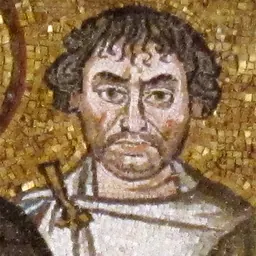
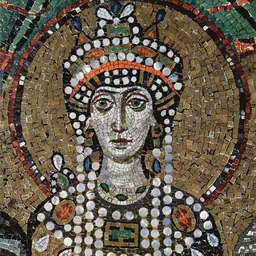


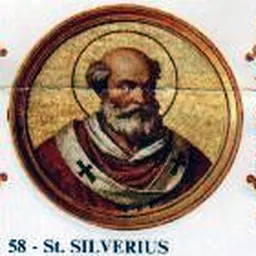
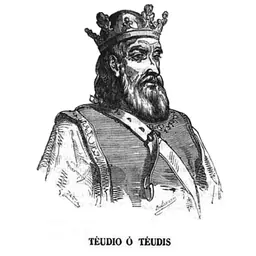
Related people
Same field, nearest in time


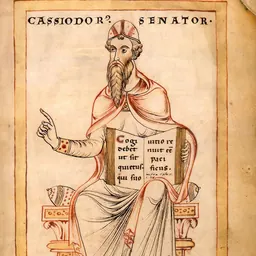
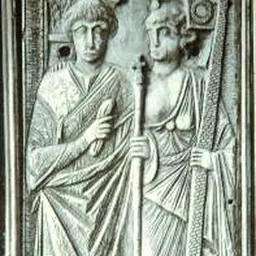

Contemporaries
People whose lives overlapped Belisarius's
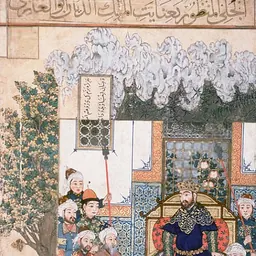
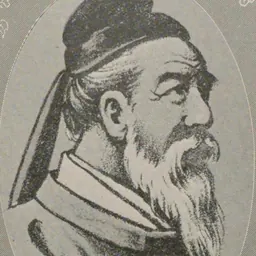


Frequently asked questions
Who was Belisarius?
6th century Byzantine general instrumental in reconquest of much of the former Roman Mediterranean territories (505-565)
When was Belisarius born?
Belisarius was born in 505 in Sapareva Banya.
When did Belisarius die?
Belisarius died on 13 March 565 in Constantinople, Chalcedon.
What was Belisarius's occupation?
Belisarius was a politician, military officer and military leader.
What nationality was Belisarius?
Belisarius was Byzantine.
Sources & further reading
Cite this page
APA: Biography.guide. (2026). Belisarius. https://biography.guide/belisarius/
MLA: "Belisarius." Biography.guide, https://biography.guide/belisarius/.
Chicago: "Belisarius." Biography.guide. https://biography.guide/belisarius/.
Data last updated: 2026-09-20 · Spot an error? Report a correction.
Page generated 2026-09-27 05:27 UTC