
About Fulgentius of Ruspe
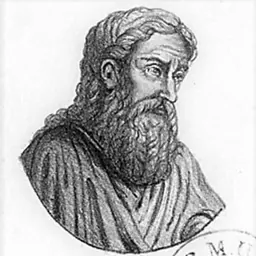
Lived 468 – 533 (aged 64–65). Fulgentius of Ruspe was a Roman monk, theologian and writer.
Fabius Claudius Gordianus Fulgentius, also known as Fulgentius of Ruspe (462 or 467 – 1 January 527 or 533), was a North African Christian prelate who served as Bishop of Ruspe in what is now Tunisia, during the 5th and 6th century. He is venerated as a saint.
Biography Fabius Claudius Gordianus Fulgentius
His father Claudius died when Fulgentius was still quite young. His mother Mariana taught him to speak Greek and Latin. Fulgentius became particularly fluent with the former, speaking it like a native. His biographer says that at an early age Fulgentius committed the entire works of Homer to memory.
He applied to Faustus, a bishop who had been forced from his diocese by the Vandal king Huneric and later set up a monastery at Byzacena. Faustus tried to dissuade Fulgentius because his physical weakness made him a poor candidate for the rigorous life of the monastery. When Fulgentius persisted, Faustus admitted him on a trial basis.
Upon learning of her son's decision, Mariana, who evidently had never been told of Fulgentius's wish, was very upset. She rushed to the gates of the monastery, demanding to know how a church that was supposed to protect widows could deprive her of her only son. Her protestations were ineffective, and Fulgentius was ultimately confirmed in his vocation.
In 500, he visited Rome, where he prayed at the tombs of the apostles. His visit coincided with a formal address to the people by king Theodoric, which confirmed Fulgentius in his low esteem for the earthly vanities of this world. He then returned to Byzacena, where he built a monastery, electing to live in an isolated cell. Fulgentius's reputation quickly spread, and he was several times offered the post of bishop of one of the dioceses which had been vacated through the actions of the Arian king Thrasamund. He chose not to accept these offers, knowing Thrasamund had specifically ordered that only Arians be permitted to fill those seats.
Fulgentius makes no clear mention of what will later be Lateran IV's "transubstantiation" (1215). In his Treatise against Fabianus: "Indeed our sharing in the Lord's body and blood when we eat his bread and drink his cup teaches us that we should die to the world." He makes clear that "we eat his bread and drink his cup."
Russian Orthodox Saint, bishop, and theologian, Sylvester Malevansky, defended Fulgentius' pneumatology while providing an Eastern Orthodox interpretation for it.
Veneration His saint's day is January 1, the day of his death. His relics were transferred to Bouvines in France in 1903.
Don’t just read it —
keep it.
Full-length biographies made to live with: read them, listen on the way to work, watch them tonight.
- E-book
- Audio
- Video
Instant download · yours to keep · every purchase keeps this site free
Important facts
People in Fulgentius of Ruspe's life
Named in this biography and alive at the same time

Related people
Same field, nearest in time




Contemporaries
People whose lives overlapped Fulgentius of Ruspe's


Frequently asked questions
Who was Fulgentius of Ruspe?
6th-century Bishop of Ruspe
When was Fulgentius of Ruspe born?
Fulgentius of Ruspe was born in 468 in Thélepte.
When did Fulgentius of Ruspe die?
Fulgentius of Ruspe died in 533 in Ruspe.
What was Fulgentius of Ruspe's occupation?
Fulgentius of Ruspe was a monk, theologian and writer.
What nationality was Fulgentius of Ruspe?
Fulgentius of Ruspe was Roman.
Sources & further reading
· Wikipedia: Fulgentius of Ruspe
· DBpedia: Fulgentius of Ruspe
Cite this page
APA: Biography.guide. (2026). Fulgentius of Ruspe. https://biography.guide/fulgentius-of-ruspe/
MLA: "Fulgentius of Ruspe." Biography.guide, https://biography.guide/fulgentius-of-ruspe/.
Chicago: "Fulgentius of Ruspe." Biography.guide. https://biography.guide/fulgentius-of-ruspe/.
Data last updated: 2026-09-20 · Spot an error? Report a correction.
Page generated 2026-09-27 05:22 UTC