
About Béla Hamvas
Lived 1897 – 1968 (aged 71). Béla Hamvas was a Hungarian philosopher and writer.
Béla Hamvas (23 March 1897 – 7 November 1968) was a Hungarian writer, philosopher, and social critic. He was the first thinker to introduce the Traditionalist School of René Guénon to Hungary.
Biography Béla Hamvas was born on 23 March 1897 in Eperjes, He was also well-versed in the works of René Guénon. In line with Evola's views, in which he incorporated a stronger emphasis on Christian beliefs, Hamvas strove for an undemocratic regime led by a small "enlightened" elite of intellectuals. To accomplish this goal, Hamvas and Károly Kerényi (who had been his closest friend since the 1920s) founded the Sziget ("Isle") circle in 1935, a literary group which also included figures such as the biological racist László Németh. However, Hamvas had a falling-out with Kerényi in the late 1930s. Despite the Soviet siege and repeated harassment by the authorities, 1945 to 1947 were his most fruitful years. Between 1945 and 1948 Hamvas held lectures and edited the series Leaflets of the University Press.
In 1948 he was placed on the b-list (banned from publishing) by the Soviet-installed socialist government, and was forced into retirement from his library job. This happened after Hamvas had started "an aesthetic and ideological discussion with György Lukács".
Throughout the post-war era, Hamvas communicated many of his ideas surrounding Traditionalism to the younger philosopher . The latter would go on to organize underground classes for groups of dissidents from 1975 onwards. He was buried in Szentendre.
Legacy
After the fall of socialism, several Traditionalist groups sprang up in Hungary, often based on the teachings of Hamvas as these were transmitted by Lászlo. These included a Béla Hamvas Circle (Hamvas Béla Kör) as well as three "Evolian" groups (Kard-Kerezst-Korona Szövetség, Apokalipszis Iskolája and Árpád Szigeti's School of Tradition and Transcendence) and the Evolian printing house Arkhé.
In 1990, Hamvas posthumously received the Kossuth Prize.
According to cultural theorist , Hamvas' preference for a form of cultural nationalism (as opposed to more crude forms of ethnonationalism) has led to a misguided identification of Hamvas as an anti-fascist, which fails to inquire into the far-right and elitist views of Hamvas and his intellectual connections to Evola.
Partial bibliography
Non-fiction Magyar Hüperion (1936, Hungarian Hyperion) Szellem és egzisztencia (1941, Spirit and Existence), an essay discussing the philosophy of Karl Jaspers A láthatatlan történet (1943, The Invisible Story) Scientia Sacra vol. 1–6 (1942–43), which deals with the philosophy of the Far East (the Upanishads, Tao Te King, the Tibetan Book of the Dead and others) and European mysticism Anthologia humana: Ötezer év bölcsessége (1946, Human Anthology – The Wisdom of Five Millennia) Forradalom a művészetben: Absztrakció és szürrealizmus Magyarországon (1947, Revolution in Art: Abstraction and Surrealism in Hungary), written together with his wife, on the history of Hungarian art from Károly Ferenczy, Tivadar Csontváry Kosztka and Lajos Gulácsy up to the “European School” Unicornis, Titkos Jegyzőkönyv, Silentium (1948–51, published 1987, Unicorn, Secret Protocol, Silence) Patmosz (1959–1966, published 1992, Patmos), an essay collection whose title alludes to John the Apostle’s exile to Patmos Scientia Sacra: az őskori emberiség szellemi hagyománya II. rész: A kereszténység (1960–64, published 1988, Sacred Science – Spiritual Heritage of Mankind, part II. Christianity)
Fiction Karnevál (1948–51, published 1985, Carnival) Szilveszter (1957, published 1991, New Year’s Eve) Bizonyos tekintetben (1961, published 1991, From a Certain Aspect) Ugyanis (1966–67, published 1991, Therefore)
Don’t just read it —
keep it.
Full-length biographies made to live with: read them, listen on the way to work, watch them tonight.
- E-book
- Audio
- Video
Instant download · yours to keep · every purchase keeps this site free
Important facts
People in Béla Hamvas's life
Named in this biography and alive at the same time



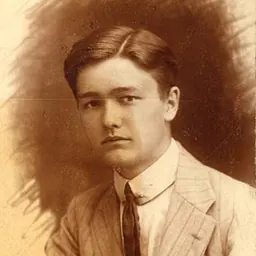

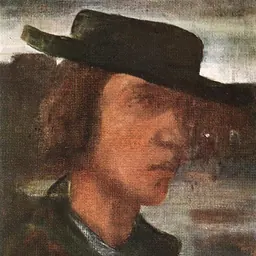
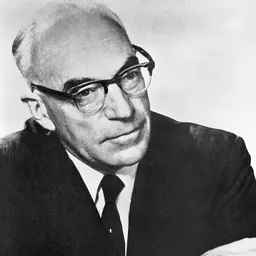
Related people
Same field, nearest in time



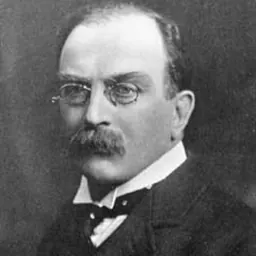
Contemporaries
People whose lives overlapped Béla Hamvas's


Frequently asked questions
Who was Béla Hamvas?
Hungarian writer and philosopher (1897–1968)
When was Béla Hamvas born?
Béla Hamvas was born on 23 March 1897 in Prešov.
When did Béla Hamvas die?
Béla Hamvas died on 7 November 1968 in Budapest.
What was Béla Hamvas's occupation?
Béla Hamvas was a philosopher and writer.
What nationality was Béla Hamvas?
Béla Hamvas was Hungarian.
Sources & further reading
Cite this page
APA: Biography.guide. (2026). Béla Hamvas. https://biography.guide/bela-hamvas/
MLA: "Béla Hamvas." Biography.guide, https://biography.guide/bela-hamvas/.
Chicago: "Béla Hamvas." Biography.guide. https://biography.guide/bela-hamvas/.
Data last updated: 2026-09-26 · Spot an error? Report a correction.
Page generated 2026-09-27 05:15 UTC