
About Beji Caid Essebsi
Lived 1926 – 2019 (aged 92). Beji Caid Essebsi was a Tunisian politician, lawyer, diplomat and jurist.
Beji Caid Essebsi (or es-Sebsi; , ; 29 November 1926 – 25 July 2019) was a Tunisian politician who served as the fourth president of Tunisia from 2014 until his death in 2019. Previously, he served as minister of foreign affairs from 1981 to 1986 and prime minister from February to December 2011.
Essebsi's political career spanned six decades, culminating in his leadership of Tunisia in its transition to democracy. Essebsi was the founder of the Nidaa Tounes political party, which won a plurality in the 2014 parliamentary election. In December 2014, he won the first regular presidential election following the Tunisian Revolution, becoming Tunisia's first democratically elected president.
Early life
Born in 1926, in Sidi Bou Said to an elite family originally from Sardinia (Italy), he was the great-grandson of Ismail Caïd Essebsi, a Sardinian kidnapped by Barbary corsairs in the Beylik of Tunis along the coasts of the island at the beginning of the nineteenth century, who then became a mamluk leader (he was raised with the ruling family after converting to Islam and was later recognized as a free man when he became an important member of the government).
Political career
Essebsi's first involvement in politics came in 1941, when he joined the Neo Destour youth organization in Hammam-Lif. He went to France in 1950 to study law in Paris. He began his career as a lawyer defending Neo-Destour activists. Essebsi later joined Tunisia's leader Habib Bourguiba as a supporter of the Tunisian separatist movement and later as his adviser following the country's independence from France in 1956.
In April 1981, he came back to the government under Mohamed Mzali as Minister of Foreign Affairs, serving until September 1986. Essesbi nevertheless has been described as someone who had "remained at a distance from Ben Ali" since his leaving politics in 1991, a move significant for "contribut[ing] to his credibility and acceptance" in the years following the 2011 revolution, the post-Ben Ali era.
On 5 May accusations of the former Interior Minister Farhat Rajhi that a coup d'etat was being prepared against the possibility of the Islamic party Ennahda Party winning the Constituent Assembly election in October. This, again, led to several days of fierce anti-Government protests and clashes on the streets. In the interview disseminated on Facebook, Rajhi called Caïd Essebsi a "liar", whose government had been manipulated by the old Ben Ali circles. Caïd Essebsi strongly rejected Rajhi's accusations as "dangerous and irresponsible lies, [aimed at spreading] chaos in the country" and also dismissed him from his post as director of the High Commission for Human Rights and Fundamental Freedoms, which he had retained after being dismissed from the office as Interior Minister already on 8 March. Nevertheless, Ennahda's president Rached Ghannouchi further fueled the suspicions, stating that "Tunisians doubt the credibility of the Transitional Government."
2014 elections
Following his departure from office, Caïd Essebsi founded the secular Nidaa Tounes party, which won a plurality of the seats in the October 2014 parliamentary election. He was also the party's candidate in the country's first free presidential elections, in November 2014.
On 22 December 2014, official election results showed that Essebsi had defeated incumbent President Moncef Marzouki in the second round of voting, receiving 55.68% of the vote. After the polls closed the previous day, Essebsi said on local television that he dedicated his victory to "the martyrs of Tunisia".
President of Tunisia Essebsi was sworn in as president on 31 December 2014 at the age of 88, he was the first freely elected president of modern Tunisia. He played a vital role in helping ensure that, more than any other Arab state, the North African country preserved many of the essential gains of the Arab spring movement, which began in Tunisia originally.
On 3 August 2016, Essebsi appointed Youssef Chahed as a prime minister as the parliament withdrew confidence from Habib Essid's government.
In 2017, he called for legal amendments to the inheritance law to ensure equal rights for men and women, and he called for Tunisian women to be able to marry non-Muslims, which he believed to be not in direct conflict with Sharia nor with the Tunisian constitution.
In 2018, he proposed a revision of Tunisian electoral law, which he felt contained many shortcomings going against the principles of the 2011 revolution.
On 13 August 2018, he promised also to submit a bill to parliament soon which would aim to give women equal inheritance rights with men, as debate over the controversial topic of inheritance reverberated then throughout the Muslim world.
Not long before his death, concerning the economic crisis of Tunisia (widely believed to be the foremost political problem in the country in the post-revolutionary era), he declared that the year 2018 would be difficult, but that the hope of economic revival was still possible.
In April 2019, Essebsi announced he would not seek a second term in that year's presidential election, saying it was time to "open the door to the youth."
Beji Caid Essebsi was recognized for his role in reinforcing democratic advances in the face of economic hardship and terrorism.
Illness and death
On 27 June 2019, Essebsi was hospitalized at a military hospital in Tunis due to a serious illness. The following day his condition stabilized.
He was re-admitted to hospital on 24 July, and died the following day (which coincided with the 62nd anniversary of the abolition of the Tunisian monarchy), five months before the expiration of his term. In addition to Tunisia, which declared mourning for seven days, eight other countries announced official mourning periods of three days after the death of Essebsi, namely Libya, Algeria, Mauritania, Jordan, Palestine, Lebanon, Egypt and Cuba. Likewise, the United Nations stood for a minute of silence and flew flags for a day after Essebsi's death.
The electoral commission subsequently announced that Essebsi's successor would be elected sooner than the original date of 17 November, Ultimately, the election was pushed up to 15 September.
His state funeral took place on 27 July in Carthage in the presence of dignitaries such as:
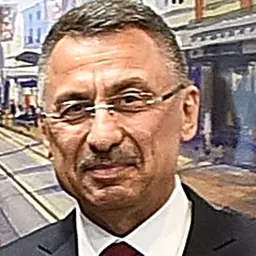
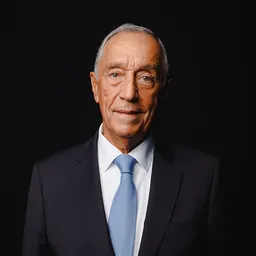
Mohamed Ennaceur (acting President of Tunisia) Emmanuel Macron (President of France) Felipe VI (King of Spain) Marcelo Rebelo de Sousa (President of Portugal) George Vella (President of Malta) Albert II (Prince of Monaco) Joachim Gauck (former President of Germany) Simonetta Sommaruga (Swiss Federal Councillor) Abdelkader Bensalah (President of Algeria) Mahmoud Abbas (President of Palestine) Fayez al-Sarraj (Chairman of the Presidential Council of Libya) Tamim bin Hamad Al Thani (Emir of Qatar) Ghassan Salame (Deputy Secretary General of the United Nations) Ahmed Aboul Gheit (Secretary General of the Arab League) Taïeb Baccouche (Secretary General of the Arab Maghreb Union) Prince Moulay Rachid of Morocco Hamad bin Mohammed Al Sharqi (Emir of Fujairah) Fuat Oktay (Vice President of Turkey) Stéphane Dion (Special Envoy of the Prime Minister of Canada) Ulrich Brechbuhl (Counselor of the United States Department of State).
A procession took place from the Carthage Palace to Jellaz Cemetery, where he was buried. Abdullah II (King of Jordan) also came to Tunisia on 29 July to offer condolences to the acting President of Tunisia Mohamed Ennaceur and to Essebsi's family.
Personal life Essebsi married Chadlia Saïda Farhat on 8 February 1958. The couple had four children: two daughters, Amel and Salwa, and two sons, Mohamed Hafedh and Khélil.
His wife died on 15 September 2019, aged 83, nearly two months after her husband.
Honours and awards National honours Ribbon bar Honours Order of Independence v. 1959 (Tunisia) - ribbon bar
Foreign honours Coat of Arms of Beji Caid Essebsi as Knight of the Collar of the Order of the Seraphim.
Awards Honorary Degree from Paris-Sorbonne University (2015) Founder's Award of International Crisis Group (2015) Freedom of the City of Amman (2015) Medal of Arab tourism (2017) Tunisian Politician of the Year (2017) Leadership Award of Global Hope Coalition (2018)
Publications Bourguiba : le bon grain et l'ivraie, éd. Sud Éditions, Tunis, 2009, La Tunisie : la démocratie en terre d'islam (with Arlette Chabot), éd. Plon, Paris, 2016
Gallery
Don’t just read it —
keep it.
Full-length biographies made to live with: read them, listen on the way to work, watch them tonight.
- E-book
- Audio
- Video
Instant download · yours to keep · every purchase keeps this site free
Important facts
Family & relationships
People in Beji Caid Essebsi's life
Named in this biography and alive at the same time






Related people
Same field, nearest in time




Contemporaries
People whose lives overlapped Beji Caid Essebsi's


Frequently asked questions
Who was Beji Caid Essebsi?
Tunisian politician
When was Beji Caid Essebsi born?
Beji Caid Essebsi was born on 29 November 1926 in Sidi Bou Said.
When did Beji Caid Essebsi die?
Beji Caid Essebsi died on 25 July 2019 in Military hospital of Tunis.
What was Beji Caid Essebsi's occupation?
Beji Caid Essebsi was a politician, lawyer, diplomat and jurist.
What nationality was Beji Caid Essebsi?
Beji Caid Essebsi was Tunisian.
Sources & further reading
· Wikipedia: Beji Caid Essebsi
Cite this page
APA: Biography.guide. (2026). Beji Caid Essebsi. https://biography.guide/beji-caid-essebsi/
MLA: "Beji Caid Essebsi." Biography.guide, https://biography.guide/beji-caid-essebsi/.
Chicago: "Beji Caid Essebsi." Biography.guide. https://biography.guide/beji-caid-essebsi/.
Data last updated: 2026-09-25 · Spot an error? Report a correction.
Page generated 2026-09-27 05:13 UTC