
About Battling Levinsky
Lived 1891 – 1949 (aged 57). Battling Levinsky was an American boxer.
Barney "Battling" Levinsky (born Lebowitz; June 10, 1890 – February 12, 1949) was an American boxer who was the world light heavyweight champion from 1916 to 1920. Statistical boxing website BoxRec lists Levinsky as the #12 ranked light heavyweight of all time, while The Ring Magazine founder Nat Fleischer placed him at #9. The International Boxing Research Organization rates Levinsky as the 20th best light heavyweight ever. He was inducted into the Ring Magazine Hall of Fame in 1966, the International Jewish Sports Hall of Fame in 1982, and the International Boxing Hall of Fame in 2000.
Early life Levinsky was born in 1890 in Philadelphia, the third son of seven children of Samuel and Lena Lebrowitz, Russian Jews who had emigrated from London. His father was a tailor, and Barney shined shoes and sold newspapers after school to help his six siblings. In his earliest boxing days, he sold jewelry during the day, but boxed in the evening at the clubs in Philadelphia, probably to hide his fledgling boxing career from his parents.
Boxing career
Career beginnings
Battling Levinsky began his boxing career under the name Barney Williams. He fought his first recorded match in 1910 at Philadelphia's Diamond Lew Bailey's Broadway Athletic Club, with a first-round knockout of his opponent, Mat Ryan, who outweighed him by over sixty pounds. He received little attention until he took on "Dumb" Dan Morgan as his manager in 1913, who changed Barney's name along with his boxing fortunes. He was known for possessing incredible defensive skills, not frequently winning by knockout, but often leaving the ring at the end of a fight without having received a truly damaging blow.
Morgan came up with his name of "Battling Levinsky" to obscure the fact that Barney's boxing style was actually more defensive than aggressive in order to give his opposition the impression that he was an aggressive puncher. Some reporters speculated that Dillon's hands were still sore from his bout the previous night with Larry Williams, a very capable light heavyweight, in Philadelphia. Many of Dillon's blows were body punches, but he tried to go to the face or jaw on several occasions, often missing due to Levinsky's fluid defense. Dillon's dangerous right, which landed on a few occasions in the second, usually glanced off Levinsky's face for the remainder of the bout, as the Philadelphia fighter showed his ability to move away from Dillon's most valuable blow, while occasionally countering with rapid left jabs.
Harry Greb defeated Levinsky in a somewhat close six-round newspaper decision of a no decision bout on August 6, 1918, at Philadelphia's Shibe Park. Though the Wilkes-Barre Times Leader had Levinsky winning four of the six rounds, the majority of local papers had Levinsky winning the battle. In their ten-round bout in Buffalo on February 17, 1919, Levinsky countered and blocked well against Greb's characteristic aggressive two handed attack, and the Pittsburgh Post wrote that the contest was "one of the most brilliant big glove exhibitions ever staged", but many local papers agreed with the Buffalo Enquirer, that "Greb won by his aggressive attack."
Levinsky met future champion Jack Dempsey on November 6, 1918, and lost in Philadelphia from a third-round knockout administered by a left to the jaw. Dempsey connected on several occasions in the first two rounds, landing short rights and lefts that seriously affected his opponent. Dempsey was particularly effective with his left, which he often followed with a right to the body. Dempsey had an advantage in height, weight and reach, which he used to his benefit throughout the match. He was not bothered by Levinsky's frequently used left jabs, and set a very fast pace for Levinsky who at twenty-seven was a critical five years older. By most records, it was the first time Levinsky had ever lost a match by knockout.
Loss of light heavy title, 1920 On October 12, 1920, fifty-nine bouts later, and almost four years to the day after he took the title, he lost his championship in a fourth round knock out to France's enormously popular Georges Carpentier in Jersey City, New Jersey. Carpentier had dominated the battle, and sent Levinsky down twice for counts of eight. Struggling to rise after being counted out, the vanquished Levinsky had to be brought to his feet and partly carried to his corner by Jack Britton, who had assisted him with the bout.
Though not unique for his boxing era, Levinsky fought many of his opponents multiple times. According to historian Ken Blady, Levinsky fought Dillon a total of ten times in his career. Perhaps his worthiest opponent, Nat Fleischer once rated Dillon the third greatest Light Heavyweight of all time while boxing promoter Charley Rose placed him at #2. Levinsky met Jim Flynn, the only man to ever knock out Jack Dempsey, and heavyweight "Porky" Flynn a total of nine times.
Career record
In an era when the winners of bouts could not be decided by the votes of referees and boxing judges, and titles changed hands only in the case of a knockout, Levinsky fought all comers, including losses to future heavyweight champions Gene Tunney and Jack Dempsey.
He also fought the 1923 World Middleweight Champion Harry Greb at least three times between 1918 and 1919, successfully defending his Light Heavyweight title in each meeting. Levinsky loved to fight, although his claim to having fought close to 500 bouts has not been fully substantiated.
His official professional record: 287 bouts – won 196 (30 KOs), lost 54, drew 37.
In his early career, Levinsky was managed by Fred Douglas (1910–11) and Jack Hanlon (1911–13), and then fell primarily under the management of Dan Morgan until 1922. Al Lippe managed him in his comeback, from 1926 to 1929.
Life after boxing
After his loss to Gene Tunney on January 13, 1922, Levinsky attempted to retire from boxing and entered the Real Estate business.
Levinsky invested much of his total boxing winnings of $250,000 in real estate, but lost most of it in the Depression of the early 1930s.
After an illness of several months that had been aggravated by a car accident on January 17, Levinsky died at his home on February 12, 1949, in Philadelphia, Pennsylvania, at the age of 59. He was buried at Har Zion Cemetery.
He was inducted into the Boxing Hall of Fame in 1966, and is in both the Pennsylvania Hall of Fame and Jewish Sports Hall of Fame in Israel. unless otherwise stated.
Official record
All newspaper decisions are officially regarded as "no decision" bouts and are not counted in the win/loss/draw column.
Unofficial record
Record with the inclusion of newspaper decisions in the win/loss/draw column.
Don’t just read it —
keep it.
Full-length biographies made to live with: read them, listen on the way to work, watch them tonight.
- E-book
- Audio
- Video
Instant download · yours to keep · every purchase keeps this site free
Important facts
People in Battling Levinsky's life
Named in this biography and alive at the same time
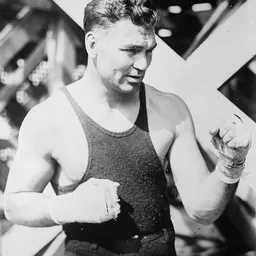

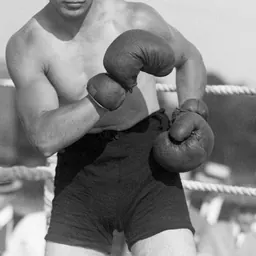




Related people
Same field, nearest in time
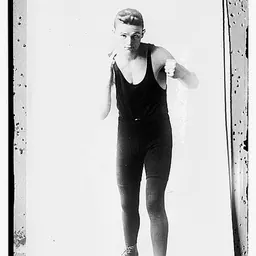

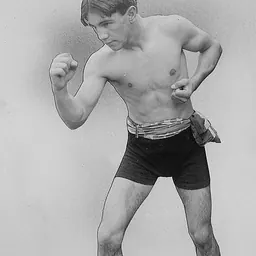


Contemporaries
People whose lives overlapped Battling Levinsky's



Frequently asked questions
Who was Battling Levinsky?
American boxer (1891–1949)
When was Battling Levinsky born?
Battling Levinsky was born on 10 June 1891 in Philadelphia.
When did Battling Levinsky die?
Battling Levinsky died on 12 February 1949 in Philadelphia.
What was Battling Levinsky's occupation?
Battling Levinsky was a boxer.
What nationality was Battling Levinsky?
Battling Levinsky was American.
Sources & further reading
· Wikipedia: Battling Levinsky
Cite this page
APA: Biography.guide. (2026). Battling Levinsky. https://biography.guide/battling-levinsky/
MLA: "Battling Levinsky." Biography.guide, https://biography.guide/battling-levinsky/.
Chicago: "Battling Levinsky." Biography.guide. https://biography.guide/battling-levinsky/.
Data last updated: 2026-09-26 · Spot an error? Report a correction.
Page generated 2026-09-27 05:15 UTC