
About Basilio Santa Cruz Pumacallao
Lived 1636 – 1710 (aged 73–74). Basilio Santa Cruz Pumacallao was a painter and artist.
A Franciscan Allegory of the Immaculate Virgin, by the workshop of Basilio de Santa Cruz Pumacallo, oil on canvas, 210 cm x 148 cm, ca. 1670–1680, in the Museo de San Francisco, Santiago, Chile Basilio Pacheco de Santa Cruz Pumacallao (1635–1710) or Basilio de Santa Cruz Puma Callao was a Peruvian painter of Quechua (Inca) and Ladino origin from Cusco, Peru. He was part of the Cuzco School, a colonial movement of indigenous painters educated in the Baroque religious painting tradition of Spain.
Background Basilio Santa Cruz is also known by his Quechua name, Pumaqallo or Pumacallo, and with Diego Quispe Tito, is regarded as one of the most famous painters in the Cusco School tradition. He lived during the colonial era of the 17th century in the Viceroyalty of Peru. His primary patron was Bishop Manuel de Mollinedo. His work combined the parallel influences of Peru and Spain and is characterized by its dynamic composition, lavish decoration, and large scale.
Initially art historians believed Basilio Santa Cruz to be a Spanish friar, but historian Jorge Cornejo Bouroncle discovered contracts commissioning paintings from the artist, revealed that he was Basilio de Santa Cruz Pumacallao, with a distinctly Quechua surname, confirming his identity as an Indian. The cathedral also owns his monumental oil paintings, Charles II and the Queen of Spain Adoring the Virgin of Almudena and Virgin of Bethlehem with Bishop Mollinedo.
His work also still stands in Convento de San Francisco del Cusco (Church and Convent of San Francisco, Cuzco) and includes "Series of the life of Saint Francis", in which only the last picture is signed by the artist. It is dated 1667. The Iglesia de la Merced has Santa Cruz's "Martyrdom of Saint Laurence", a painting with angels in the style of Spanish painter Bartolomé Esteban Murillo. Basilio Santa Cruz de Pumacallao created iconographies of arcabuceros, that is, angels with muzzle-loaded firearms, so characteristic of the Cuzco School and so different from the angels imagined in Europe at the same time.
Corpus Christi Procession in Cuzco, a late 17th-century oil on canvas painting in the collection of the Museo Arzobispol del Arte Religioso, has been attributed to him.
Don’t just read it —
keep it.
Full-length biographies made to live with: read them, listen on the way to work, watch them tonight.
- E-book
- Audio
- Video
Instant download · yours to keep · every purchase keeps this site free
Important facts
People in Basilio Santa Cruz Pumacallao's life
Named in this biography and alive at the same time


Related people
Same field, nearest in time

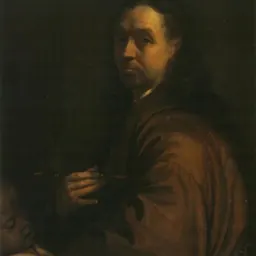
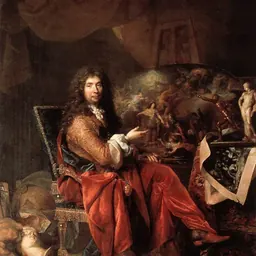
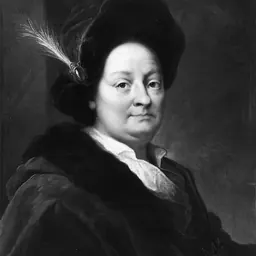
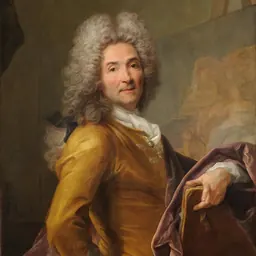

Contemporaries
People whose lives overlapped Basilio Santa Cruz Pumacallao's





Frequently asked questions
Who was Basilio Santa Cruz Pumacallao?
17th century Quechua painter from Cuzco, Peru (1635-1710)
When was Basilio Santa Cruz Pumacallao born?
Basilio Santa Cruz Pumacallao was born in 1636.
When did Basilio Santa Cruz Pumacallao die?
Basilio Santa Cruz Pumacallao died in 1710.
What was Basilio Santa Cruz Pumacallao's occupation?
Basilio Santa Cruz Pumacallao was a painter and artist.
What nationality was Basilio Santa Cruz Pumacallao?
Basilio Santa Cruz Pumacallao's recorded nationality: Viceroyalty of Peru.
Sources & further reading
· Wikipedia: Basilio Santa Cruz Pumacallao
· DBpedia: Basilio Santa Cruz Pumacallao
Cite this page
APA: Biography.guide. (2026). Basilio Santa Cruz Pumacallao. https://biography.guide/basilio-santa-cruz-pumacallao/
MLA: "Basilio Santa Cruz Pumacallao." Biography.guide, https://biography.guide/basilio-santa-cruz-pumacallao/.
Chicago: "Basilio Santa Cruz Pumacallao." Biography.guide. https://biography.guide/basilio-santa-cruz-pumacallao/.
Data last updated: 2026-09-20 · Spot an error? Report a correction.
Page generated 2026-09-27 05:01 UTC