
About Basil William Douglas, Lord Daer
Lived 1763 – 1794 (aged 30–31). Basil William Douglas, Lord Daer was a British politician.
Basil William Douglas, Lord Daer FRSE (1763-1794) was a Scottish nobleman who, in his short life, developed a reputation as an agricultural improver and an advocate of parliamentary reform. He was an active member of, among other radical societies, the "Friends of the People". He is one of the small group of people to whom Robert Burns dedicated poetry.
Early life
He was the second son of Helen Hamilton and Dunbar Douglas, 4th Earl of Selkirk. Despite the death of his parents' first son in infancy, Douglas did not become Earl as he died before his father. He was educated at the University of Edinburgh. While studying lodged with his teacher moral philosopher Dugald Stewart, one of the most important figures of the later Scottish Enlightenment, and a renowned populariser of the work of Francis Hutcheson and Adam Smith.
In 1785 (soon after its inception in 1783) Daer was elected a Fellow of the Royal Society of Edinburgh. His proposers were Dugald Stewart, James Gregory, and John Walker.
In 1786 he travelled with Dugald Stewart to his country house at Catrine in Ayrshire, and there, on 23 October, he was introduced to Robert Burns, Burns' first meeting with nobility. "Nae honest, worthy man need care,To meet with noble, youthful DaerFor he but meets a brother"
Radical political engagement
Daer broadly shared Burns's democratic sympathies. Returning in 1789 from a visit to early revolutionary France, he became a concurrent member of three associations dedicated to representative, parliamentary reform, and an important link between them: the learned Society for Constitutional Information and the more artisanal and radical London Corresponding Society and the Friends of the People Society in Scotland.
Though a strong critic of the English-Scottish union of 1707, Daer called for English and Scottish radical societies to work together 'to have mutually beneficial results: providing Scots with greater say in government while relieving you of that vermin from this country who infect your court, parliament and every establishment". At the national Convention of reform societies held in Edinburgh in December 1792 he clashed with Thomas Muir of the Friends of the People over his presentation of an address from the United Irishmen. The address (largely drawn up by William Drennan) was made acceptable to Daer and to the Convention only by redacting any suggestion of "Treason or Misprison of Treason against the Union [of Scotland] with England".
Daer's political career, however, was cut short when he died, unmarried, from tuberculosis on 5 November 1794 at Ivybridge, Devon; he was buried in Exeter Cathedral. On his death the title of Lord Daer passed to his younger brother Thomas Douglas who soon became the 5th Earl of Selkirk.
Don’t just read it —
keep it.
Full-length biographies made to live with: read them, listen on the way to work, watch them tonight.
- E-book
- Audio
- Video
Instant download · yours to keep · every purchase keeps this site free
Important facts
People in Basil William Douglas, Lord Daer's life
Named in this biography and alive at the same time
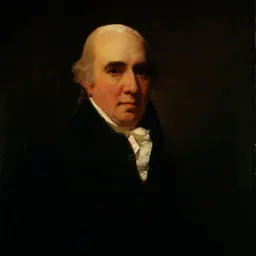




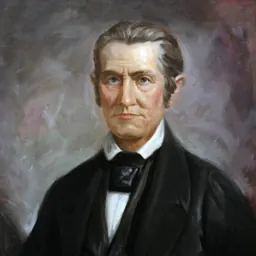
Related people
Same field, nearest in time


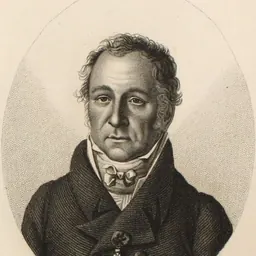
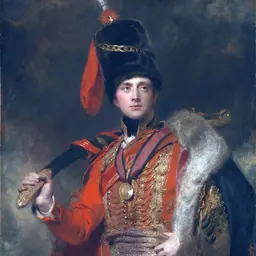

Contemporaries
People whose lives overlapped Basil William Douglas, Lord Daer's




Frequently asked questions
Who was Basil William Douglas, Lord Daer?
Scottish radical
When was Basil William Douglas, Lord Daer born?
Basil William Douglas, Lord Daer was born in 1763.
When did Basil William Douglas, Lord Daer die?
Basil William Douglas, Lord Daer died in 1794.
What was Basil William Douglas, Lord Daer's occupation?
Basil William Douglas, Lord Daer was a politician.
What nationality was Basil William Douglas, Lord Daer?
Basil William Douglas, Lord Daer was British.
Sources & further reading
· Wikipedia: Basil William Douglas, Lord Daer
· DBpedia: Basil William Douglas
Cite this page
APA: Biography.guide. (2026). Basil William Douglas, Lord Daer. https://biography.guide/basil-william-douglas-lord-daer/
MLA: "Basil William Douglas, Lord Daer." Biography.guide, https://biography.guide/basil-william-douglas-lord-daer/.
Chicago: "Basil William Douglas, Lord Daer." Biography.guide. https://biography.guide/basil-william-douglas-lord-daer/.
Data last updated: 2026-09-26 · Spot an error? Report a correction.
Page generated 2026-09-27 05:15 UTC