
Basil Thomson
British civil servant and writer
About Basil Thomson
Lived 1861 – 1939 (aged 77). Basil Thomson was a British colonial administrator, police officer, writer, barrister and local government officer.
Sir Basil Home Thomson, (21 April 1861 – 26 March 1939) was a British colonial administrator and prison governor, who was head of Metropolitan Police CID during World War I. This gave him a key role in arresting wartime spies, and he was closely involved in the prosecution of Mata Hari, Sir Roger Casement and many Irish and Indian nationalists. His equating of Jews with Bolshevism led to accusations of anti-semitism. Thomson was also a successful novelist.
Early life Thomson was born in Oxford, where his father, William Thomson (who would later become Archbishop of York), was provost of The Queen's College. Thomson was educated at Worsley's School in Hendon and Eton College, and then attended New College, Oxford, where a fellow undergraduate was Montague John Druitt, the man named as the prime suspect in the Jack the Ripper case by Chief Constable Melville Macnaghten in a Scotland Yard document dated 1894. (Thomson replaced Macnaghten as head of CID at Scotland Yard in 1913.) Thomson ended his university studies after two terms, after suffering bouts of depression, and spent some time from 1881 to 1882 in the United States, working as a farmer in Iowa.
Colonial service In 1883, with the promise of marriage to a Grace Webber should he be financially secure, Thomson secured a cadet position at the Colonial Office, where he assisted Sir William Des Vœux, then Governor of Fiji. Arriving in Fiji in early 1884, he set about learning the Fijian and Tongan languages while appointed as a stipendiary magistrate throughout the islands. When Sir William MacGregor was appointed administrator of British New Guinea, Thomson joined his staff until he was invalided back to England after contracting malaria. . He embarked on a career as a writer, drawing on his experiences in the South Sea Islands to produce South Sea Yarns (1894; written in Fiji), The Diversions of a Prime Minister (1894, about his government work in Tonga), and The Indiscretions of Lady Asenath (1898). Basil Thomson used his Fijian assistants to organise the first ever census of Fijian marriage on the largest island, Viti Levu. He found that Fijian men did not marry, as claimed in the specialised literature, their mother's brother's daughter, but married any woman and recalculated her kinship status after the marriage so as to address her by the term meaning mother's brother's daughter.
Prison governorship In the mid-1890s, Thomson read for the bar examinations at the Inner Temple, and was admitted to the bar in 1896. Instead of becoming a barrister, Thomson accepted the position of deputy governor at HM Prison Liverpool, after his name was suggested for the post due to a personal acquaintance with Sir Evelyn Ruggles-Brise, a fellow Old Etonian who had stayed with Thomson in Tonga. Over the next twelve years, he served as governor of Northampton, Cardiff, Dartmoor, and Wormwood Scrubs prisons. From 1908 to 1913, he served as secretary of the Prison Commission.
Metropolitan Police In June 1913, Thomson was appointed Assistant Commissioner "C" (Crime) of London's Metropolitan Police, which made him the head of the Criminal Investigation Department (CID) at New Scotland Yard. When World War I broke out in 1914, the CID found itself acting as the enforcement arm for Britain's counter-intelligence apparatus: while the newly formed Secret Service Bureau and the intelligence arms of the War Office and the Admiralty, collected intelligence on suspected spies in Britain, they had no arrest powers. As head of CID, Thomson was involved in the arrests in several high-profile espionage cases, including Lieutenant Carl Hans Lody and establishing himself a reputation as a "spycatcher". Thomson himself refers to the transcript in his 1922 book Queer People).
Thomson's work as Assistant Commissioner of Scotland Yard Involved a wide range of investigations. His natural conservatism was given full throttle against suffragettes, then against spies from Imperial Germany and its allies, then against Irish nationalists, and finally against British Marxists. Thomson was involved with the spreading of public awareness of the "Black Diaries" used against Sir Roger Casement to prevent public support for a reduction of Casement's death sentence for high treason in 1916.
More controversially, the large number of Jews among the Bolsheviks before Stalin's purges led some to think he equated Bolshevism with Jews. He wrote anti-Semiticly shaded articles for a newspaper, the Whitechapel Gazette, owned by the highly questionable social figure Maundy Gregory. He burlesqued such views in his 1925 Sherlock Holmes spoof, "Mr Pepper Investigates", especially in Chapter 6, 'Blackmailers'. Thomson was appointed Companion of the Order of the Bath (CB) in 1916 and Knight Commander of the Order of the Bath (KCB) in 1919.
In 1919, while remaining Assistant Commissioner (Crime), he was appointed Director of Intelligence at the Home Office, in overall charge of every intelligence agency in the United Kingdom. From 30 April 1919 he issued a fortnightly Report on Revolutionary Organisations in the United Kingdom from his offices in Scotland House. One of Thomson's Irish agents John Charles Byrnes was a double agent within the IRA who identified Michael Collins but who was executed by the IRA in March 1920. In 1921 he fell out with Lloyd George and agreed to resign from his Metropolitan Police and Home Office roles, taking effect on 30 November that year. The reasons for this remain mysterious.
The Hyde Park incident In December 1925, Thomson was arrested in London's Hyde Park, and charged with "committing an act in violation of public decency" with a young woman, Miss Thelma de Lava. Thomson rejected the charges, insisting that he was engaged in conversation with the woman for the purposes of research for a book he was writing on London vice; found guilty of public indecency, he was fined £5 . The story he gave the court (which his barrister, Sir Henry Curtis-Bennett, probably did not support) sounded totally peculiar. Thomson apparently lied (or told a half-truth) regarding his name, calling himself "Home Thomson" when he was arrested with de Lava. "Home" was one of his middle names. However he was recognised by the police. He tried alternately to bluster and to offer a vague bribe to the constables. When he presented his version in the courtroom he said he was researching a book on the danger of left wing agitators in England and he was together with de Lava waiting for the speech to begin. Had this been true, Thomson should have revealed in court who the orator was he was waiting for. He kept refusing, which, with the background of de Lava as a prostitute, forfeited the credibility that Thomson thought would save him.
Family Thomson had three children:
Enid Zaina Thomson Lieutenant-Colonel Vivian Home Seymer, DSO, MC (17 October 1894 – 7 January 1967), born Vivian Home Thomson, whose name was legally changed by royal licence on 3 November 1919. Amherst Felix Basil Home Thomson (1911–?)
Footnotes
Don’t just read it —
keep it.
Full-length biographies made to live with: read them, listen on the way to work, watch them tonight.
- E-book
- Audio
- Video
Instant download · yours to keep · every purchase keeps this site free
Important facts
People in Basil Thomson's life
Named in this biography and alive at the same time




Related people
Same field, nearest in time
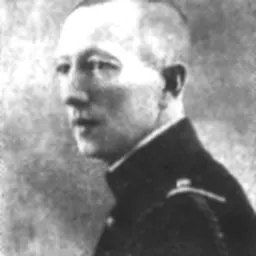




Contemporaries
People whose lives overlapped Basil Thomson's
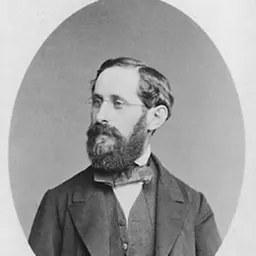
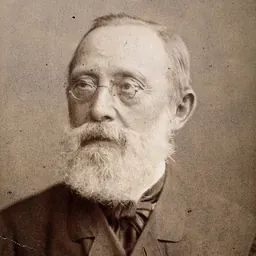

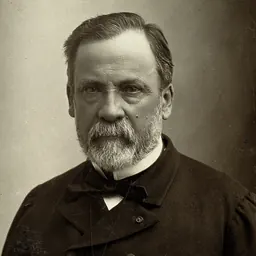
Frequently asked questions
Who was Basil Thomson?
British civil servant and writer
When was Basil Thomson born?
Basil Thomson was born on 21 April 1861 in Oxford.
When did Basil Thomson die?
Basil Thomson died on 26 March 1939 in London Borough of Richmond upon Thames.
What was Basil Thomson's occupation?
Basil Thomson was a colonial administrator, police officer, writer, barrister and local government officer.
What nationality was Basil Thomson?
Basil Thomson was British.
Sources & further reading
Cite this page
APA: Biography.guide. (2026). Basil Thomson. https://biography.guide/basil-thomson/
MLA: "Basil Thomson." Biography.guide, https://biography.guide/basil-thomson/.
Chicago: "Basil Thomson." Biography.guide. https://biography.guide/basil-thomson/.
Data last updated: 2026-09-20 · Spot an error? Report a correction.
Page generated 2026-09-27 05:34 UTC