
Basil Kiiza Bataringaya
Ugandan politician
About Basil Kiiza Bataringaya
Lived 1927 – 1972 (aged 44–45). Basil Kiiza Bataringaya was an Ugandan politician, minister and leader of opposition (uganda).
Edit Basil Kiiza Bataringaya (1927 – 18 September 1972) was a Ugandan politician and statesman who served as the interior minister of Uganda from 1964 to 1971. He was the Leader of the Opposition at the beginning of the Milton Obote's government, but changed parties and was appointed to the powerful role of Minister of Internal Affairs by Obote. He was imprisoned, tortured, and was one of the first political prisoners to be executed by Idi Amin's regime.
Early life Birth Basil Kiiza Bataringaya was born in 1927, in the county of Igara, in Bushenyi District of the Ugandan Protectorate. His father was Marko Kiiza, who was the Ssaza Chief of Bunyaruguru at the time. The Ankole Agreement set the boundaries of the Bunyaruguru Ssaza as "On the north-west by the Dweru Channel; on the east by the Chambura River, the recognized Bunyaruguru-lgara and Kamsura-Igara boundaries; on the south by the Rwenchwera River; on the west by Lake Albert, and gave Bataringaya's father a powerful position in southwestern Uganda during the early 20th century.
Education Bataringaya attended St. Leo's College, Kyegobe, a residential boys' secondary school of Catholic curriculum, located in Fort Portal, Kabarole District in the Western Region of Uganda from 1945 to 1947. He then attended the Government Teacher Training College of Uganda (TTC) from 1948 to 1949. He then attended Makerere University, Uganda's top university, from 1953 to 1956. Bataringaya quickly became popular within the Democratic Party of Uganda that controlled government following its win of 44 of the 82 contested seats, and Bataringaya was appointed to be the first Minister of Local Government for Uganda's first post-colonial independent government under Benedicto Kiwanuka.
Leader of the Opposition Following agreements made by 48 Ugandan representatives, including prominent Ugandan politician A.G. Mehta, at a September 1961 Constitutional Convention meeting in London, England, the Ugandan Legislative Council of the transitional government between the colonial-era Uganda Protectorate and the Republic of Uganda became the Parliament of Uganda, which was then formally dissolved so that the 1962 Ugandan general election could occur on 25 April 1962, the first elections held under an entirely independent Ugandan government. Bataringaya ran again as a member of the Democratic Party of Uganda in his Ankole constituency and was reelected. Bataringaya lost his ministerial positions as a result of the election, as the Ugandan People's Congress won 37 of the 82 seats and formed an alliance with the Kabaka Yekka party that won 21 of 82 seats, giving this new alliance 58 of the 82 seats in the Parliament of Uganda, taking control away from the Democratic Party of Uganda who won 24 of the 82 seats and became the official party of the opposition.
Bataringaya was elected Secretary General of the Democratic Party of Uganda in 1961, and became the second most powerful member of the Democratic Party after the Prime Minister of the transitional government between the colonial-era Uganda Protectorate and the Republic of Uganda, Benedicto Kiwanuka. Benedicto Kiwanuka did not run for the Parliament of Uganda in the 1962 Ugandan general election and thus was ineligible for any parliamentarian positions in the first government of the Republic of Uganda. As the highest-ranking member of the Democratic Party of Uganda still in the Parliament of Uganda, Bataringaya became the second ever Leader of the Ugandan Opposition, replacing newly elected prime minister Apollo Milton Obote, and the first ever Ugandan Opposition Leader of the new Republic of Uganda.
As Opposition Leader, Bataringaya worked as the chief representative of the Democratic Party of Uganda which was operating as the resistance to the Apollo Milton Obote regime and the joint Ugandan People's Congress and Kabaka Yekka government. Bataringaya had little power as opposition leader, but worked during his tenure as Leader of the Ugandan Opposition to protect opposition MPs from censorship, arrest, and violence. His most significant act was to protect Democratic Party MP Vincent Rwamwaro of the Toro East constituency from an arrest that Bataringaya described as a political arrest. On 16 August 1962, MP Vincent Rwamwaro was arrested in his home at 6:20 am, tied with rope, thrown in the back of a pick-up truck, and sent in only his underwear and sandals before a magistrate in the court in Nakawa on charges of failing to pay his graduation tax, a charge Rwamwaro denied.
Bataringaya quickly earned the trust of Prime Minister Apollo Milton Obote, and earned a spot in Obote's small inner circle of trusted advisors and amassed a large policy portfolio as one of the most powerful ministers in the Obote government. He also represented the Ugandan government to the media of the world following the kidnapping of Brian Lea, a British diplomat who was kidnapped in Uganda in 1970. As a high-profile Catholic involved in the administration, Bataringaya also served as a liaison between the Catholic Church of Uganda and the Obote regime, helping open Catholic hospitals and Catholic schools throughout Uganda.
Also as one of Obote's five most trusted ministers, Bataringaya was in charge of putting out numerous crises throughout his tenure as Minister of Internal Affairs. This use of troops was criticized and faced resistance, and Bataringaya took much of the blame as the implementer of the crisis and the killer of several other Buganda Kabaka loyalists.
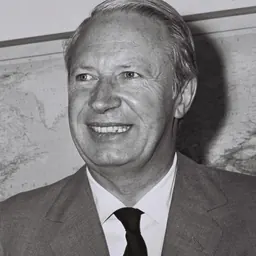
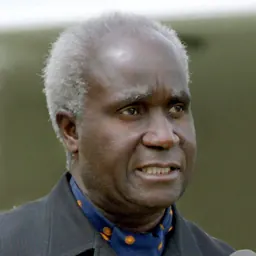
Idi Amin was seen as a threat to the Obote government, and Apollo Milton Obote had Basil Kiiza Bataringaya put in charge of the last minute attempted covert arrest of Amin. President Obote went to a January 1971 conference with British Conservative Prime Minister Edward Heath alongside other African leaders like President Julius Nyerere of Tanzania and President Kenneth Kaunda of Zambia to discourage Prime Minister Heath from lifting the ban that the United Kingdom had on selling arms to the apartheid government of South Africa. While there, Obote learned about another attempt on his life by Amin, and tasked Basil Bataringaya to lead an 'assassination' committee that ultimately set out to arrest Amin. On 28 January 1971, three days after the coup d'état, Idi Amin brought fifty-five political prisoners imprisoned by the Apollo Milton Obote government to the Entebbe International Airport and freed them, while also bringing Bataringaya to the event in an army Jeep under armed guard, and was the only political prisoner not freed despite Amin's comment that "you need not fear for your safety since the new government is more interested in uniting Ugandans than anything else". Bataringaya was personally interrogated by Amin, where he likely revealed the other officers working to arrest Amin on 24 January 1971.
Death While in detention, Bataringaya was tortured and was imprisoned in Makindye Prison. Bataringaya was then sent to the outskirts of the town of Mbarara, where he was dismembered alive. His severed head was then fixed on a pole, and paraded around the town of Mbarara until it was ultimately displayed in the Mbarara barracks. A photograph of Amin's soldiers leading Bataringaya on a military Jeep to his execution was taken and circulated, one of the few photographs still existing that show proof of Idi Amin executing political opponents. Edith Mary Bataringaya traveled frequently with her husband on his international trips representing Uganda abroad, traveling to the United States with him. Edith Mary Bataringaya continued her husband's work with the Catholic Church in Uganda after Basil Kiiza Bataringaya's murder. The children were orphaned in 1977 as both parents were killed by the Amin regime. Edith Mary Bataringaya's brother, Dr. Emmanuel Kaijuka who later served as the Ugandan Commissioner of Health, raised the children who were still young when they were orphaned following their parents' murders. In 1985, the eight children reunited for the first time since their mother's murder in the town of Muyenga, Uganda. Their children all went on to successful careers as of 2003: Grace Bataringaya is a veterinary doctor and events manager, Kenneth Bataringaya is a businessman who manages the family estate, Dr. Jacqueline Bataringaya is a doctor for Action Aid working in Harare, Zimbabwe, Janette Bataringaya is working in Public Health in Boston, Massachusetts in the United States, Dr. Juliet Bataringaya is a doctor working for the World Health Organization, and Dr. Aisha Bataringaya-Sekalala (née Bataringaya) was studying at the University of Western Cape in South Africa.
Religious views Bataringaya was a Catholic and involved with the Catholic Church in Uganda throughout his career in both academia and politics. Bataringaya attended a Catholic school at St. Leo's College, Kyegobe in Tooro, and eventually ran all Catholic schools in Ankole before entering politics. Bataringaya also acted as a liaison between the Catholic Church in Uganda and the Uganda government as well, working with the Catholic Church in Uganda to build schools and hospitals throughout Uganda.
Don’t just read it —
keep it.
Full-length biographies made to live with: read them, listen on the way to work, watch them tonight.
- E-book
- Audio
- Video
Instant download · yours to keep · every purchase keeps this site free
Important facts
Family & relationships
People in Basil Kiiza Bataringaya's life
Named in this biography and alive at the same time




Related people
Same field, nearest in time






Contemporaries
People whose lives overlapped Basil Kiiza Bataringaya's

Frequently asked questions
Who was Basil Kiiza Bataringaya?
Ugandan politician
When was Basil Kiiza Bataringaya born?
Basil Kiiza Bataringaya was born in 1927 in Bushenyi District, Kantō region, Uganda Protectorate.
When did Basil Kiiza Bataringaya die?
Basil Kiiza Bataringaya died on 18 September 1972 in Mbarara City.
What was Basil Kiiza Bataringaya's occupation?
Basil Kiiza Bataringaya was a politician, minister and leader of opposition (uganda).
What nationality was Basil Kiiza Bataringaya?
Basil Kiiza Bataringaya was Ugandan.
Sources & further reading
· Wikipedia: Basil Kiiza Bataringaya
· DBpedia: Basil Kiiza Bataringaya
Cite this page
APA: Biography.guide. (2026). Basil Kiiza Bataringaya. https://biography.guide/basil-kiiza-bataringaya/
MLA: "Basil Kiiza Bataringaya." Biography.guide, https://biography.guide/basil-kiiza-bataringaya/.
Chicago: "Basil Kiiza Bataringaya." Biography.guide. https://biography.guide/basil-kiiza-bataringaya/.
Data last updated: 2026-09-25 · Spot an error? Report a correction.
Page generated 2026-09-27 05:11 UTC