
Basil J. Hiley
British quantum physicist
About Basil J. Hiley
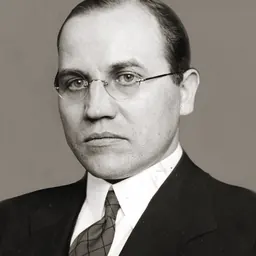
Lived 1935 – 2025 (aged 89). Basil J. Hiley was a British quantum physicist, theoretical physicist and physicist.
Basil James Hiley (15 November 1935 – 25 January 2025) was a British physicist and professor emeritus of the University of London.
Long-time colleague of David Bohm, Hiley is known for his work with Bohm on implicate orders and for his work on algebraic descriptions of quantum mechanics in terms of underlying symplectic and orthogonal Clifford algebras. Hiley co-authored the book The Undivided Universe with David Bohm, which is considered the main reference for Bohmian mechanics.
The work of Bohm and Hiley has been characterized as primarily addressing the question "whether we can have an adequate conception of the reality of a quantum system, be this causal or be it stochastic or be it of any other nature" and meeting the scientific challenge of providing a mathematical description of quantum systems that matches the idea of an implicate order.
Background Basil James Hiley was born November 15, 1935 in Burma, where his father, James Hiley, worked for the military of the British Raj. He moved to Hampshire, England, at the age of twelve, where he attended secondary school. His interest in science was stimulated by his teachers at secondary school and by books, in particular The Mysterious Universe by James Hopwood Jeans and Mr Tompkins in Wonderland by George Gamow.
Hiley performed undergraduate studies at King's College London.
Hiley first met David Bohm during a week-end meeting organized by the student society of King's College at Cumberland Lodge, where Bohm held a lecture. In 1961 Hiley was appointed assistant lecturer at Birkbeck College, where Bohm had taken the chair of Theoretical Physics shortly before. He reports that during the seminars he held together with Roger Penrose he was particularly fascinated by John Wheeler's "sum over three geometries" ideas that he was using to quantise gravity. — Hiley, Initially Bohm's model of 1952 did not feature in their discussions; this changed when Hiley asked himself whether the "Einstein-Schrödinger equation", as Wheeler called it, might be found by studying the full implications of that model.
In 1995, Basil Hiley was appointed to the chair in physics at Birkbeck College at the University of London. He was awarded the 2012 Majorana Prize in the category The Best Person in Physics for the algebraic approach to quantum mechanics and furthermore in recognition of "his paramount importance as natural philosopher, his critical and open minded attitude towards the role of science in contemporary culture".
Hiley died on 25 January 2025, at the age of 89.
Work
Quantum potential and active information In the 1970s Bohm, Hiley and co-workers at Birkbeck College expanded further on the theory presented by David Bohm in 1952. They suggested to re-express the field equations of physics in a way that is independent of their spacetime description. They proposed that the fundamental new quality introduced by quantum physics is non-locality. In 1975, they presented how in the causal interpretation of the quantum theory introduced by Bohm in 1952 the concept of a quantum potential leads to the notion of an "unbroken wholeness of the entire universe", and they proposed possible routes to a generalization of the approach to relativity by means of a novel concept of time. By performing numeric computations on the basis of the quantum potential, Chris Philippidis, Chris Dewdney and Basil Hiley used computer simulations to deduce ensembles of particle trajectories that could account for the interference fringes in the double-slit experiment and worked out descriptions of scattering processes. Their work renewed the interests of physicists in the Bohm interpretation of quantum physics. In 1979, Bohm and Hiley discussed the Aharonov–Bohm effect which had recently found experimental confirmation. They called attention to the importance of the early work of Louis de Broglie on pilot waves, emphasizing his insight and physical intuition and stating that developments based on his ideas aimed at a better understanding than mathematical formalism alone. They offered ways of understanding quantum non-locality and the measurement process, interference and quantum tunneling.
They showed how in the Bohm model, introducing the concept of active information, the measurement problem and the collapse of the wave function, could be understood in terms of the quantum potential approach, and that this approach could be extended to relativistic quantum field theories. They described the measurement process and the impossibility of measuring position and momentum simultaneously as follows: "The ѱ field itself changes since it must satisfy the Schrödinger equation, which now contains the interaction between the particle and apparatus, and it is this change that makes it impossible to measure position and momentum together". The collapse of the wave function of the Copenhagen interpretation of quantum theory is explained in the quantum potential approach by the demonstration that information can become inactive in the sense that from then on "all the packets of the multi-dimensional wave function that do not correspond to the actual result of measurement have no effect on the particle".
Summarizing Bohm's and his own interpretation, Hiley has explained that the quantum potential "does not give rise to a mechanical force in the Newtonian sense. Thus while the Newtonian potential drives the particle along the trajectory, the quantum potential organises the form of the trajectories in response to the experimental conditions." The quantum potential can be understood as an aspect of "some kind of self-organising process" involving a basic underlying field. The quantum potential (or information potential) links the quantum system under investigation to the measuring apparatus, thereby giving that system a significance within the context defined by the apparatus. It acts on each quantum particle individually, each particle influencing itself. Hiley cites the wording of Paul Dirac: "Each electron only interferes with itself" and adds: "Somehow the 'quantum force' is a 'private' force. It thus cannot be regarded as a distortion of some underlying sub-quantum medium as was originally suggested by de Broglie". It is independent of field intensity, thus fulfilling a precondition for non-locality, and it carries information about the whole experimental arrangement in which the particle finds itself.
Relativistic quantum field theory With Pan N. Kaloyerou, Hiley extended the quantum potential approach to quantum field theory in Minkowski spacetime. Bohm and Hiley proposed a new interpretation of the Lorentz transformation and considered the relativistic invariance of a quantum theory based on the notion of beables, a term coined by John Bell to distinguish these variables from observables. Hiley and a co-worker later extended the work further to curved spacetime. Bohm and Hiley demonstrated that the non-locality of quantum theory can be understood as limit case of a purely local theory, provided the transmission of active information is allowed to be greater than the speed of light, and that this limit case yields approximations to both quantum theory and relativity.
The Bohm–Hiley approach to relativistic quantum field theory (RQFT) as presented in Bohm and Hiley's book Undivided Universe and in the work of their co-worker Kaloyerou
Implicate orders, pre-space and algebraic structures Much of Bohm and Hiley's work in the 1970s and 1980s has expanded on the notion of implicate, explicate and generative orders proposed by Bohm. This concept is described in the books Wholeness and the Implicate Order by Bohm and Science, Order, and Creativity by Bohm and F. David Peat. The theoretical framework underlying this approach has been developed by the Birkbeck group over the last decades. In 2013 the research group at Birkbeck summarized their over-all approach as follows: "It is now quite clear that if gravity is to be quantised successfully, a radical change in our understanding of spacetime will be needed. We begin from a more fundamental level by taking the notion of process as our starting point. Rather than beginning with a spacetime continuum, we introduce a structure process which, in some suitable limit, approximates to the continuum. We are exploring the possibility of describing this process by some form of non-commutative algebra, an idea that fits into the general ideas of the implicate order. In such a structure, the non-locality of quantum theory can be understood as a specific feature of this more general a-local background and that locality, and indeed time, will emerge as a special feature of this deeper a-local structure."
As of 1980, Hiley and his co-worker Fabio A. M. Frescura expanded on the notion of an implicate order by building on the work of Fritz Sauter and Marcel Riesz who had identified spinors with minimal left ideals of an algebra. The identification of algebraic spinors with minimal left ideals, which can be seen as a generalization of the ordinary spinor was to become central to the Birkbeck group's work on algebraic approaches to quantum mechanics and quantum field theory. Frescura and Hiley considered algebras that had been developed in the 19th century by the mathematicians Hermann Grassmann, William Rowan Hamilton, and William Kingdon Clifford. As Bohm and his colleagues emphasized, in such an algebraic approach operators and operands are of the same type: "there is no need for the disjoint features of the present mathematical formalism [of quantum theory], namely the operators on the one hand and the state vectors on the other. Rather, one uses only a single type of object, the algebraic element". More specifically, Frescura and Hiley showed how "the states of quantum theory become elements of the minimal ideals of the algebra and [..] the projection operators are just the idempotents which generate these ideals". With their approach based on algebraic idempotents, Bohm and Hiley "incorporate Bohr's notion of 'wholeness' and d'Espagnat's concept of 'non-separability' in a very basic way". They extended this approach further to relativistic phase space by applying the phase space interpretation of Mario Schönberg to the Dirac algebra. Their approach was subsequently applied by Peter R. Holland to fermions and by Alves O. Bolivar to bosons.
In 1984, Hiley and Frescura discussed an algebraic approach to Bohm's notion of implicate and explicit orders: the implicate order is carried by an algebra, the explicate order is contained in the various representations of this algebra, and the geometry of space and time appear at a higher level of abstraction of the algebra. Bohm and Hiley expanded on the concept that "relativistic quantum mechanics can be expressed completely through the interweaving of three basic algebras, the bosonic, the fermionic and the Clifford" and that in this manner "the whole of relativistic quantum mechanics can also be put into an implicate order" as suggested in earlier publications of David Bohm from 1973 and 1980. On this basis, they expressed the twistor theory of Penrose as a Clifford algebra, thereby describing structure and forms of ordinary space as an explicit order that unfolds from an implicate order, the latter constituting a pre-space.
Quantum Cloud by Antony Gormley, influenced by an exchange of thoughts among Hiley and Gormley on algebra and pre-space. The notion of another order underlying space was not new. Along similar lines, both Gerard 't Hooft and John Archibald Wheeler, questioning whether space-time was the appropriate starting-point for describing physics, had called for a deeper structure as starting point. In particular, Wheeler had proposed a notion of pre-space which he called pregeometry, from which spacetime geometry should emerge as a limiting case. Bohm and Hiley underlined Wheeler's view, yet pointed out that they did not build on the foam-like structure proposed by Wheeler and by Stephen Hawking These features can be considered to be independent only up to a certain level of approximation in which certain criteria are fulfilled. In this picture, the classical limit for quantum phenomena, in terms of a condition that the action function is not much greater than the Planck constant, indicates one such criterion. Bohm and Hiley used the word holomovement for the underlying activity in the various orders together. underlies Bohm and Hiley's efforts to establish algebraic structures that relate to quantum physics and to find an ordering that describes thought processes and the mind.
They investigated non-locality of spacetime also in terms of the time dimension. In 1985, Bohm and Hiley showed that Wheeler's delayed-choice experiment does not require the existence of the past to be limited to its recording in the present. Hiley and R. E. Callaghan later confirmed this view, which stands in stark contrast to Wheeler's earlier statement that "the past has no existence except as it is recorded in the present", by a detailed trajectory analysis for delayed choice experiments and by an investigation into welcher Weg experiments. Hiley and Callaghan in fact showed that, an interpretation of Wheeler's delayed choice experiment based on Bohm's model, the past is an objective history that cannot be altered retroactively by delayed choice (see also: Bohmian interpretation of Wheeler's delayed choice experiment).
Bohm and Hiley sketched also how Bohm's model could be treated under the point of view of statistical mechanics, and their joint work on this was published in their book (1993) and a subsequent publication (1996).
Hiley has pursued work on algebraic structures in quantum theory throughout his scientific career. After Bohm's death in 1992, he published several papers on how different formulations of quantum physics, including Bohm's, can be brought in context. Hiley also pursued further work on the thought experiments set out by the EPR paradox of Albert Einstein Boris Podolsky and Nathan Rosen and by Hardy's paradox of Lucien Hardy, in particular considering the relation to special relativity.
In the late 1990s, Hiley expanded further on the notion he had developed with Bohm on the description of quantum phenomena in terms of processes. Hiley and his co-worker Marco Fernandes interpret time as an aspect of process that should be represented by a mathematically appropriate description in terms of an algebra of process. For Hiley and Fernandes, time should be considered in terms of "moments" rather than extensionless points in time, in conventional terms implying an integration over time, recalling also that from the "characteristic matrix" of Bohm and Hiley showed that the Bohm interpretation of quantum physics need not rely on a formulation in terms of ordinary space ( -space), but can be formulated, alternatively, in terms of momentum space ( -space).
quote= — Brown and Hiley (2000) ). These shadow phase space descriptions include the descriptions in terms of the x-space of the Bohm trajectory description, of the quantum phase space, and of the p-space. In the classical limit, the shadow phase spaces converge to one unique phase space.
The set of two operator equations, first derived and published by Brown and Hiley in 2000, was re-derived
Hiley has emphasized that quantum processes cannot be displayed in phase space for reason of lacking commutativity. that the quasi-probability distribution can be understood as the density matrix re-expressed in terms of a mean position and momentum of a "cell" in phase space, and furthermore revealed that the Bohm interpretation arises from the dynamics of these "cells" if the particle is considered to be at the center of the cell. Hiley pointed out that the equations defining the Bohm approach can be taken to be implicit in certain equations of the 1949 publication by José Enrique Moyal on the phase space formulation of quantum mechanics; he emphasized that this link between the two approaches could be of relevance for constructing a quantum geometry. More succinctly yet, Hiley and Gosson later stated: The classical world lives in a symplectic space, while the quantum world unfolds in the covering space. In mathematical terms, the covering group of the symplectic group is the metaplectic group, and De Gosson summarizes the mathematical reasons for the impossibility of constructing simultaneous position and momentum representations as follows: "Hiley's 'shadow phase space' approach is a reflection of the fact that we cannot construct a global chart for the metaplectic group, when it is viewed as a Lie group, that is, as a manifold equipped with a continuous algebraic structure". In Hiley's framework, the quantum potential arises as "a direct consequence of projecting the non-commutative algebraic structure onto a shadow manifold" and as a necessary feature which ensures that both energy and momentum are conserved. Similarly, the Bohm and the Wigner approach are shown to be two different shadow phase space representations.
With these results, Hiley gave evidence to the notion that the ontology of implicate and explicate orders could be understood as a process described in terms of an underlying non-commutative algebra, from which spacetime could be abstracted as one possible representation.
Here emerges, in Hiley's words, "a radically new way of looking at the way quantum processes enfold in time", built on the work of Bohm and Hiley in the 1980s: and by Marco Fernandes in his PhD thesis of 1995, who had constructed orthogonal Clifford algebras for certain pairs of dual Grassmann algebras. Adopting a similar approach, Hiley constructed algebraic spinors as minimal left ideals of a process algebra built on the Kauffman's notion of distinction. By nature of their construction, these algebraic spinors are both spinors and elements of that algebra. Whereas they can be mapped (projected) into an external Hilbert space of ordinary spinors of the quantum formalism in order to recover the conventional quantum dynamics, Hiley emphasizes that the dynamic algebraic structure can be exploited more fully with the algebraic spinors than with the ordinary spinors. In this aim, Hiley introduced a Clifford density element expressed in terms of left and right minimal ideals of a Clifford algebra, analogous to the density matrix expressed as an outer product in bra–ket notation in conventional quantum mechanics. On this basis Hiley showed how three Clifford algebras Cl0,1, Cl3,0, Cl1,3 form a hierarchy of Clifford algebras over the real numbers that describe the dynamics of the Schrödinger, Pauli and Dirac particles, respectively. The technique developed by Hiley and his co-workers demonstrates "that quantum phenomena per se can be entirely described in terms of Clifford algebras taken over the reals without the need to appeal to specific representation in terms of wave functions in a Hilbert space. This removes the necessity of using Hilbert space and all the physical imagery that goes with the use of the wave function".
Hiley refers to Bohm's ink droplet analogy for a rather easily understandable analogy of the notion of implicate and explicate order. Regarding the algebraic formulation of the implicate order, he has stated: "An important new general feature that emerges from these considerations is the possibility that not everything can be made explicit at a given time" and adding: 'Within the Cartesian order, complementarity seems totally mysterious. There exists no structural reason as to why these incompatibilities exist. Within the notion of the implicate order, a structural reason emerges and provides a new way of searching for explanations."
Hiley has worked with Maurice A. de Gosson on the relation between classical and quantum physics, presenting a mathematical derivation of the Schrödinger equation from Hamiltonian mechanics.
Observed trajectories and their algebraic description In 2011, de Gosson and Hiley showed that when in Bohm's model a continuous observation of a trajectory is performed, the observed trajectory is identical to the classical particle trajectory. This finding puts the Bohm model in connection to the well-known quantum Zeno effect. They confirmed this finding when they showed that the quantum potential enters into the approximation for the quantum propagator only on time scales of the order of , which means that a continuously observed particle behaves classically and furthermore that the quantum trajectory converges to a classical trajectory if the quantum potential decreases with time.
Later in 2011, for the first time experimental results were published that showed paths that display the properties expected for Bohm trajectories. More specifically, photon trajectories were observed by means of weak measurements in a double-slit interferometer, and these trajectories displayed the qualitative features that had been predicted ten years earlier by Partha Ghose for Bohm trajectories. The same year, Hiley showed that a description of weak processes – "weak" in the sense of weak measurements – can be included in his framework of an algebraic description of quantum processes by extending the framework to include not only (orthogonal) Clifford algebras but also the Moyal algebra, a symplectic Clifford algebra.
Glen Dennis, de Gosson and Hiley, expanding further on de Gosson's notion of quantum blobs, emphasized the relevance of a quantum particle's internal energy – in terms of its kinetic energy as well as its quantum potential – with regard to the particle's extension in phase space.
In 2018, Hiley showed that the Bohm trajectories are to be interpreted as the mean momentum flow of a set of individual quantum processes, not as the path of an individual particle, and related the Bohm trajectories to Richard Feynman's path integral formulation as an average of an ensemble of Feynman paths.
Relations to other work Hiley has repeatedly discussed the reasons for which the Bohm interpretation has met resistance, these reasons relating for instance to the role of the quantum potential term and to assumptions on particle trajectories. He has shown how the energy–momentum-relations in the Bohm model can be obtained directly from the energy–momentum tensor of quantum field theory. In Hiley's view the Bohm model and Bell's inequalities allowed a debate on the notion of non-locality in quantum physics or, in Niels Bohr's words, wholeness to surface.
For his purely algebraic approach, Hiley takes reference the work of Rudolf Haag on local quantum field theory, and the work of Ola Bratteli and D.W. Robertson. He points out that the algebraic mental representation allows to establish a connection to the thermo field dynamics of Hiroomi Umezawa, Hiley has stated that his recent focus on noncommutative geometry appears to be very much in line with the work of Fred van Oystaeyen on noncommutative topology.
Ignazio Licata cites Bohm and Hiley's approach as formulating "a quantum event as the expression of a deeper quantum process" that connects a description in terms of space-time with a description in non-local, quantum mechanical terms. His view of process as fundamental has been seen as similar to the approach taken by the physicist Lee Smolin. This stands quite in contrast to other approaches, in particular to the blockworld approach in which spacetime is static.
Philosopher Paavo Pylkkänen, Ilkka Pättiniemi and Hiley are of the view that Bohm's emphasis on notions such as "structural process", "order" and "movement" as fundamental in physics point to some form of scientific structuralism, and that Hiley's work on symplectic geometry, which is in line with the algebraic approach initiated by Bohm and Hiley, "can be seen as bringing Bohm's 1952 approach closer to scientific structuralism".
Mind and matter Hiley and Pylkkänen addressed the question of the relation between mind and matter by the hypothesis of an active information contributing to quantum potential. Recalling notions underlying Bohm's approach, Hiley emphasises that active information "informs" in the sense of a literal meaning of the word: it "induces a change of form from within", and "this active side of the notion of information [...] seems to be relevant both to material processes and to thought". He emphasizes: "even though the quantum level may be analogous to the human mind only in a rather limited way, it does help to understand the interlevel relationships if there are some common features, such as the activity of information, shared by the different levels. The idea is not to reduce everything to the quantum level but rather to propose a hierarchy of levels, which makes room for a more subtle notion of determinism and chance".
In this context, Hiley spoke of his aim of finding "an algebraic description of those aspects of this implicate order where mind and matter have their origins".
Hiley also worked with biologist Brian Goodwin on a process view of biological life, with an alternate view on Darwinism.
Honors and awards Hiley received the Majorana Prize by the Electronic Journal of Theoretical Physics for "Best person in physics" in 2012.
Publications Overview articles
B. J. Hiley: Particles, fields, and observers. In: Baltimore, D., Dulbecco, R., Jacob, F., Levi-Montalcini, R. (eds.) Frontiers of Life, vol. 1, pp. 89–106. Academic Press, New York (2002)
Books David Bohm, Basil Hiley: The Undivided Universe: An Ontological Interpretation of Quantum Theory, Routledge, 1993, F. David Peat (Editor) and Basil Hiley (Editor): Quantum Implications: Essays in Honour of David Bohm, Routledge & Kegan Paul Ltd, London & New York, 1987 (edition of 1991 )
Other Foreword to: "The Principles of Newtonian and Quantum Mechanics – The Need for Planck's Constant, h" by Maurice A. de Gosson, Imperial College Press, World Scientific Publishing, 2001, Foreword to the 1996 edition of: "The Special Theory of Relativity" by David Bohm, Routledge,
Don’t just read it —
keep it.
Full-length biographies made to live with: read them, listen on the way to work, watch them tonight.
- E-book
- Audio
- Video
Instant download · yours to keep · every purchase keeps this site free
Important facts
People in Basil J. Hiley's life
Named in this biography and alive at the same time



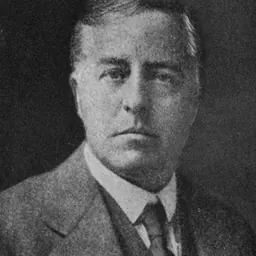
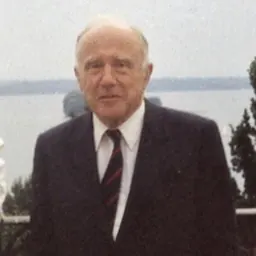
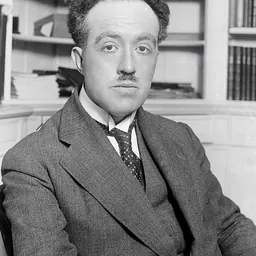

Related people
Same field, nearest in time





Contemporaries
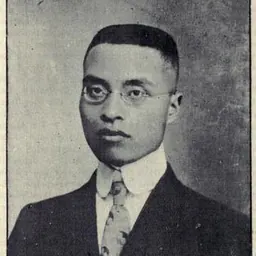
People whose lives overlapped Basil J. Hiley's



Frequently asked questions
Who was Basil J. Hiley?
British quantum physicist
When was Basil J. Hiley born?
Basil J. Hiley was born on 15 November 1935 in Myanmar.
When did Basil J. Hiley die?
Basil J. Hiley died on 25 January 2025 in London.
What was Basil J. Hiley's occupation?
Basil J. Hiley was a quantum physicist, theoretical physicist and physicist.
What nationality was Basil J. Hiley?
Basil J. Hiley was British.
Sources & further reading
Cite this page
APA: Biography.guide. (2026). Basil J. Hiley. https://biography.guide/basil-j-hiley/
MLA: "Basil J. Hiley." Biography.guide, https://biography.guide/basil-j-hiley/.
Chicago: "Basil J. Hiley." Biography.guide. https://biography.guide/basil-j-hiley/.
Data last updated: 2026-09-20 · Spot an error? Report a correction.
Page generated 2026-09-27 05:33 UTC