
About Basanta Kumar Biswas
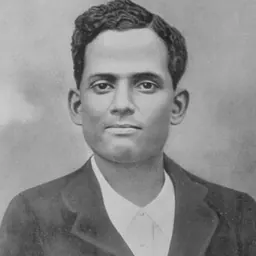
Lived 1895 – 1915 (aged 20). Basanta Kumar Biswas was an Indian revolutionary.
Basanta Kumar Biswas (6 February 1895 – 11 May 1915) was an Indian pro-independence activist involved in the Jugantar group who, in December 1912, played a role in the bombing of the Viceroy's parade in what came to be known as the Delhi-Lahore Conspiracy.
Biswas was one of the illustrious names of the early pro-independence activists of Bengal and the entire country. He was expert in bomb making and was initiated into revolutionary movement by Jugantar leaders Amarendranath Chattopadhyaya and Rash Behari Bose.
Early life Basanta Kumar Biswas was born on 6 February 1895 at Poragacha village in a Bengali Hindu aristocratic Mahishya family of Nadia district of present day West Bengal, to Motilal Biswas and Kunjabala Devi. His ancestor (grand uncle), Digambar Biswas had gained fame as an active leader of the Indigo revolt (Nil Bidroha,1859) against the forced cultivation of the cash crop and freedom fighter Manmathanath Biswas was his cousin.
In 1906, Basanta was moved to Muragacha school, where he studied upto Entrance examination. In 1907, he left his studies and took up a job in 1910 at a swadeshi cloth store at Uttarpara, but left it for touring the different places of India. He went to Puri, and eventually went to Benaras, where he stayed at Ramakrishna Mission. Next year he met Rash Behari Bose in Dehradun and was recruited by him. After meeting Rash Behari Bose in Dehradun, he was politically indoctrinated and learnt practical trainings to carry out his mission. He was brought to Lahore by Bose in October 1912 and stayed there with his Punjabi associates. At Lahore he took the job of a compounder at a popular dispensary. Statue of Shaheed Basanta Kumar Biswas in Krishnanagar, Nadia. Biswas participated in the plot to throw a bomb on Lord Hardinge, the Viceroy of India. It was carried out by him on 23 December 1912, when Lord Hardinge was passing through Chandni Chowk, Delhi, in a state procession marking the inauguration of Delhi as the capital of India. Dressed in women's clothing, Basanta went to a rooftop overlooking viceroy's route reserved for ladies. He introduced himself to other spectators as Lakshmibai – an allusion to famous Rani of Jhansi. As the procession was passing by the rooftop, where Biswas was waiting, a bomb sailed down and exploded behind the viceroy. Hardinge was seriously injured, and the servant behind him holding his parasol was killed. As soon as his job was done Basanta dashed down to street and threw off his saree and disappeared into the crowd. He returned to Punjab where he carried on his revolutionary activities. The authors of the deed remained obscure for many months despite the state's intense investigation, and lucrative reward.
Biswas was arrested on 26 February 1914 at Poragachha, Nadia while he went to perform the last rites for his father. He was also accused of throwing a bomb in the Lawrence Garden, Lahore, on 17 May 1913, in which a peon was killed. The trial, which came to be called the Delhi-Lahore Conspiracy Case, began on 23 May 1914 in Delhi; Amir Chand, Abadh Behari, and Bhai Balmukund, were condemned to death in the trial, and Basanta Biswas was found guilty but initially sentenced to life imprisonment as he was just seventeen years of old.
An appeal was formulated at Lahore High Court. The Crown won its appeal and Biswas was sentenced to be hanged.
Basanta Kumar Biswas was hanged on 11 May 1915 at Ambala Central Jail in Punjab aged twenty and became one of the youngest people to be executed during the Indian revolutionary struggles during the 20th century.
Legacy
There is a statue of Basanta Biswas was established by Rasbihari Basu in a park of Tokyo, Japan. Another statue is situated in front of Rabindra Bhawan, Krishnanagar, Nadia. A school in civil lines, Delhi was named "Shaheed Basant Kumar Biswas Sarvodaya Vidhyalaya" in his memory. Although it was later renamed to Rajkiya Pratibha Vikas Vidyalaya. Loka Sabha Speaker Meira Kumar has installed a photo of Basanta Kumar at the Museum of the Indian Parliament. Ujjal Biswas, an Indian politician and the present Minister in the Government of West Bengal belongs to the family of Basanta Biswas. The minister has been organising a three-day fair titled Basanta Mela at his village home in the month of February for the past 30 years.
Don’t just read it —
keep it.
Full-length biographies made to live with: read them, listen on the way to work, watch them tonight.
- E-book
- Audio
- Video
Instant download · yours to keep · every purchase keeps this site free
Important facts
People in Basanta Kumar Biswas's life
Named in this biography and alive at the same time



Related people
Same field, nearest in time


Contemporaries
People whose lives overlapped Basanta Kumar Biswas's

Frequently asked questions
Who was Basanta Kumar Biswas?
Indian revolutionary
When was Basanta Kumar Biswas born?
Basanta Kumar Biswas was born on 6 February 1895 in Poragachha.
When did Basanta Kumar Biswas die?
Basanta Kumar Biswas died on 11 May 1915 in Ambala.
What was Basanta Kumar Biswas's occupation?
Basanta Kumar Biswas was a revolutionary.
What nationality was Basanta Kumar Biswas?
Basanta Kumar Biswas was Indian.
Sources & further reading
· Wikipedia: Basanta Kumar Biswas
· DBpedia: Basanta Kumar Biswas
Cite this page
APA: Biography.guide. (2026). Basanta Kumar Biswas. https://biography.guide/basanta-kumar-biswas/
MLA: "Basanta Kumar Biswas." Biography.guide, https://biography.guide/basanta-kumar-biswas/.
Chicago: "Basanta Kumar Biswas." Biography.guide. https://biography.guide/basanta-kumar-biswas/.
Data last updated: 2026-09-20 · Spot an error? Report a correction.
Page generated 2026-09-27 05:31 UTC