
Basant Kumar Satpathy
Indian academic and Odia-language writer
About Basant Kumar Satpathy
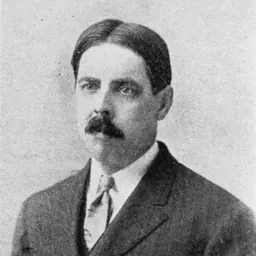
Lived 1913 – 1994 (aged 80). Basant Kumar Satpathy was an Indian writer, translator, lecturer, autobiographer and short story writer.
Basanta Kumar Satpathy (26 June 1913 – 20 February 1994) was an Odia short story writer, translator, and academic. He authored twelve collections of short stories, numerous translated works, and an autobiography. He was among the few literary figures who helped chart a new direction for modern Odia literature in the post-independence period. His short fiction and essays appeared in periodicals including Indian Literature, Jhankara, Samabesha, and Asantakali. His writing has been translated into multiple Indian languages. A selection of his short stories was translated into English by Bikram Keshari Das. His works have been published by India's National Academy of Letters Sahitya Akademi, National Book Trust, and Bharatiya Jnanpith. Several of his stories have been incorporated into school and college curricula by the Government of Odisha. Satpathy received various literary awards, including the Odisha Sahitya Akademi Award for the book Anti-romantic, the Sarala Samman, and the Utkal Sahitya Samaj Samman. A monograph on his life and work was published by the Sahitya Akademi as a part of its series titled Makers of Indian Literature.
Early life and education
Satpathy was born in Pandhada village in Mayurbhanj district, Odisha (Mayurbhanj state in British India). He received his early education in Pandhada and Shirsa, and completed his matriculation from Baripada High School. As a meritorious student, he was awarded a scholarship by the Maharaja of Mayurbhanj and pursued higher education at Ravenshaw College, Cuttack. Satpathy completed his M.A. in English in 1938 and began his career as a teacher at Baripada High School. He later served as Public Relations Officer to the Maharaja of Mayurbhanj and was associated with publications such as Bhanjapradip, Prajasabha, Mayurbhanj Gazette, and Mayurbhanj Chronicle. He participated in a delegation to Delhi to meet Sardar Vallabhbhai Patel regarding the merger of Mayurbhanj with the Indian Union. Following the integration of Mayurbhanj, he was transferred to the Odisha Secretariat in Cuttack as Public Relations Officer. After qualifying in the Odisha Administrative Service, he joined Samanta Chandrasekhar College, Puri. He later taught at Krushnachandra Gajapati College, Paralakhemundi, and Fakir Mohan College, Balasore.
Writings Satpathy began his literary career with a focus on literary criticism and editorial work. in Bhanja Sahitya and Mayurbhanj Chronicle. His first short story collection, Anti-Romantic, was published in 1966 and received the Odisha Sahitya Akademy Award. In 2009, Basanta Satpathynka Shreshtha Galpamala was published by the National Book Trust as part of a series on contemporary Indian literature. The Bharatiya Jnanpith also published Hindi translations of his short stories. The Anti-Romantics, English translation of his short stories was published by the Sahitya Akademi in 2022. At Mayadhar Mansingh's suggestion, he compiled Sanchayana (1974), an anthology of Odia poetry modelled on Palgrave's Golden Treasury, published by the Sahitya Akademi. He translated Rabindranath Tagore's Raja into Odia (1979) and adapted Fakir Mohan's novel Chha Mana Atha Guntha into a play titled Champa (1970). He also authored Fakir Mohan: His Life and Literature (1984), which included a biographical essay and six translated stories. Between the 1960s and 1970s, Satpathy's essays appeared in the Sahitya Akademi's journal Indian Literature, including pieces such as "Nilasaila," "One or Two Outstanding Books," "Neither Bang nor Whimper," His short stories, have been noted for their "distinct use of humour and stylistic clarity". Satakadi Hota characterised his humour as a "philosophical outlook that transforms sorrow into amusement." In the context of postcolonial Indian literature, Professor Himansu Mahapatra observed that Satpathy's stories extend the discourse of postcolonialism into the mainstream literary domain. Kankan Basu wrote in The Hindu:The stories are not without an occasional dash of humour as is evident in 'When Their Eyes Met' with its confused characters playing romantic musical chairs. Quite a few stories have an unexpected twist towards the end. But it is his concern for the bigger and more serious issues that touch the reader. His birth centenary was commemorated by the Odisha Sahitya Akademi on 20 October 2013 at the Utkal Sangeet Mahavidyalaya, Bhubaneswar. A parallel centenary celebration was also organised by the Sahitya Akademi (New Delhi), which featured participation by noted literary scholars and critics including Harish Trivedi, Srinivas Rao, and former Akademi President Vishwanath Prasad Tiwari. In his memory, the annual Basanta Satpathy Memorial Lecture is held on his birth anniversary, featuring talks by leading intellectuals and literary figures from across India.
Don’t just read it —
keep it.
Full-length biographies made to live with: read them, listen on the way to work, watch them tonight.
- E-book
- Audio
- Video
Instant download · yours to keep · every purchase keeps this site free
Important facts
People in Basant Kumar Satpathy's life
Named in this biography and alive at the same time
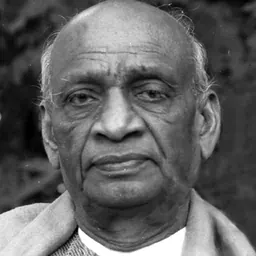
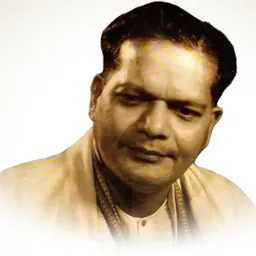
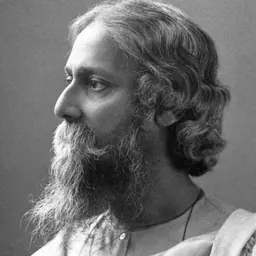
Related people
Same field, nearest in time



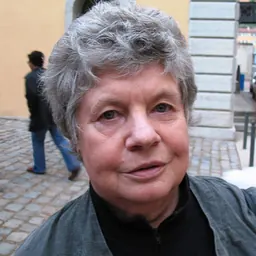
Contemporaries
People whose lives overlapped Basant Kumar Satpathy's




Frequently asked questions
Who was Basant Kumar Satpathy?
Indian academic and Odia-language writer
When was Basant Kumar Satpathy born?
Basant Kumar Satpathy was born on 26 June 1913 in Mayurbhanj district.
When did Basant Kumar Satpathy die?
Basant Kumar Satpathy died on 20 February 1994.
What was Basant Kumar Satpathy's occupation?
Basant Kumar Satpathy was a writer, translator, lecturer, autobiographer and short story writer.
What nationality was Basant Kumar Satpathy?
Basant Kumar Satpathy was Indian.
Sources & further reading
· Wikipedia: Basant Kumar Satpathy
· DBpedia: Basanta Kumar Satpathy
Cite this page
APA: Biography.guide. (2026). Basant Kumar Satpathy. https://biography.guide/basant-kumar-satpathy/
MLA: "Basant Kumar Satpathy." Biography.guide, https://biography.guide/basant-kumar-satpathy/.
Chicago: "Basant Kumar Satpathy." Biography.guide. https://biography.guide/basant-kumar-satpathy/.
Data last updated: 2026-09-20 · Spot an error? Report a correction.
Page generated 2026-09-27 05:28 UTC