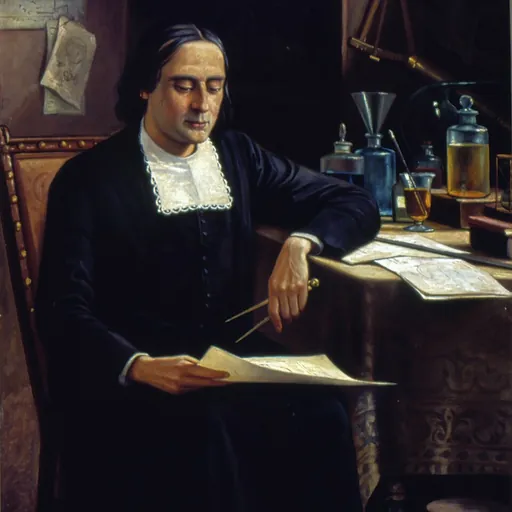
About Bartolomeu de Gusmão
Lived 1685 – 1724 (aged 38–39). Bartolomeu de Gusmão was a Portuguese naturalist, inventor, aircraft pilot, catholic priest, regular priest and writer, known for Priest.
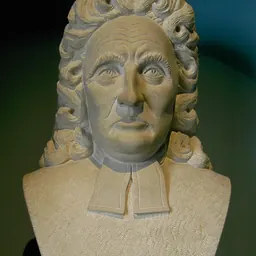
Bartolomeu Lourenço de Gusmão (December 1685 – 18 November 1724) was a Portuguese Catholic priest and naturalist born in colonial Brazil, who was a pioneer of lighter-than-air aerostat design, being among the first scholars at that time to understand the operational principles of the hot air balloon and to build a functional prototype of such a device. He is also one of the main characters in Nobel Prize-winning José Saramago's Baltasar and Blimunda.
Early life Gusmão was born at Santos, then part of the Portuguese colony of Brazil.
He began his novitiate in the Society of Jesus at Bahia when he was about fifteen years old, but left the order in 1701. He went to Portugal and found a patron at Lisbon in the person of the Marquis of Abrantes. He completed his course of study at the University of Coimbra, devoting his attention principally to philology and mathematics, but received the title of Doctor of Canon Law (related to Theology). He is said to have had a remarkable memory and a great command of languages.
Airship In 1709, he presented a petition to King John V of Portugal, seeking royal favour for his invention of an airship, in which he expressed the greatest confidence. The contents of this petition have been preserved, together with a picture and description of his airship. Developing the ideas of Francesco Lana de Terzi, S.J., Gusmão wanted to spread a huge sail over a boat-like body like the cover of a transport wagon; the boat itself was to contain tubes through which, when there was no wind, air would be blown into the sail by means of bellows. The vessel was to be propelled by the agency of magnets which were to be encased in two hollow metal balls. The public test of the machine, which was set for 24 June 1709, did not take place.
It is known that Gusmão was working on this principle at the public exhibition he gave before the Court on 8 August 1709, in the hall of the Casa da Índia in Lisbon, when he propelled a small balloon to the roof using combustion from a flame. The king rewarded the inventor by appointing him to a professorship at Coimbra and made him a canon. He was also one of the fifty selected as members of the Academia Real de História, founded in 1720; and in 1722 he was made chaplain to the Court. Gusmão also busied himself with other inventions, but in the meantime continued his work on his airship schemes, the idea for which he is said to have conceived while a novice at Bahia. His designs included a ship to sail in the air consisting of a triangular gas-filled pyramid, but he died without making progress.thumb
Persecution One account of Gusmão's work suggests that the Portuguese Inquisition forbade him to continue his aeronautic investigations and persecuted him because of them, but this is probably a later invention. It dates, however, from at least the end of the 18th century, as the following article in the London Daily Universal Register (later The Times) of 20 October 1786, makes clear:
Contemporary documents do attest that information was laid before the Inquisition against Gusmão, but on quite another charge. The inventor fled to Spain and fell ill of a fever, of which he died in Toledo. He wrote: Manifesto summário para os que ignoram poderse navegar pelo elemento do ar (Short Manifesto for those who are unaware that is possible to sail through the element air, 1709); and Vários modos de esgotar sem gente as naus que fazem água (Several ways of draining, without people, ships that leak water, 1710); some of his sermons also have been printed.
Legacy In 1936, the Bartolomeu de Gusmão Airport was built in Rio de Janeiro, Brazil, by the Luftschiffbau Zeppelin to operate with the rigid airships Graf Zeppelin and Hindenburg. In 1941, it was taken over by the Brazilian Air Force and renamed Santa Cruz Air Force Base. Presently, the airport serving Araraquara is named Bartolomeu de Gusmão Airport.
In popular culture Passarola Rising by Azhar Abidi Baltasar and Blimunda by José Saramago
Don’t just read it —
keep it.
Full-length biographies made to live with: read them, listen on the way to work, watch them tonight.
- E-book
- Audio
- Video
Instant download · yours to keep · every purchase keeps this site free
Important facts
People in Bartolomeu de Gusmão's life
Named in this biography and alive at the same time
Related people
Same field, nearest in time


Contemporaries
People whose lives overlapped Bartolomeu de Gusmão's


Frequently asked questions
Who was Bartolomeu de Gusmão?
Portuguese scientist
When was Bartolomeu de Gusmão born?
Bartolomeu de Gusmão was born in 1685 in Santos.
When did Bartolomeu de Gusmão die?
Bartolomeu de Gusmão died on 19 November 1724 in Toledo.
What was Bartolomeu de Gusmão's occupation?
Bartolomeu de Gusmão was a naturalist, inventor, aircraft pilot, catholic priest, regular priest and writer.
What was Bartolomeu de Gusmão known for?
Bartolomeu de Gusmão was known for Priest.
What nationality was Bartolomeu de Gusmão?
Bartolomeu de Gusmão was Portuguese.
Sources & further reading
· Wikipedia: Bartolomeu de Gusmão
· DBpedia: Bartolomeu de Gusmão
Cite this page
APA: Biography.guide. (2026). Bartolomeu de Gusmão. https://biography.guide/bartolomeu-de-gusmao/
MLA: "Bartolomeu de Gusmão." Biography.guide, https://biography.guide/bartolomeu-de-gusmao/.
Chicago: "Bartolomeu de Gusmão." Biography.guide. https://biography.guide/bartolomeu-de-gusmao/.
Data last updated: 2026-09-22 · Spot an error? Report a correction.
Portrait: Wikimedia Commons · author & licence
Page generated 2026-09-27 05:04 UTC