
About Bartolome Cabangbang
Lived 1917 – 1985 (aged 67). Bartolome Cabangbang was a military personnel.
Bartolome Constancia Cabangbang (23 October 1917 – 12 September 1985) was a Filipino soldier, war hero and politician who served as a member of the Philippine House of Representatives on behalf of the province of Bohol. He was also a candidate for President of the Federal Party, and campaigned for the Philippines to become the 51st state of the United States of America during the 1981 presidential elections, but lost to reelectionist incumbent Ferdinand Marcos.
Early life Cabangbang was born to a family of impoverished tenant farmers in Bohol. In 1936, he entered the newly-established Philippine Military Academy (PMA) in Baguio to pursue a free college education, and was among the members of its pioneer class in 1940. While assigned to the 4th US Marines before agreeing to join the Japanese-sponsored Bureau of Constabulary. But after completing his training, he escaped to Bohol and joined the guerrilla movement.
During his tenure in Congress, he finished his law degree at the Far Eastern University and also worked as a pilot for Philippine Airlines. His influence grew upon the accession of fellow Boholano Carlos P. Garcia as President, upon which Cabangbang became regarded as his representative in Congress. As Chairman of the House Defense Committee, he announced the discovery of a planned coup d'état against President Garcia by military officers associated with his predecessor, Ramon Magsaysay, in 1958. The incident led to the removal of Armed Forces of the Philippines Chief of Staff Lt. Gen. Alfonso Arellano and Defense Secretary Jesus Vargas, who was replaced by Cabangbang's guerrilla comrade Alejo Santos. He served until 1984.
In 1981, while serving as an assemblyman, he ran for President as a candidate of the Federal Party in elections held on 16 June, running against his former comrade, Alejo Santos of the Nacionalista Party and reelectionist President Ferdinand Marcos, who had established his own Kilusang Bagong Lipunan party. Among his campaign promises were to hold a plebiscite on the annexation of the Philippines to the U.S. as its 51st state and a $1,000 per month minimum salary. He, along with Santos, lost to Marcos, winning only 4% of total votes versus Marcos's 88%.
After his loss, Cabangbang continued to advocate for Philippine admission into the Union, reviving the Statehood USA Movement following the assassination of Ninoy Aquino in 1983 and claiming to have regained 5,000 members while setting up chapters in eight U.S. states. A street in Caloocan was later named after him.
Don’t just read it —
keep it.
Full-length biographies made to live with: read them, listen on the way to work, watch them tonight.
- E-book
- Audio
- Video
Instant download · yours to keep · every purchase keeps this site free
Important facts
People in Bartolome Cabangbang's life
Named in this biography and alive at the same time

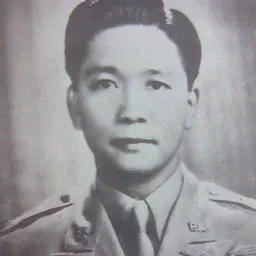
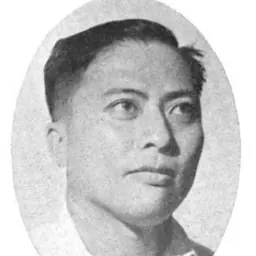
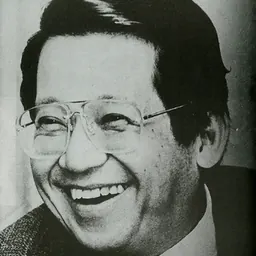


Related people
Same field, nearest in time
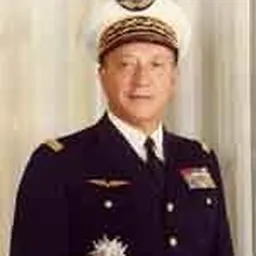
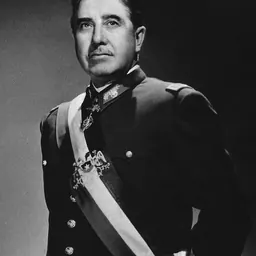
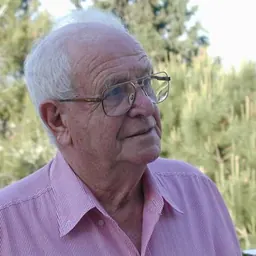


Contemporaries
People whose lives overlapped Bartolome Cabangbang's

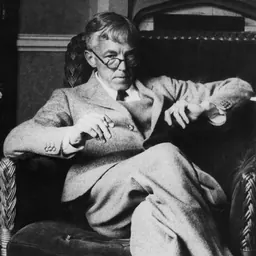
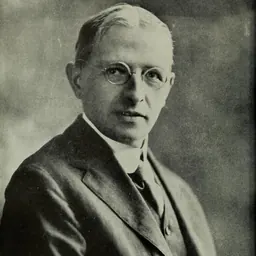
Frequently asked questions
Who was Bartolome Cabangbang?
Filipino soldier, war hero and politician
When was Bartolome Cabangbang born?
Bartolome Cabangbang was born on 23 October 1917.
When did Bartolome Cabangbang die?
Bartolome Cabangbang died on 12 September 1985.
What was Bartolome Cabangbang's occupation?
Bartolome Cabangbang was a military personnel.
Sources & further reading
· Wikipedia: Bartolome Cabangbang
· DBpedia: Bartolome Cabangbang
Cite this page
APA: Biography.guide. (2026). Bartolome Cabangbang. https://biography.guide/bartolome-cabangbang/
MLA: "Bartolome Cabangbang." Biography.guide, https://biography.guide/bartolome-cabangbang/.
Chicago: "Bartolome Cabangbang." Biography.guide. https://biography.guide/bartolome-cabangbang/.
Data last updated: 2026-09-20 · Spot an error? Report a correction.
Page generated 2026-09-27 05:26 UTC