
Bartholomew Booth
American education pioneer
About Bartholomew Booth
Lived 1732 – 1786 (aged 53–54).
Bartholomew Booth (c.1732–1786) was a pioneer in American education. Oxford-educated, Booth was ordained as a priest in the Church of England before becoming a headmaster. He opened academies in Liverpool, then in Lancashire and Essex. He offered a wide curriculum, broadly following the educational philosophy of Benjamin Franklin, and was a curate for what became the congregation of Saint John's Church (Hagerstown, Maryland).
Early life He was the son of Bartholomew Booth (died 1750), the schoolmaster of the village Mellor, then in Derbyshire. After instruction from his father, he attended Manchester Grammar School, from 1750. He matriculated at Brasenose College, Oxford in 1754, aged 21, but left without taking a degree.
Booth was ordained deacon in 1755, by Edmund Keene. He began teaching in 1756, at Disley. Initially involved as supporters of Booth's Liverpool school in 1765, they undertook housekeeping duties at the boarding school. Their money enabled Booth to purchase Woolton Hall, in 1771. Whitehead suggests that the Rev. Samuel Bardsley (1726–1756), curate at Flixton, may have been Anne's husband.
Booth took on as assistant master Peter Newby, who taught French and Latin, and was much influenced by Booth's broad-based curriculum. Woolton Academy continued to 1772, when Booth sold Woolton Hall. It went to Nicholas Ashton (1742–1833), from a Liverpool merchant family.
Booth with Newby set up a new school in High Beach, Essex. The masters parted in 1773, Booth moving to British America, and Newby setting up his own school, at Burton-in-Kendal.
Booth became one of three curates assisting the unpopular but politically connected Rev. Bennet Allen at All Saints Church in Frederick, Maryland. He was appointed to Frederick County's Committee of Observation on January 24, 1775, by John Hanson.
From the outbreak in 1776 of the American War of Independence, Boothe found himself in a difficult position. He sympathized with the Patriot cause, and the Maryland Legislature gave permission to set up his Forest of Needwood school, which functioned from 1778 to 1785. On the other hand, Rev. Booth was an Episcopalian cleric, and western Marylanders in particular viewed him with suspicion.
Bowing to Middletown Patriots, the group sold the Needwood property in Frederick County. Former Maryland governor Thomas Sim Lee agreed to purchase the Needwood farm and forest in 1783, but the transaction had not been completed by Booth's death, and his son and executor sold the property in 1785 to Mary Valens, which caused litigation not resolved until 1816. Meanwhile, Thomas Sim Lee took possession of the property by either 1790 or 1805, with his son John Lee and enslaved labor farmed, and died there in 1819. Following the conflict, Booth moved west to Washington County, with self-exiled Maryland Tories. The site chosen for the new Delamere academy was the Devil's Backbone on Antietam Creek, adjacent to the old main road from Maryland's eastern counties to the frontier in the Potomac highlands. Anne Bardsley had purchased the land shortly before her death in 1781.
Here Booth built his new home and a mill. The entrance lane to Delamere (Delemere in source), the house, is next to the 19th-century Delemere Bridge over the Creek. Two years before Booth's death in 1786, the taxable land was listed as . Delemere or Delamere references the Booth family of Dunham Massey, the Booth baronets and George Booth, 1st Baron Delamer who was grandson of the first baronet. There is a putative connection to Batholomew Booth.
Legacy The Needwood and Delamere schools only operated for about a decade, but they launched other educators' careers and advanced Benjamin Franklin's theory of instruction. For example, August Christian Whitehair, born about 1760, graduated from Delamere and settled in modern-day Preston County, West Virginia in 1788, three years after Booth's death. Whitehair studied under Booth and was the first teacher in the Preston County Union District (1790). The History of Preston County notes Whitehair as an educational pioneer within the German settlement.
Footnotes
Don’t just read it —
keep it.
Full-length biographies made to live with: read them, listen on the way to work, watch them tonight.
- E-book
- Audio
- Video
Instant download · yours to keep · every purchase keeps this site free
Important facts
People in Bartholomew Booth's life
Named in this biography and alive at the same time
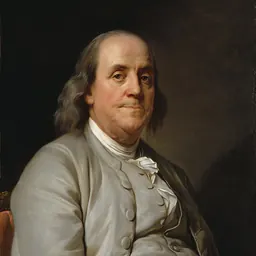


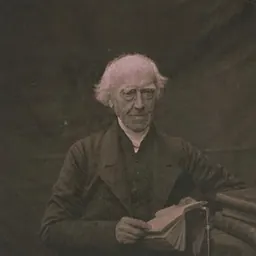

Contemporaries
People whose lives overlapped Bartholomew Booth's


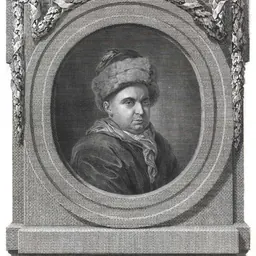



Frequently asked questions
Who was Bartholomew Booth?
American education pioneer
When was Bartholomew Booth born?
Bartholomew Booth was born in 1732.
When did Bartholomew Booth die?
Bartholomew Booth died in 1786.
Sources & further reading
· Wikipedia: Bartholomew Booth
Cite this page
APA: Biography.guide. (2026). Bartholomew Booth. https://biography.guide/bartholomew-booth/
MLA: "Bartholomew Booth." Biography.guide, https://biography.guide/bartholomew-booth/.
Chicago: "Bartholomew Booth." Biography.guide. https://biography.guide/bartholomew-booth/.
Data last updated: 2026-09-20 · Spot an error? Report a correction.
Page generated 2026-09-27 05:13 UTC