
About Barrington Reynolds
Lived 1786 – 1861 (aged 74–75). Barrington Reynolds was a British naval officer.
Admiral Sir Barrington Reynolds (1786 – 3 August 1861) was a senior and long-serving officer of the British Royal Navy who went to sea with his father aged only nine during the French Revolutionary Wars and was captured by the French aged eleven. Returning to service on his release soon afterwards, Reynolds experienced the successive deaths of his elder brother and his father on active service during the Napoleonic Wars as well as severe bouts of ill-health himself. Leaving the service at the end of the war, Reynolds returned to the Navy in the 1840s after an absence of thirty years and played a major role in the final destruction of the illegal trade in African slaves to Brazil. Reynolds was honoured for this service and retired again to his family seat in Cornwall, where he died aged 75.
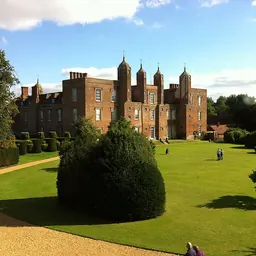
Early career Barrington Reynolds was the second son of Rear-Admiral Robert Carthew Reynolds, a successful and long-serving Royal Navy officer who had once served under Samuel Barrington who is probably the origin of Barrington's Christian name. Like his elder brother, Barrington Reynolds had been born at the family seat in Penair, near Truro, Cornwall, but aged only nine he was brought onto his father's ship the frigate for service as a captain's servant.
Independent command In 1808, Reynolds moved to but less than a year later was given his first command, the hulk . In February 1811 he became a commander and took over the sloop in which he participated in the attack on Java and was promoted to post captain as a reward, taking over HMS Sir Francis Drake. The Admiralty confirmed his promotion in 1812, in recognition of the services of his father, who had died in the wreck of on Christmas Eve 1811. He returned to Britain in August 1812 in command of and remained in her for a year before entering semi-retirement due to ill-health. Following the end of the war in 1815, Reynolds was offered continued service as a frigate captain in the reduced Navy, but was forced to turn the post down due to a protracted bout of ill-health. In Ganges, Reynolds participated in the bombardment of Acre during operations against Egyptian forces. Reynolds was promoted to rear-admiral in 1848, and given command at the Cape of Good Hope Station, with instructions to clamp down on the illegal slave traders who operated from West Africa.
Reynolds was so successful off Africa, that at Admiralty dispatched him to cruise off the Brazilian coast on the same service. Over the next three years, Reynolds and his squadron captured dozens of slave ships, boarded and captured more at anchor on the Brazilian coast and, despite loud protests from the Brazilian government, raided Brazilian harbours along the coast, burning the empty slave ships which sheltered in them. In reply to the protests, Reynolds wrote to the Admiralty that "Nothing can be done with the Brazilian government on this matter except by compulsion". The actions of the forces under Reynolds' command have been credited with destroying the Brazilian slave trade completely by 1851.
Promoted to vice-admiral in 1855, he became Commander-in-Chief, Plymouth in 1857 and was promoted to full admiral on retirement in 1860. He was also advanced to Knight Grand Cross of the Order of the Bath. He died in 1861 at the family home and was buried in St Clement's Churchyard near Truro.
Don’t just read it —
keep it.
Full-length biographies made to live with: read them, listen on the way to work, watch them tonight.
- E-book
- Audio
- Video
Instant download · yours to keep · every purchase keeps this site free
Important facts
People in Barrington Reynolds's life
Named in this biography and alive at the same time



Related people
Same field, nearest in time


Contemporaries
People whose lives overlapped Barrington Reynolds's




Frequently asked questions
Who was Barrington Reynolds?
British Royal Navy officer (1786-1861)
When was Barrington Reynolds born?
Barrington Reynolds was born in 1786 in Penair School.
When did Barrington Reynolds die?
Barrington Reynolds died on 3 August 1861 in St Clement.
What was Barrington Reynolds's occupation?
Barrington Reynolds was a naval officer.
What nationality was Barrington Reynolds?
Barrington Reynolds was British.
Sources & further reading
· Wikipedia: Barrington Reynolds
· DBpedia: Barrington Reynolds
Cite this page
APA: Biography.guide. (2026). Barrington Reynolds. https://biography.guide/barrington-reynolds/
MLA: "Barrington Reynolds." Biography.guide, https://biography.guide/barrington-reynolds/.
Chicago: "Barrington Reynolds." Biography.guide. https://biography.guide/barrington-reynolds/.
Data last updated: 2026-09-20 · Spot an error? Report a correction.
Page generated 2026-09-27 05:03 UTC