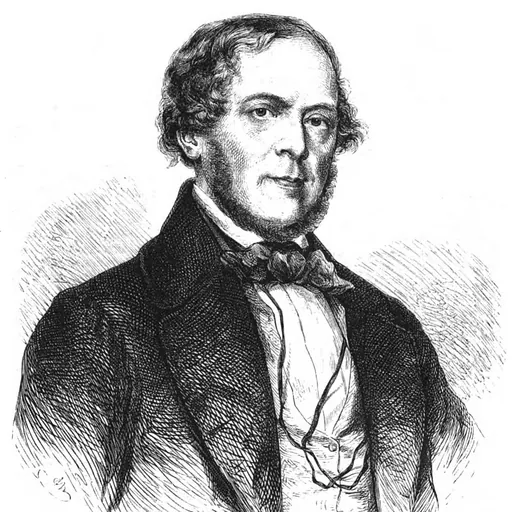
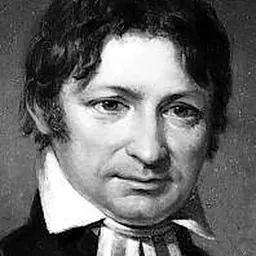
Baron Eligius Franz Joseph von Münch-Bellinghausen
Austrian writer
About Baron Eligius Franz Joseph von Münch-Bellinghausen
Lived 1806 – 1871 (aged 65). Baron Eligius Franz Joseph von Münch-Bellinghausen was an Austrian poet, playwright, writer and librarian.
Baron Eligius Franz Joseph von Münch-Bellinghausen (2 April 180622 May 1871) was an Austrian dramatist, poet and novella writer of the Austrian Biedermeier period and beyond, and is more generally known under his pseudonym Friedrich Halm.
Life and career He was the son of a district judge at Kraków in Poland, at this time part of the Austrian Empire. Early in his literary career he adopted the nom de plume of Friedrich Halm ("Halm" means a blade of grass or a blade of straw), and became one of the most popular dramatists in Vienna around the middle of the 19th century. His novellas are now regarded as more significant from a literary point of view than his dramatic writings.
Münch-Bellinghausen was educated at the seminary of Melk Abbey and later at Vienna, where he studied philosophy and jurisprudence, and where he began his career in 1826.
Halm's other short stories and novellas, which tend to focus on spiritual issues and self-destructive monomaniacal characters, are psychologically insightful—especially his earliest major story, Das Auge Gottes ("The Eye of God"), a lengthy novella written in 1826, about the supernatural reverberations of the blasphemous act of the desecration of a holy icon, and his final narrative piece, Das Haus an der Veronabrücke ("The House on Verona Bridge"), centering on the inner collapse of a man given over to a morally repellent but overriding (the enforced sexual coupling of his wife with another man). His novella, Die Marzipan-Lise ("Marzipan Lise"), is credited with being one of the first "criminal fiction tales" of German literature and is now available as an audio book on CD. Furthermore, the composer, Brahms, used some of Halm's verses as the basis for a number of his Lieder, as did composer Pauline Volkstein.
Overall it can be said that it is as a short-story or "novella" writer that Halm has secured a place in the history of German/Austrian literature. His novellas mark Halm out as a writer of talent, psychological penetration and substance. His novella, The House at Verona Bridge (Das Haus an der Veronabruecke) alone stands as a milestone in 19th-century Austrian literature for its probing and insightful treatment of an obsessive mentality that inevitably leads its possessor into tragedy and death.
His collected works, Samtliche Werke, were published arranged in chronological order in eight volumes (1856–1864), to which four posthumous volumes were added in 1872. Also published were Ausgewählte Werke, ed. by Anton Schlossar in 4 vols. (1904). Published for the first time in the 21st century (in Amazon Kindle format) by Dr. Tony Page were a collection of poems entitled Unpublished Poems of Friedrich Halm (2011), also for the first time the complete text of Halm's novella, Das Auge Gottes (2011), as well as Halm's novella, Ein Abend zu L. (2012), plus Halm's earliest full-length novella, St. Sylvesterabend (2017), in addition to Halm's essay on literary aesthetics, Sendschreiben an J. C. R. (2012), as well as his massive drama, Schwert, Hammer, Buch (2022) and the earlier melodrama, Die Nacht der Rache (2024), all transcribed, edited and introduced by Dr. Tony Page.
Works
Plays
Stories
Collections , 1850 , 8 vols., 1856–1864
Don’t just read it —
keep it.
Full-length biographies made to live with: read them, listen on the way to work, watch them tonight.
- E-book
- Audio
- Video
Instant download · yours to keep · every purchase keeps this site free
Important facts
People in Baron Eligius Franz Joseph von Münch-Bellinghausen's life
Named in this biography and alive at the same time


Related people
Same field, nearest in time
Contemporaries
People whose lives overlapped Baron Eligius Franz Joseph von Münch-Bellinghausen's





Frequently asked questions
Who was Baron Eligius Franz Joseph von Münch-Bellinghausen?
Austrian writer (1806–1871)
When was Baron Eligius Franz Joseph von Münch-Bellinghausen born?
Baron Eligius Franz Joseph von Münch-Bellinghausen was born on 2 April 1806 in Kraków.
When did Baron Eligius Franz Joseph von Münch-Bellinghausen die?
Baron Eligius Franz Joseph von Münch-Bellinghausen died on 22 May 1871 in Vienna.
What was Baron Eligius Franz Joseph von Münch-Bellinghausen's occupation?
Baron Eligius Franz Joseph von Münch-Bellinghausen was a poet, playwright, writer and librarian.
What nationality was Baron Eligius Franz Joseph von Münch-Bellinghausen?
Baron Eligius Franz Joseph von Münch-Bellinghausen was Austrian.
Sources & further reading
· Wikipedia: Baron Eligius Franz Joseph von Münch-Bellinghausen
Cite this page
APA: Biography.guide. (2026). Baron Eligius Franz Joseph von Münch-Bellinghausen. https://biography.guide/baron-eligius-franz-joseph-von-munch-bellinghausen/
MLA: "Baron Eligius Franz Joseph von Münch-Bellinghausen." Biography.guide, https://biography.guide/baron-eligius-franz-joseph-von-munch-bellinghausen/.
Chicago: "Baron Eligius Franz Joseph von Münch-Bellinghausen." Biography.guide. https://biography.guide/baron-eligius-franz-joseph-von-munch-bellinghausen/.
Data last updated: 2026-09-23 · Spot an error? Report a correction.
Portrait: Wikimedia Commons · author & licence
Page generated 2026-09-27 05:08 UTC