
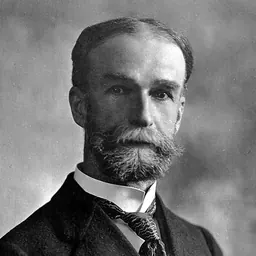
Barney Ruditsky
NYPD officer, private detective
About Barney Ruditsky
Lived 1898 – 1962 (aged 63). Barney Ruditsky was an American detective and private investigator.
Barnett "Barney" P. Ruditsky (December 25, 1898 – October 18, 1962) was a British-born American police officer and private detective.
During his 20-year career on the force Ruditsky was among the NYPD's prominent "celebrity detectives" of the 1920s and 1930s. Ruditsky was associated with many criminal cases during this period, most notably, ending with the break-up of Murder Incorporated in 1940. Years later, he was called to testify before the Kefauver hearings due to his knowledge of the criminal underworld in Southern California and Las Vegas.
He later worked as a private investigator in California, and also served as a technical advisor on a series of crime films for 20th Century Fox in the mid-1940s and The Lawless Years, a television series loosely based on his career.
Early life Barnett P. Ruditsky was born in London, England on December 25, 1898. He was the son of Blooma (née Marin) and Phillip Ruditsky, a boot finisher. His family lived in South Africa for a time before returning to England. He was Jewish.
In 1908, the Ruditsky family emigrated to the United States and settled on the East Side of Manhattan. At the age of 18, Ruditsky enlisted in the United States Army and saw active service during the 1916 U.S. expedition into Mexico and on the Western Front during the First World War.
Career in the NYPD Upon his return from France, Ruditsky joined New York City Police Department (NYPD), officially becoming a patrolman in 1921. The young officer soon made a name for himself when, in August 1923, he subdued a much larger man using his nightstick and was praised by both Magistrate Henry M. R. Goodman and The New York Times for the arrest. Ruditsky was made a detective the following year in the gangster-industrial squad, headed by Detective Johnny Broderick. Six months after this incident Ruditsky was promoted to second-grade detective.
In 1928, Ruditsky and fellow detective Harry Hagen disguised themselves as customers in a Turkish bathhouse on Second Street, a known underworld hangout, where they successfully captured the notorious "Poison Ivy" gang. Similarly, he arrested members of the "Pearl Buttons" of West Side Manhattan. It was these cases which first gained Ruditsky fame as a detective. In November 1935, Ruditsky was involved in the pursuit of three hold-up men who had robbed nightclub entertainer Frances Faye and her escort Joseph Eichenbaum. The high speed chase began after he commandeered a car and, with detective Thomas Aulbach, followed them until the would-be thieves crashed their car into an elevated pillar at Ninth Avenue and 63rd Street. He chased one of the men on foot and captured him following a shootout. He was presented with the NYPD Combat Cross, the NYPD's second-highest honor, for his actions.
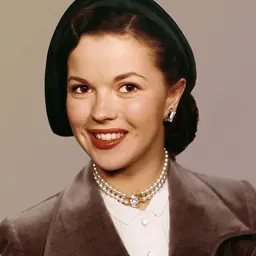
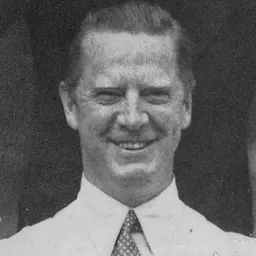
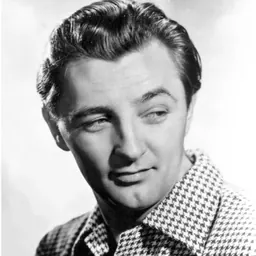
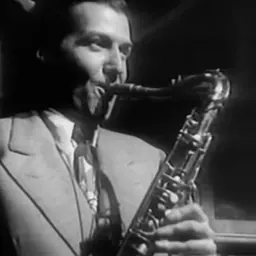
Ruditsky was also assigned to crowd control for the police guarding child star Shirley Temple during her 1938 visit to New York City; the two met again in Hollywood ten years later, when Ruditsky offered to take the young woman along for the police raid that saw actor Robert Mitchum arrested in a "marijuana bust". Temple was tempted but declined the offer. One celebrity with whom he enjoyed a close friendship was musician and big band leader Charlie Barnet. In his autobiography, Those Swinging Years (1992), Barnet described a road trip with Ruditsky:
In 1939, Ruditsky was enmeshed in a bribery scandal stemming from his earlier work in the Industrial Squad, which disbanded in 1933. A former Communist, Maurice L. Malkin, accused Ruditsky, Broderick and other officers of corruption in testimony before the House Un-American Activities Committee. Malkin testified that the furriers union, which was controlled by Communists, borrowed $1.75 million from racketeer Arnold Rothstein to finance a 1926 strike, and that $110,000 of that went to members of the Industrial Squad, including Ruditsky. No action was taken against the officers. Similar charges had been made in 1927 by the American Federation of Labor, and the officers were exonerated.
Private Eye in Hollywood On October 19, 1941, after twenty years with the NYPD, Ruditsky retired from the force. Shortly after the US entered the Second World War less than two months later, he reenlisted in the United States Army. He was sent to the North African theatre and served as a guard for prisoners of war until being wounded by shrapnel in 1943. While in the military, Ruditsky completed his memoirs, largely about his career in the NYPD, entitled Angel's Corner. His business ventures brought him into contact with figures in the entertainment industry, law enforcement, and organized crime. The details of this meeting were subsequently leaked to syndicated columnist Westbrook Pegler, who exposed Ruditsky's relationship with Siegel, and his image as "a squeaky clean New York cop" was called into question. On at least one occasion he contacted New York mobster Frank Costello, known as "Prime Minister of the Underworld", to assist him in getting a certain type of liquor for his club. Ruditsky routinely checked the street and parking lot for the safety of patrons. In July 1949, Mickey Cohen, a regular at Sherry's, was attacked outside the club and shot in the shoulder in an attempted mob hit. In the aftermath of the attack Ruditsky assisted crime reporter Florabel Muir in searching the area, where they discovered "spent shells and half-eaten sardine sandwiches" on a nearby flight of cement stairs. He specifically shared details about Mickey Cohen and Bugsy Siegel, and described the erratic behavior of Virginia Hill, calling her "psychopathic"; however, he distanced himself from suggestions that he had "improper ties" with the local underworld.
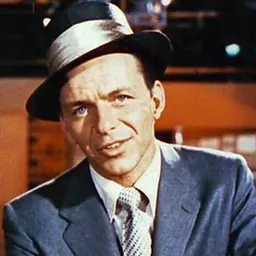
On the evening of November 5, 1954, one of Ruditsky's associates, 21-year-old Phil Irwin, observed Monroe's Cadillac parked at Kilkea Drive and Waring Avenue. Monroe was visiting a friend, actress Sheila Stewart; however, DiMaggio suspected at the time that Monroe was having an affair with her vocal coach Hal Schaefer and that Stewart, one of Schaefer's students, was letting the two use her apartment. Irwin reported to Ruditsky, who phoned DiMaggio, who was dining with Frank Sinatra at an Italian restaurant in Hollywood, the Villa Capri. DiMaggio and Sinatra, along with Sinatra's manager Henry Sanicola and Villa Capri owner Pasquale "Patsy" D'Amore, arrived at the address less than an hour later, where they met with Ruditsky and Irwin. Together, the group entered the two-story apartment building, broke down the door of one of the three rooms, and rushed into the bedroom with a cameraman expecting to catch the couple in bed. Instead, the lights from the flash camera revealed the frightened occupant, 37-year-old secretary Florence Kotz Ross. Realizing their mistake, they quickly fled from the building. The police were called; however, because Kotz Ross was unable to identify the intruders, the case, then thought to be an attempted burglary, remained unsolved and was finally closed by the LAPD almost a year later.
The entire incident came out in the September 1955 issue of Confidential, which called it the "Wrong Door Raid"; it became a legendary story in Hollywood gossip and caused embarrassment for all parties involved. After the story broke, Kotz Ross sued DiMaggio and Sinatra for $200,000; they settled out of court. The Lawless Years ran during the summer television season for three years before being canceled in 1961. The show was the first of its kind and inspired the creation of its ABC network rival, the long-running series The Untouchables, based on Eliot Ness's exploits against Al Capone and the Chicago underworld.
In popular fiction Barney Ruditsky, a popular police detective in his lifetime, has been portrayed in television, books and comics.
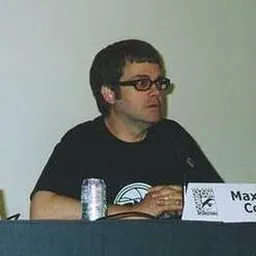
Books Ruditsky is a major character in William Heffernan's fictionalized biography Broderick (1983) Ruditsky is a minor character in Denise Hamilton's historical novel The Last Embrace (2008) Ruditsky is a minor character in Adam Braver's fictionalized biography Misfit (2012) Fictional detective Fred Rubinski, a major character in Max Allan Collins' short story "Unreasonable Doubt", is based on Barney Ruditsky.
Comic books; Ruditsky appears as himself in the first issue of Mystery Men Comics (August 1939).
Television Ruditsky is portrayed by actor James Gregory in the 1950s television series The Lawless Years Danny Arnold, creator of the 1970s television series Barney Miller, named the show in honor of his old friend by using his longtime nickname "Barney".
Don’t just read it —
keep it.
Full-length biographies made to live with: read them, listen on the way to work, watch them tonight.
- E-book
- Audio
- Video
Instant download · yours to keep · every purchase keeps this site free
Important facts
People in Barney Ruditsky's life
Named in this biography and alive at the same time


Related people
Same field, nearest in time



Contemporaries
People whose lives overlapped Barney Ruditsky's


Frequently asked questions
Who was Barney Ruditsky?
NYPD officer, private detective (1898-1962)
When was Barney Ruditsky born?
Barney Ruditsky was born on 25 December 1898 in London.
When did Barney Ruditsky die?
Barney Ruditsky died on 18 October 1962 in Los Angeles.
What was Barney Ruditsky's occupation?
Barney Ruditsky was a detective and private investigator.
What nationality was Barney Ruditsky?
Barney Ruditsky was American.
Sources & further reading
Cite this page
APA: Biography.guide. (2026). Barney Ruditsky. https://biography.guide/barney-ruditsky/
MLA: "Barney Ruditsky." Biography.guide, https://biography.guide/barney-ruditsky/.
Chicago: "Barney Ruditsky." Biography.guide. https://biography.guide/barney-ruditsky/.
Data last updated: 2026-09-20 · Spot an error? Report a correction.
Page generated 2026-09-27 05:00 UTC