
About Barbara Ehrenreich
Lived 1941 – 2022 (aged 81). Barbara Ehrenreich was an American journalist, writer, historian, novelist, essayist and peace activist.
Barbara Ehrenreich (, ; ; August 26, 1941 – September 1, 2022) was an American author and political activist. During the 1980s and early 1990s, she was a prominent figure in the Democratic Socialists of America. She was a widely read and award-winning columnist and essayist and the author of 21 books. Ehrenreich was best known for her 2001 book Nickel and Dimed: On (Not) Getting By in America, a memoir of her three-month experiment surviving on a series of minimum-wage jobs. She was a recipient of a Lannan Literary Award and the Erasmus Prize.
Early life Ehrenreich was born to Isabelle ( Oxley) and Ben Howes Alexander in Butte, Montana, which she describes as then being "a bustling, brawling, blue collar mining town". In an interview on C-SPAN, she characterized her parents as "strong union people" with two family rules: "never cross a picket line and never vote Republican". In a talk she gave in 1999, Ehrenreich called herself a "fourth-generation atheist". Later in life, she wrote that she rejected "the God of monotheism" because of the philosophical problem of a being that was all good and all powerful, when people were living with "all the misery he allowed or instigated". She had mystical experiences throughout her life, which she identified as belonging to a type of animism rather than theism. Her mother was a deeply unhappy homemaker. Her father was a copper miner who went to the Montana School of Mines (renamed Montana Technological University in 2018 ) and then to Carnegie Mellon University. A high-functioning alcoholic, He eventually became a senior executive at the Gillette Corporation. Her parents later divorced.
In 1970, Ehrenreich gave birth to her daughter Rosa in a public clinic in New York. "I was the only white patient at the clinic, and I found out this was the health care women got," she told The Globe and Mail newspaper in 1987, "They induced my labor because it was late in the evening and the doctor wanted to go home. I was enraged. The experience made me a feminist."
Career
After completing her doctorate, Ehrenreich did not pursue a career in science. Instead, she worked first as an analyst with the Bureau of the Budget in New York City and with the Health Policy Advisory Center, and later as an assistant professor at the State University of New York at Old Westbury.
In 1972, Ehrenreich began co-teaching a course on women and health with feminist journalist and academic Deirdre English. Through the rest of the seventies, Ehrenreich worked mostly in health-related research, advocacy and activism, including co-writing, with English, several feminist books and pamphlets on the history and politics of women's health. During this period she began speaking frequently at conferences staged by women's health centers and women's groups, by universities, and by the United States government. She also spoke regularly about socialist feminism and about feminism in general.
Throughout her career, Ehrenreich worked as a freelance writer. She is arguably best known for her non-fiction reportage, book reviews and social commentary. Her reviews have appeared in The New York Times Book Review, The Washington Post, The Atlantic Monthly, Mother Jones, The Nation, The New Republic, the Los Angeles Times Book Review supplement, Vogue, Salon.com, TV Guide, Mirabella and American Film. Her essays, op-eds and feature articles have appeared in Harper's Magazine, The New York Times, The New York Times Magazine, Time, The Wall Street Journal, Life, Mother Jones, Ms., The Nation, The New Republic, the New Statesman, In These Times, The Progressive, Working Woman, and Z Magazine.
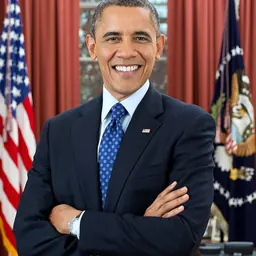
In February 2008, she expressed support for then-Senator Barack Obama in the 2008 U.S. presidential campaign.
In 2001, Ehrenreich published her seminal work, Nickel and Dimed: On (Not) Getting By in America. Seeking to explore whether people can subsist on minimum wage in the United States, she worked "undercover" in a series of minimum-wage jobs, such as waitress, housekeeper, and Wal-Mart associate, and reported on her efforts to pay living expenses with the low wages paid by those jobs (an average of $7 per hour). She concluded that it was impossible to pay for food and rent without working at least two such jobs. Nickel and Dimed became a bestseller and admirers regard the book as "a classic of social justice literature." Ehrenreich founded the Economic Hardship Reporting Project with one main purpose: support immersive reporting on the working poor, in the manner of Ehrenreich's own Nickel and Dimed.
Filling in for a vacationing Thomas Friedman as a columnist with The New York Times in 2004, Ehrenreich wrote about how, in the fight for women's reproductive rights, "it's the women who shrink from acknowledging their own abortions who really irk me" and said that she herself "had two abortions during my all-too-fertile years".
In her 1990 book of essays, The Worst Years of Our Lives, she wrote that "the one regret I have about my own abortions is that they cost money that might otherwise have been spent on something more pleasurable, like taking the kids to movies and theme parks."
In 2005, The New Yorker called her "a veteran muckraker".
In 2006, she founded United Professionals, an organization described as "a nonprofit, non-partisan membership organization for white-collar workers, regardless of profession or employment status. We reach out to all unemployed, underemployed, and anxiously employed workers—people who bought the American dream that education and credentials could lead to a secure middle class life, but now find their lives disrupted by forces beyond their control."
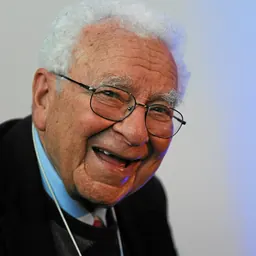
In 2009, she wrote Bright-sided: How Positive Thinking Is Undermining America (published in the UK as Smile Or Die: How Positive Thinking Fooled America and the World), which investigated the rise of the positive thinking industry in the United States. She included her own experience after being told that she had breast cancer as a starting point in the book. In this book, she brought to light various methods of what Nobel physicist Murray Gell-Mann called "quantum flapdoodle".
Beginning in 2013, Ehrenreich was an honorary co-chair of the Democratic Socialists of America. She also served on the NORML board of directors, the Institute for Policy Studies board of trustees and the editorial board of The Nation. She has served on the editorial boards of Social Policy, Ms., Mother Jones, Seven Days, Lear's, The New Press, and Culturefront, and as a contributing editor to Harper's. for the cover story The Corporate Crime of the Century, about "what happens after the U.S. government forces a dangerous drug, pesticide or other product off the domestic market, then the manufacturer sells that same product, frequently with the direct support of the State Department, throughout the rest of the world."
In 1998 the American Humanist Association named her "Humanist of the Year".
In 2000, she received the Sidney Hillman Award for journalism for the Harper's article "Nickel and Dimed", which was later published as a chapter in her book of the same title.
In 2002, she won a National Magazine Award for her essay "Welcome to Cancerland: A mammogram leads to a cult of pink kitsch", which describes Ehrenreich's own experience of being diagnosed with breast cancer, and describes what she calls the "breast cancer cult," which "serves as an accomplice in global poisoning – normalizing cancer, prettying it up, even presenting it, perversely, as a positive and enviable experience."
In 2004, she received the Puffin/Nation Prize for Creative Citizenship, awarded jointly by the Puffin Foundation of New Jersey and The Nation Institute to an American who challenges the status quo "through distinctive, courageous, imaginative, socially responsible work of significance".
In 2007, she received the "Freedom from Want" Medal, awarded by the Roosevelt Institute in celebration of "those whose life's work embodies FDR's Four Freedoms".
Ehrenreich received a Ford Foundation award for humanistic perspectives on contemporary society (1982), a Guggenheim Fellowship (1987–88) and a grant for research and writing from the John D. and Catherine T. MacArthur Foundation (1995). She received honorary degrees from Reed College, the State University of New York at Old Westbury, the College of Wooster in Ohio, John Jay College, UMass Lowell and La Trobe University in Melbourne, Australia.
Personal life and family Ehrenreich had one brother, Ben Alexander Jr., and one sister, Diane Alexander. When she was 35, according to the book Always Too Soon: Voices of Support for Those Who Have Lost Both Parents, her mother died "from a likely suicide". Her father died years later from Alzheimer's disease. and they co-wrote several books about health policy and labor issues before divorcing in 1977. In 1983, she married Gary Stevenson, a union organizer for the Teamsters. is a Virginia-based law professor, national security and foreign policy expert and writer. Ehrenreich's son Ben, born in 1972, is a novelist and a journalist in Los Angeles.
Ehrenreich was diagnosed with breast cancer in 2001, shortly after the release of her book Nickel and Dimed: On (Not) Getting By in America. This led to the award-winning article "Welcome to Cancerland," published in the November 2001 issue of Harper's Magazine. The piece inspired the 2011 documentary Pink Ribbons, Inc.
Ehrenreich lived in Alexandria, Virginia, where she died from a stroke at a hospice facility on September 1, 2022.
Don’t just read it —
keep it.
Full-length biographies made to live with: read them, listen on the way to work, watch them tonight.
- E-book
- Audio
- Video
Instant download · yours to keep · every purchase keeps this site free
Important facts
Family & relationships
People in Barbara Ehrenreich's life
Named in this biography and alive at the same time





Related people
Same field, nearest in time



Contemporaries
People whose lives overlapped Barbara Ehrenreich's


Frequently asked questions
Who was Barbara Ehrenreich?
American writer and journalist (1941–2022)
When was Barbara Ehrenreich born?
Barbara Ehrenreich was born on 26 August 1941 in Butte.
When did Barbara Ehrenreich die?
Barbara Ehrenreich died on 1 September 2022 in Alexandria.
What was Barbara Ehrenreich's occupation?
Barbara Ehrenreich was a journalist, writer, historian, novelist, essayist and peace activist.
What nationality was Barbara Ehrenreich?
Barbara Ehrenreich was American.
Sources & further reading
· Wikipedia: Barbara Ehrenreich
Cite this page
APA: Biography.guide. (2026). Barbara Ehrenreich. https://biography.guide/barbara-ehrenreich/
MLA: "Barbara Ehrenreich." Biography.guide, https://biography.guide/barbara-ehrenreich/.
Chicago: "Barbara Ehrenreich." Biography.guide. https://biography.guide/barbara-ehrenreich/.
Data last updated: 2026-09-20 · Spot an error? Report a correction.
Page generated 2026-09-27 05:28 UTC