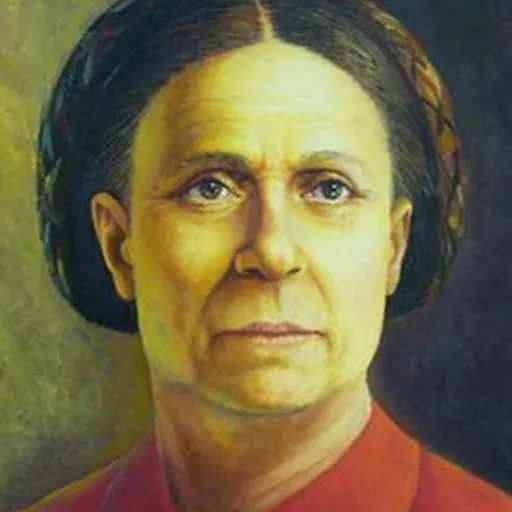
Bárbara de Alencar
Brazilian merchant and revolutionary, Brazil's first political prey
About Bárbara de Alencar
Lived 1760 – 1832 (aged 72). Bárbara de Alencar was a Brazilian revolutionary, political activist and merchant.
Bárbara Pereira de Alencar (11 February 1760 – 18 August 1832) was a Brazilian merchant and revolutionary. She was a major figure in the Pernambucan revolt. She was briefly the president of the Republic of Crato, which was set up in revolt against the Brazilian government. Within 8 days she was captured and tortured by the monarchy, making her the first political prisoner in the history of Brazil.
In 1817, Bárbara participated in her first armed revolt — the Revolution of Crato, which aligned with the broader Pernambucan Revolution and opposed the Portuguese Crown. Together with her sons, the Alencar family ousted the local Portuguese authorities and replaced them with revolutionaries. This new government lasted eight days before Portuguese forces reclaimed control. The consequences for Alencar and her sons were harsh. They were imprisoned under inhumane conditions. After years of legal petitions, letters to the king, and even bribery attempts, they were released in 1820.
She was the mother of José Martiniano Pereira de Alencar and grandmother of the writer José de Alencar and diplomat Baron Leonel Martiniano de Alencar. The writer Paulo Coelho is her sixth-generation descendant.
Biography Bárbara Pereira de Alencar was born on 11 February 1760 in Senhor Bom Jesus dos Aflitos de Exu, in the hinterlands of Pernambuco, on the Caiçara Farm — owned by the Alencar family patriarch, the Portuguese Leonel de Alencar Rego, her grandfather. As a teenager, Bárbara moved to the then village of Crato, in Ceará, where she married the Portuguese merchant José Gonçalves dos Santos. The republican heroine was the mother of the revolutionary leaders José Martiniano Pereira de Alencar and Tristão Gonçalves.
Her father, along with other ancestors, founded the town of Exu. The Alencar family began accumulating wealth through cattle raising and the cultivation of cotton and sugarcane. Through the economic dynamics of the period, they expanded their influence throughout Pernambuco and Ceará, especially the interior, gaining visibility, respect, and political influence.
One of the famous stories from Alencar's childhood is that she survived an attack by indigenous warriors on her family’s home, which was burned down. Her escape and survival were seen as early signs of her strength and resilience. Later, according to the book "Independência do Brasil, as mulheres estavam lá", particularly in the chapter dedicated to her, Alencar chose to marry a man of her preference — 30 years her senior — despite her parents' disapproval. Due to her strong opinions and behavior in an era when female empowerment was unheard of, she earned the reputation of a “woman-man” — a label meant to convey her toughness and assertiveness.
As a multifaceted matriarch, Alencar defied societal expectations. She raised five children, cared for her ill father, managed the family’s distillery (producing cachaça and rapadura), and pursued entrepreneurial ventures, such as investing in cooking pots, despite her husband’s objections. At age 32, Alencar began active political engagement. She was introduced to liberal Enlightenment thinkers like Voltaire, Montesquieu, and Rousseau by the naturalist Manoel de Arruda Câmara. In 1809, after becoming a widow, she officially assumed control of her family — a role she had unofficially held for years.
In 1810, she was called a heroine for her anti-monarchical stance even before the revolution began — a title bestowed by her friend and revolutionary ally, Arruda Câmara. Her children also adopted liberal ideals, influenced by her example. These liberal ideas awakened a political consciousness in Bárbara and her sons, who joined others in the struggle to free Brazil from Portuguese domination. This eventually led to their involvement in the Pernambucan Revolution and the Confederation of the Equator, both of which were rooted in liberal principles.
She financed her sons and other revolutionary participants of the Crato Revolution and relocated to her Alecrim Farm in Piauí during the conflict. Alencar died in 1832 at age 72 on her farm in Piauí.
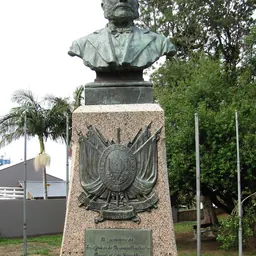
Bárbara de Alencar and the Crato Revolution Barbara was the head of the provisional government that was established by the revolutionaries, serving as the president of the Republic of Crato for 8 days. This made her the first political prisoner in the history of Brazil. The administrative center of the Government of Ceará is called the Bárbara de Alencar Administrative Center A statue of Bárbara de Alencar stands in Fortaleza de Alencar's name is inscribed in the book of Brazilian national heroes in the federal cenotaph Tancredo Neves Pantheon of the Fatherland and Freedom de Alencar was the subject of an epic poem by the writer Caetano Ximenes de Aragão (pt)
Don’t just read it —
keep it.
Full-length biographies made to live with: read them, listen on the way to work, watch them tonight.
- E-book
- Audio
- Video
Instant download · yours to keep · every purchase keeps this site free
Important facts
People in Bárbara de Alencar's life
Named in this biography and alive at the same time
Related people
Same field, nearest in time



Contemporaries
People whose lives overlapped Bárbara de Alencar's




Frequently asked questions
Who was Bárbara de Alencar?
Brazilian merchant and revolutionary, Brazil's first political prey (1760-1832)
When was Bárbara de Alencar born?
Bárbara de Alencar was born on 11 February 1760 in Exu.
When did Bárbara de Alencar die?
Bárbara de Alencar died on 18 August 1832 in Fronteiras.
What was Bárbara de Alencar's occupation?
Bárbara de Alencar was a revolutionary, political activist and merchant.
What nationality was Bárbara de Alencar?
Bárbara de Alencar was Brazilian.
Sources & further reading
· Wikipedia: Bárbara de Alencar
Cite this page
APA: Biography.guide. (2026). Bárbara de Alencar. https://biography.guide/barbara-de-alencar/
MLA: "Bárbara de Alencar." Biography.guide, https://biography.guide/barbara-de-alencar/.
Chicago: "Bárbara de Alencar." Biography.guide. https://biography.guide/barbara-de-alencar/.
Data last updated: 2026-09-22 · Spot an error? Report a correction.
Portrait: Wikimedia Commons · author & licence
Page generated 2026-09-27 04:58 UTC