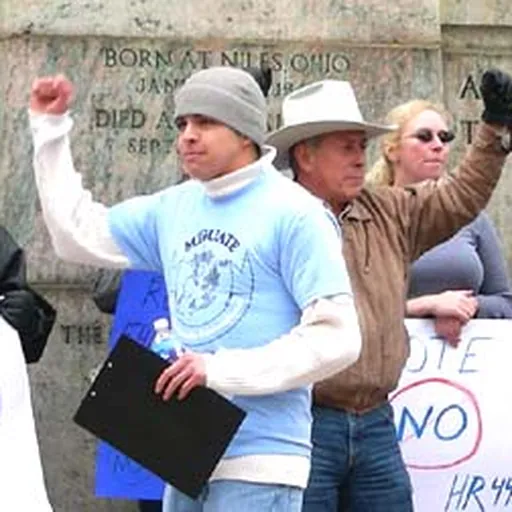
About Baldemar Velasquez
Born 1947. Baldemar Velasquez is an American farmworker and trade unionist, known for Farm Labor Organizing Committee.
Baldemar Velásquez (born February 15, 1947) is an American labor union activist. He co-founded and is president of the Farm Labor Organizing Committee, AFL-CIO. He was named a MacArthur Fellow (also known as the "Genius Grant") in 1989, and awarded the Order of the Aztec Eagle in 1994, the highest honor Mexico can bestow on a non-citizen.
Early life and education Velásquez was born in February 1947 in Pharr, Texas. He was the third of nine children born to Cresencio and Vicenta Castillo Velásquez. Baldemar's father was born into a Mexican-American family in Driscoll, Texas. They rode with other migrant workers in a pickup truck with a canvas-covered bed, huddling around a can of hot ashes and covering themselves in blankets to stay warm. The family's poverty worsened one year when an employer paid his father only half the wages he was owed. Velásquez led his first strike at the age of 12, helping pickers at his summer job win better wages. He began to excel in his studies in the eighth grade, making honor roll. He attended Pandora-Gilboa High School, where he participated in baseball, basketball, football, and track and field, and took college preparatory courses. Templin's teachings deeply influence Velásquez's approach to securing social justice for farmworkers. and Templin encouraged him to volunteer with the Congress of Racial Equality (CORE)—a civil rights organization in which Rustin played a major role. Baldemar Velásquez spent several weeks in the summer of 1968 working with CORE and living with an African American family in Cleveland, Ohio. After graduation, he spent time picking cherries in Michigan to pay off his student loans, and went to Wisconsin to meet with the founder of Obreros Unidos, Jesus Salas (also known as "Jesse Salas"). Velásquez had been deeply influenced by the ideas of Gandhi, César Chávez and Martin Luther King Jr. But the effort largely failed, and in September 1968 Velásquez called a strike against 10 tomato growers in Ohio. Five growers signed contracts recognizing the union, agreeing to a minimum wage and limited health insurance, and promising not to discriminate against union members or union organizers. But in the following year, sustained anti-union opposition from the growers (backed by the American Farm Bureau Federation), the withdrawal of some growers from the tomato market, the refusal of some growers to honor their contracts, and the efforts of some growers to raise wages and improve working conditions caused Velásquez to rethink his organizing strategy. From 1970 to 1983, Velasquez implemented a long-term strategy to build public support for the farmworkers, publicizing the discrimination, low wages, and often appalling working conditions they faced. In 1976, workers at a tomato cannery in Warren, Indiana, struck over the employer's tactic of overrecruiting workers in order to force down wages. The workers spontaneously barricaded themselves inside the cannery, refusing to allow the perishable crop inside until their grievances had been addressed.
Velásquez decided that the union's first target should be the Campbell Soup Company. The goal was three-way bargaining: The produce buyer (Campbell's) would pay slightly more for produce, which would allow growers to pay farmworkers much higher wages. Velásquez asked migrant workers in 1978 to strike growers with contracts with Campbell's, and 2,000 farm workers walked off the job. Velásquez required that all strikers be trained in nonviolent protest techniques, and he worked closely with local churches and religious groups so that large numbers of clergy and nuns were present (which inhibited violence). Campbell's denied any involvement in the strike (claiming the union's dispute was with the growers and not the soup company), and Velásquez announced a boycott in 1979. At the 1984 Democratic National Convention, Velásquez strategically positioned farmworkers in the audience with signs reading "Boycott Campbell's." Cameras focused on the signs during a prime time speech by Democratic presidential candidate Rev. Jesse Jackson, which raised the profile of the boycott. It covered 600 workers at 16 tomato growers in Ohio and 12 cucumber growers in Michigan, an additional 71 growers agreed to hold union organizing elections in the summer of 1986. Once more, Velásquez decided on a boycott when initial attempts to secure a three-way collective bargaining contract failed. Velásquez personally led a four-day, march from Mount Olive, North Carolina, to Raleigh. On September 16, 2004, FLOC signed a collective bargaining agreement with Mount Olive and the growers which covered more than 8,500 of the state's 10,000 guest workers. It was the first union contract for farmworkers in the state, and the first to establish a union hiring hall in Mexico to supply the state with guest workers. The same year, he was one of only 15 individuals appointed to a committee of the International Labour Organization to create global working condition standards for farmworkers. He was later ordained a chaplain by Florida-based Rapha Ministries. As of 2010 serves on the board of Policy Matters Ohio, and the Toledo Zoo. In November 2010, Ohio Governor Ted Strickland appointed him to the Commission on Hispanic/Latino Affairs, a state panel which analyzes the problems of and provides information about programs affecting Spanish-speaking people in that state. He was named a MacArthur Fellow (the so-called "Genius Grant") the following year by the John D. and Catherine T. MacArthur Foundation. In 1994, the National Council of La Raza bestowed on him the Hispanic Heritage Leadership Award.
Velásquez has also received honorary Doctor of Humane Letters degrees from Bowling Green State University in 1996, Bluffton College in 1998, and the University of Toledo in 1998.
Footnotes
Don’t just read it —
keep it.
Full-length biographies made to live with: read them, listen on the way to work, watch them tonight.
- E-book
- Audio
- Video
Instant download · yours to keep · every purchase keeps this site free
Important facts
People in Baldemar Velasquez's life
Named in this biography and alive at the same time


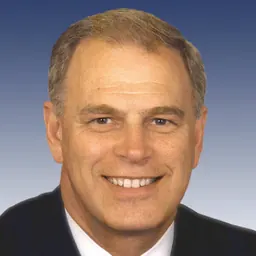
Related people
Same field, nearest in time
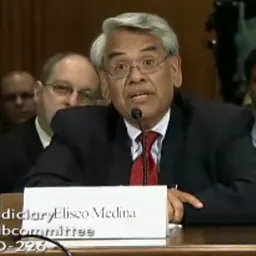



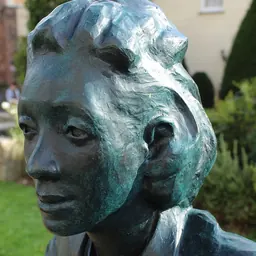
Contemporaries
People whose lives overlapped Baldemar Velasquez's

Frequently asked questions
Who is Baldemar Velasquez?
American labor leader
When was Baldemar Velasquez born?
Baldemar Velasquez was born on 15 February 1947 in Pharr.
What is Baldemar Velasquez's occupation?
Baldemar Velasquez is a farmworker and trade unionist.
What is Baldemar Velasquez known for?
Baldemar Velasquez is known for Farm Labor Organizing Committee.
What nationality is Baldemar Velasquez?
Baldemar Velasquez is American.
Sources & further reading
· Wikipedia: Baldemar Velasquez
Cite this page
APA: Biography.guide. (2026). Baldemar Velasquez. https://biography.guide/baldemar-velasquez/
MLA: "Baldemar Velasquez." Biography.guide, https://biography.guide/baldemar-velasquez/.
Chicago: "Baldemar Velasquez." Biography.guide. https://biography.guide/baldemar-velasquez/.
Data last updated: 2026-09-23 · Spot an error? Report a correction.
Portrait: Wikimedia Commons · author & licence
Page generated 2026-09-27 05:04 UTC