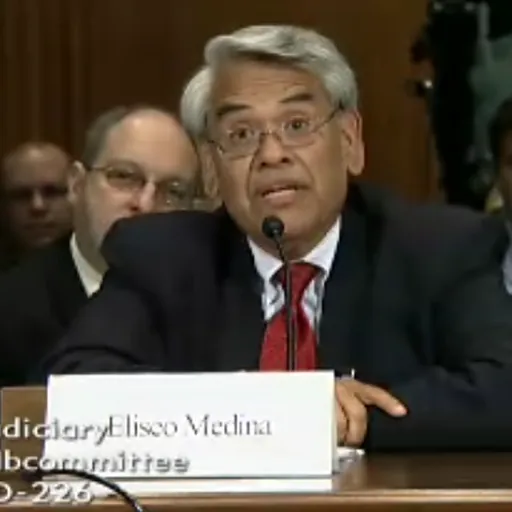
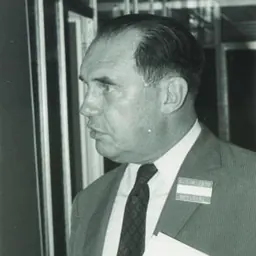
Eliseo Medina
Labor organizer with United Farm Workers, Service Employees International Union
About Eliseo Medina
Born 1946. Eliseo Medina is a farmworker and trade unionist.
Eliseo Vasquez Medina (born January 24, 1946) is a Mexican-American labor union activist and leader, and advocate for immigration reform in the United States. From 1973 to 1978, he was a board member of the United Farm Workers.
After leaving the UFW in 1978 he worked for several unions, ultimately becoming an international executive vice president of the Service Employees International Union, the first Mexican American to serve on the union's executive board. He later served as secretary-treasurer of SEIU; he resigned from that position effective October 1, 2013.
Early life Medina was born in Huanusco, Zacatecas, Mexico, to Eliseo and Guadalupe Medina, both farm workers. In the 1940s and 1950s, his father was employed as a farmworker in the United States, sometimes as an undocumented worker and sometimes as a "bracero" (documented Mexican worker brought to the U.S. temporarily to work in agriculture). His mother's parents had been killed in the Mexican Revolution, and his mother had a strong sense of social justice which she passed to her children.
In 1954, the family moved to Tijuana and Medina's father worked as an undocumented worker in the U.S. for two years. On September 16, 1965, he participated in a meeting called by the National Farm Workers Association (the precursor to the United Farm Workers) to decide whether to join a strike that had been started by a small Filipino union. That meeting launched the Delano grape strike. Although it took almost all the money he had (he literally broke open his piggy bank to pay his membership dues), he joined the union that day. In the spring of 1966, as the grape strike continued at various vineyards, Medina sought help in getting a job at one of the companies that had signed a contract with the new union, but was recruited by Dolores Huerta to be a union organizer in the UFW's attempt to form at union at the DiGiorgio Corporation. He met César Chávez as he was leaving the union office. He was beaten by Teamsters organizers (who were vying with the UFW for the farmworkers) during the DiGiorgio organizing campaign. His experiences during the DiGiorgio organizing campaign attracted Chavez's notice, and Medina was sent to Chicago to lead the union's boycott of grapes in that city. He continued to rise within the ranks of the organization and became one of its leaders during its years of greatest strength. He worked closely with Dolores Huerta, and was jailed. He was so shy that he often could not speak during interviews or press conferences, but he built one of the most successful boycott operations in the country, which ultimately helped force the growers to sign historic contracts in 1970. While in Chicago, he also raised several thousand dollars for the UFW. He concluded that Ross' organizing techniques did not translate well into urban areas and to secondary boycotts, and he began developing his own techniques and ideas about building support among non-farmworkers based on his Chicago experiences. Many supermarket chains stopped selling grapes.
In 1971, Medina met Dorothy Johnson, a UFW volunteer from Seattle, when she requested an assignment on the Chicago boycott based on Medina's reputation. She followed Medina to California, Florida, Ohio, and back to California again. The couple were married at Medina's mother's house in Delano in 1976. In 1972, a coalition of agricultural owners and right-to-work advocates successfully encouraged state legislators to introduce a bill that would ban union hiring halls. However, César Chávez had ordered him to return to California. The UFW's contracts with grape growers in the Coachella Valley were expiring, but the growers were signing sweetheart contracts with the Teamsters rather than negotiating with the UFW. A strike against the Coachella Valley growers had erupted, and Medina successfully led the farmworkers in opposing the Teamsters and settling the strike. He was dropped from the Chávez slate, but after Manuel Chávez (César's cousin) explained to Medina what his actions meant, Medina rejoined the Chávez slate. In his first three months in office, the union won 13 elections and added more than 3,000 new members. If negotiations stalled, Medina's back-up strategy was ask union members to perform their jobs sloppily and then leave work. The employer would institute a lockout, a strike would begin, and the employer would return to the bargaining table to get the harvest in. In 1977, Medina was elected Second Vice President of the UFW (replacing Philip Vera Cruz), which added credence to these assumptions. UFW co-founded Dolores Huerta said, "He would have been president if he'd stayed." Medina was also frustrated by Chávez's insistence that all UFW staff be unpaid volunteers, a policy not conducive to building a professional, long-lasting union. Medina later said: Medina wasn't alone in leaving, however. Between 1978 and 1981, many of the UFW's top leaders and staff left the union or were forced out, including Secretary-Treasurer and UFW co-founder Gilbert Padilla, UFW chief organizer Marshall Ganz, legal department director Jerry Cohen and most of his staff, and union health services program director Jessica Govea.
SEIU After leaving the UFW, Eliseo Medina worked for the American Federation of State, County and Municipal Employees for two years, helping organize workers in the University of California. He later organized public employees in Texas for the union. Medina turned around the "failing" local: Membership soared from 1,700 to 10,000, and then Local 2028 absorbed a far larger independent union which had been SEIU's rival for decades. Medina was an active vice president, overseeing many successful union organizing campaigns in the right-to-work Southwest and Deep South. He played a critical role in SEIU's successful strike and organizing campaign at the University of Miami in 2001, engaging in a hunger strike in support of the janitors being organized there.
In 2005, he brought the Latino voter project Mi Familia Vota to Arizona, where he and others led a successful effort to enact by referendum an increase in the state minimum wage. Since the late 1990s, his views on immigration have been largely been adopted by the American labor movement, and he was the Change to Win Federation's chief lobbyist on immigrant rights in 2006. As of 2006, he oversaw the activities of SEIU locals in 17 Southwestern and West Coast states.
Retirement and immigration reform Medina announced on September 3 that he would resign as an executive vice president and secretary-treasurer of SEIU effective October 1, 2013. He said he wished to concentrate more of his time on winning passage of immigration reform. In November and December 2013, Medina undertook a 22-day hunger strike, at the age of 67, to draw attention to the need for action on immigration reform. During his fast, Medina was visited by President Obama in a tent near the Capitol in Washington DC.
Footnotes
Don’t just read it —
keep it.
Full-length biographies made to live with: read them, listen on the way to work, watch them tonight.
- E-book
- Audio
- Video
Instant download · yours to keep · every purchase keeps this site free
Important facts
People in Eliseo Medina's life
Named in this biography and alive at the same time
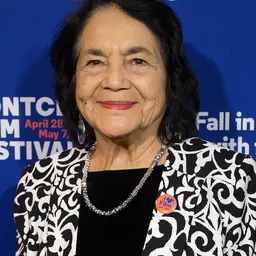
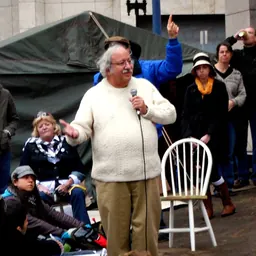



Related people
Same field, nearest in time
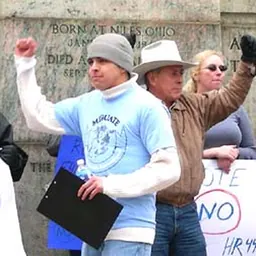




Contemporaries
People whose lives overlapped Eliseo Medina's

Frequently asked questions
Who is Eliseo Medina?
Labor organizer with United Farm Workers, Service Employees International Union
When was Eliseo Medina born?
Eliseo Medina was born on 24 January 1946 in Huanusco Municipality.
What is Eliseo Medina's occupation?
Eliseo Medina is a farmworker and trade unionist.
Sources & further reading
Cite this page
APA: Biography.guide. (2026). Eliseo Medina. https://biography.guide/eliseo-medina/
MLA: "Eliseo Medina." Biography.guide, https://biography.guide/eliseo-medina/.
Chicago: "Eliseo Medina." Biography.guide. https://biography.guide/eliseo-medina/.
Data last updated: 2026-09-22 · Spot an error? Report a correction.
Portrait: Wikimedia Commons · author & licence
Page generated 2026-09-27 04:59 UTC