
About Bahruz Kangarli
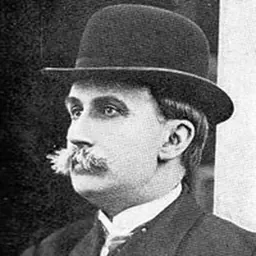
Lived 1892 – 1922 (aged 30). Bahruz Kangarli was a Russian and Azerbaijani painter.
Bahruz Shirali bey oglu Kangarli (; 22 January 1892, Nakhchivan – 7 February 1922, Nakhchivan) an Azerbaijani artist who paved the way for innovation with his realistic works by working in the first academic painting style in the art of Azerbaijani painting.
Bahruz Kangarli's artistic legacy, which consists of about 2000 works of various themes and genres, has attracted the attention of the general public, has been collected successively and has become the decoration of exhibitions and museum expositions.
Biography Early years Bahruz Kangarli was born on January 22, 1892, in the city of Nakhchivan. The artist's mother, Aziz, died when Bahruz was a baby, after that, his father, Shirali Bey, married Shirin Khanim.
His father, Shirali bey, studied at the gymnasium, studied Persian and Russian languages, got acquainted with Eastern and European literature, was recognized as an advanced intellectual, and worked as a translator in the city court. He sent his son to study in a new type of city school called "Khayriyya". Bahruz Kangarli benefited from the books and picture books brought home by his father, showed interest in drawing from an early age, copied pictures, and tried to increase his level of knowledge by learning Russian. Leafing through Molla Nasreddin magazine, to which his father subscribed, fed Bahruz's. spiritual world. He got acquainted with the columns and caricatures published in the magazine, and learned the secrets of drawing by drawing the copies of funny pictures.
Bahruz Kangarli, the first Azerbaijani graduate of the art school organized under the "Society for the Promotion of Art" in Tbilisi, an important cultural center of Transcaucasia, found a favorable ground for the comprehensive development of his talent there. A number of his paintings in pencil, charcoal, watercolors and oil paints, including busts and statues such as masterpieces of ancient Greek and Roman art such as "Head of Apollo", "Laokoon", Michelangelo's "The Rebellious Slave" can be an example.
Children and teenagers would watch the artist's exhibitions, gather around him while he was painting from nature, and enjoy admiring his skill. Such visual painting habits became living lessons and practice exercises for art lovers. The artist is looking for important ways to promote the art of painting, he prepares painting albums called "Nakhchivan Yadigari", tries to distribute such albums among the local population, and conducts interesting conversations among art lovers. From 1912 to 1918, the artist painted large-scale panels for more than 40 performances of Najaf Bey Vazirov's "Pahlavanani-zamane", "Haji Gambar", "Musibati-Fakhreddin", Abdurrahim Bey Hagverdiev's "Hungry Men" on the stage of the Nakhchivan Theater. provided stage design and costume sketches.
His work during the Azerbaijan SSR In the summer of 1920, Nakhchivan was occupied by the Bolsheviks' Red Army, the Soviet government was established, and a number of measures were implemented in the field of education and culture. In the new social environment, Bahruz Kangarli finds an opportunity to expand his creative activity. As shown in the memoirs of his contemporaries, in 1920–1921, Bahruz Kangarli created a number of complete, artistically perfect works. Of these, the symbolic image of the Azerbaijani fighters who took part in the First World War - the image of "Golden Soldier" should be especially noted.
On February 15, 1921, at the initiative of the Nakhchivan Revolutionary Committee, an exhibition of about 500 paintings by Bahruz Kangarlini was shown, and a certain part of the funds obtained from the sale of some works to the population was donated to an orphanage in the city according to the artist's wish. As with that oil portrait, Kangarli's teacher Oskar Schmerling's pencil profile portrait is characterized by European national features. The portrait of Kangarli's classmate, Georgian artist Lado Gudiashvili, is lively and natural due to his individual features. The artist, who usually leads a quiet and secluded life and stays out of politics, demonstrated his civic attitude towards the fate of the people, sharp social contradictions, national enmity and massacres, and created a vivid and vivid chronicle of the tragic events related to the reaction and Armenian aggression. Their sad and hopeless faces show signs of misery, loneliness, fear and torture. These poor people, whose faces are pale, their clothes are torn, and their fate is bitter, are drowning in the sea of sorrow and are waiting for help in asking for mercy, cure, and salvation.
In May 2001, by the decision of the Supreme Assembly of the Nakhchivan Autonomous Republic, on the occasion of the 110th anniversary of the artist's birth, the exhibition hall of the Nakhchivan Artists' Union was named after Bahruz Kangarli. He praised Bahruz Kangarli's creativity and said, "His works are the national treasure of the Azerbaijan state".
Paintings Bahruz Kangarli's artistic legacy, which consists of about 2000 works of various themes and genres, has attracted the attention of the general public, has been collected successively and has become the decoration of exhibitions and museum expositions.
Don’t just read it —
keep it.
Full-length biographies made to live with: read them, listen on the way to work, watch them tonight.
- E-book
- Audio
- Video
Instant download · yours to keep · every purchase keeps this site free
Important facts
People in Bahruz Kangarli's life
Named in this biography and alive at the same time

Related people
Same field, nearest in time


Contemporaries
People whose lives overlapped Bahruz Kangarli's

Frequently asked questions
Who was Bahruz Kangarli?
Azerbaijani painter (1892–1922)
When was Bahruz Kangarli born?
Bahruz Kangarli was born on 10 January 1892 in Nakhchivan.
When did Bahruz Kangarli die?
Bahruz Kangarli died on 7 February 1922 in Nakhchivan.
What was Bahruz Kangarli's occupation?
Bahruz Kangarli was a painter.
What nationality was Bahruz Kangarli?
Bahruz Kangarli was Russian and Azerbaijani.
Sources & further reading
Cite this page
APA: Biography.guide. (2026). Bahruz Kangarli. https://biography.guide/bahruz-kangarli/
MLA: "Bahruz Kangarli." Biography.guide, https://biography.guide/bahruz-kangarli/.
Chicago: "Bahruz Kangarli." Biography.guide. https://biography.guide/bahruz-kangarli/.
Data last updated: 2026-09-25 · Spot an error? Report a correction.
Page generated 2026-09-27 05:12 UTC