
About Baba Dyal Singh
Lived 1783 – 1855 (aged 71–72). Baba Dyal Singh was a missionary.
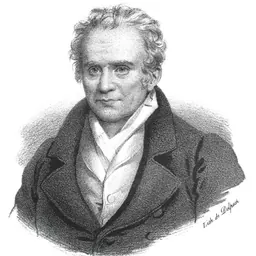
Baba Dayal (17 May 1783 – 30 January 1855), also spelt as Baba Dyal, was a non-Khalsa, Sahajdhari Sikh reformer whose main mission was to bring Sikhs back to the Adi Granth and Simran. He was the founder of the Nirankari sect of Sikhism.
Early life Dyal Singh was born in Peshawar on 17 May 1783 and was the son of a banker named Ram Sahai and Ladikki, daughter of Vasakha Singh of Rohtas. His father died while he was a baby. Growing up, he was educated in Gurmukhi, Persian, and Pashto.
Religious career
After the death of his mother in 1802, he moved to Rawalpindi, where he worked as a grocer. It is during this time that his religious preaching began to the local Sikh congregations at two gurdwaras. At the age of 18, it is claimed he heard a voice inside his head telling him to preach against ritualism, expel the darkness of ignorance, and that he was the true Nirankari. This event is taken as a sign of enlightenment. His message was that ritualism and practices, which had been firmly spurned by the Sikh gurus, were seeping back into the religion again, much to his dismay. One of the things he spoke out against the most was the use of images as a means of worship, as he believed this was against the Sikh tenet of the Divine being Nirankar (meaning "formless" or "shapeless"). During the rise of the Sikh Empire, many Hindu practices had entered into Sikhism, which may have spurned his reaction against such practices. Thus, him and his growing group of followers became known as the Nirankaris. His own marriage in the year 1808 may have been the first recorded instance of the now-mainstream Sikh wedding tradition, known as the Lavan and Anand. This act was revolutionary as he did not invite a Brahmin priest to the wedding and instead chose verses of the Sikh scripture, Guru Granth Sahib, to be read out during the occasion. Dyal was also against gross displays of personal wealth by the upper-classes of Sikh society, such as by royals. He reiterated the Sikh teaching of Kirat Karo, or honest living. He also had aniconistic ideals as he was against the use of idols as a means of worship. He was against the worship of Indic deities by Sikhs. He promoted filial piety, where children revered and respected their begetter. He was anti-narcotics and was opposed to the use of intoxicants. He preferred simple and humble religious ceremonies rather than profligate ones. He promoted naam simran and naam japna as a vital practice for Sikhs. He preached about the centrality of the holy scripture, the Guru Granth Sahib, as the focus and aim for Sikhs to direct themselves spiritually towards and the importance of its message. He did not preach nor practice renunciation. Most of his followers were shopkeepers and traders.
After being refused entry to one of his local gurdwaras he was known to preach at due to his controversial teachings, he decided to establish his own durbar (court) by purchasing land and constructing a small structure there. It is said that Ranjit Singh of the Sikh Empire once visited him.
His sect was opposed by the Bedi descendents of Guru Nanak and the Brahmin caste.
Death and successor Dyal died on 30 January 1855 and his eldest son, Darbara Singh, succeeded him as leader of the Nirankari sect and whom responsible for collecting and recording his father's teachings. His successor spread the teachings of the sect outside of the Rawalpindi area.
Don’t just read it —
keep it.
Full-length biographies made to live with: read them, listen on the way to work, watch them tonight.
- E-book
- Audio
- Video
Instant download · yours to keep · every purchase keeps this site free
Important facts
People in Baba Dyal Singh's life
Named in this biography and alive at the same time

Related people
Same field, nearest in time


Contemporaries
People whose lives overlapped Baba Dyal Singh's


Frequently asked questions
Who was Baba Dyal Singh?
Sikh missionary
When was Baba Dyal Singh born?
Baba Dyal Singh was born in 1783.
When did Baba Dyal Singh die?
Baba Dyal Singh died in 1855.
What was Baba Dyal Singh's occupation?
Baba Dyal Singh was a missionary.
Sources & further reading
Cite this page
APA: Biography.guide. (2026). Baba Dyal Singh. https://biography.guide/baba-dyal-singh/
MLA: "Baba Dyal Singh." Biography.guide, https://biography.guide/baba-dyal-singh/.
Chicago: "Baba Dyal Singh." Biography.guide. https://biography.guide/baba-dyal-singh/.
Data last updated: 2026-09-20 · Spot an error? Report a correction.
Page generated 2026-09-27 05:06 UTC