
Baba Deep Singh
Sikh martyr, Warrior and Scholar
About Baba Deep Singh
Lived 1682 – 1757 (aged 75).
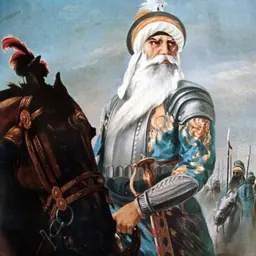
Baba Deep Singh (26 January 1682 – 13 November 1757) is revered among Sikhs as one of the most hallowed martyrs in Sikhism. He is remembered for his sacrifice and devotion to the teachings of the Sikh Gurus. Baba Deep Singh was the first head of Misl Shaheedan Tarna Dal – an order of the Khalsa military established by Nawab Kapur Singh, the then head of Sharomani Panth Akali Buddha Dal. The Damdami Taksal also state that he was the first head of their order. He is remembered by Sikhs as one of their notable martyrs of the 18th century. He is one of two Sikh individuals who have a teġ vāhī shrine at the Golden Temple complex commemorating their martyrdom, the other being Baba Gurbaksh Singh. Deep Singh was one of three Sikhs of the 18th century who are believed to restored the Dasam Granth via gathering scattered writings, the other two namely being Mani Singh and Sukha Singh of Patna.
Early life Baba Deep Singh was born in a Sandhu Jat Sikh family on 26 January 1682. His father Bhagta was a Farmer, and his mother was Jioni. He lived in the Pahuwind village of Amritsar district.
He went to Anandpur Sahib on the day of Vaisakhi in 1700, where he was baptised into Khalsa by Guru Gobind Singh, through the Khande di Pahul or Amrit Sanchar (ceremonial initiation into Khalsa). As a youth, he spent considerable time in close companionship of Guru Gobind Singh, learning weaponry, riding and other martial skills. From Bhai Mani Singh, he learnt reading and writing Gurmukhi and the interpretation of the Gurus' words. After spending two years at Anandpur, he returned to his village in 1702, before he was summoned by Guru Gobind Singh at Talwandi Sabo in 1705, where he helped Bhai Mani Singh in making copies of the scripture Guru Granth Sahib.
Military career
In 1709, Baba Deep Singh joined Banda Singh Bahadur during the Battle of Sadhaura and the Battle of Chappar Chiri. In 1733, Nawab Kapur Singh appointed him a leader of an armed squad (jatha). On the Vaisakhi of 1748, at the meeting of the Sarbat Khalsa in Amritsar, the 65 jathas of the Dal Khalsa were reorganized into twelve Misls. Baba Deep Singh was entrusted with the leadership of the Shaheed Misl.
With the invasion of India by Nadir Shah between January–May 1739 and the total destruction of the Mughal administration in the Punjab as a result, the Sikhs saw an opportunity for themselves and pillaged and sought revenge on their enemies. According to the contemporary writer Harcharan Das in his Chahár Gulzár Shujá'í, in 1740, one year after the attack of Nader Shah, a large force of Sikhs and Jats, including local Muslims, seized the Sirhind sarkar of the Jullunder Doab, establishing a short-lived polity with a person named Daranat Shah as its head. The rebellion was eventually crushed by a Mughal force in 1741 under Azimullah Khan and the Sikhs retreated to the Lakhi Jungle. According to Hari Ram Gupta, Daranat Shah was Baba Deep Singh. and in the ensuing conflict Baba Deep Singh was decapitated.
There are two accounts of Baba Deep Singh's death. According to one popular version, Baba Deep Singh continued to fight after having been completely decapitated, slaying his enemies with his head in one hand and his sword in the other. According to the second version, he was mortally wounded with a blow to the neck, but not completely decapitated. After receiving this blow, a Sikh reminded Baba Deep Singh, "You had resolved to reach the periphery of the pool." On hearing the talk of the Sikh, he held his head with his left hand and removing the enemies from his way with the strokes of his Khanda "with his right hand, reached the periphery of Harmandir Sahib where he breathed his last. The Singhs celebrated the Bandhi-Sor Divas of 1757 A.D. in Harmandir Sahib".
The Sikhs recovered their prestige by defeating the Afghan army and the latter were forced to flee.
Legacy
The spot where Baba Deep Singh's head fell is marked in the Golden Temple complex, and Sikhs from around the world pay their respects there. Baba Deep Singh's Khanda (double-edged sword), which he used in his final battle, is still preserved at Akal Takht, first of the five centers of temporal Sikh authority.
Battles fought by Baba Deep Singh
Battle of Sadhaura (1710) Battle of Chappar Chiri (1710) Siege of Sirhind (1710) Battle of Amritsar (1757)
In popular culture Anokhe Amar Shaheed Baba Deep Singh Ji, an Indian historical biographical film by Jaswinder Chahal was released in 2006.
Gallery
Don’t just read it —
keep it.
Full-length biographies made to live with: read them, listen on the way to work, watch them tonight.
- E-book
- Audio
- Video
Instant download · yours to keep · every purchase keeps this site free
Important facts
People in Baba Deep Singh's life
Named in this biography and alive at the same time

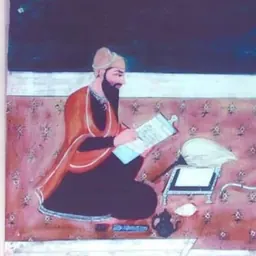


Contemporaries
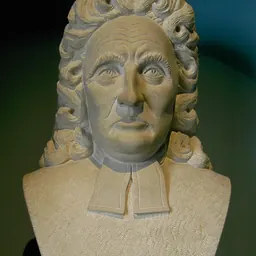
People whose lives overlapped Baba Deep Singh's




Frequently asked questions
Who was Baba Deep Singh?
Sikh martyr, Warrior and Scholar
When was Baba Deep Singh born?
Baba Deep Singh was born on 26 January 1682 in Amritsar district.
When did Baba Deep Singh die?
Baba Deep Singh died on 13 November 1757 in Harmandir Sahib.
Sources & further reading
Cite this page
APA: Biography.guide. (2026). Baba Deep Singh. https://biography.guide/baba-deep-singh/
MLA: "Baba Deep Singh." Biography.guide, https://biography.guide/baba-deep-singh/.
Chicago: "Baba Deep Singh." Biography.guide. https://biography.guide/baba-deep-singh/.
Data last updated: 2026-09-25 · Spot an error? Report a correction.
Page generated 2026-09-27 05:10 UTC