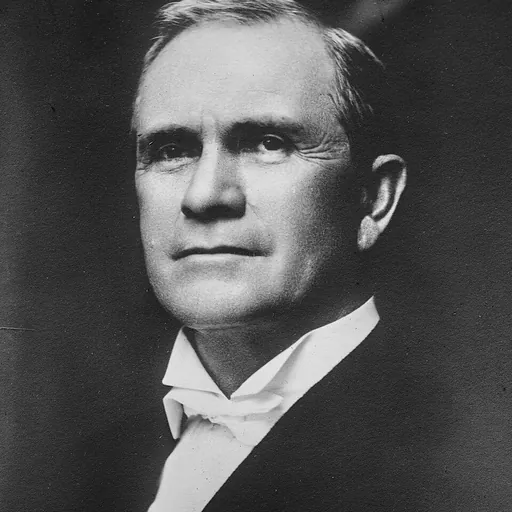
About B. B. Comer
Lived 1848 – 1927 (aged 78). B. B. Comer was an American politician.
Braxton Bragg Comer (November 7, 1848 – August 15, 1927) was an American politician who served as the 33rd governor of Alabama from 1907 to 1911, and a United States senator in 1920. As governor, Comer presided over several reforms such as railroad regulation and the lowering of business rates in Alabama to make them more competitive with other states. He also increased funding for the public school system, resulting in more rural schools and high schools in each county for white students and a rise in the state's literacy rate.
Comer was a planter and businessman before and after entering politics as a Democrat. He inherited the Comer family plantation, which was devoted to corn and cotton production. He had an interest in the Comer mines near Birmingham known as the Eureka Mines. In 1897 he invested $10,000 with the Trainer family, who intended to develop textile mills in the state, and he was appointed president of Avondale Mills, which he developed in Birmingham, serving in that role until he died in 1927.
Early life and education
Comer was born on November 7, 1848, in Spring Hill, Alabama. He was the fourth son of John Fletcher and Catharine (Drewry) Comer. As planters, Comer's parents had built their wealth based on enslaved labor for their cotton plantation. B. B. Comer began his education at the age of ten under the tutelage of E. N. Brown.
In 1864 Comer went to the University of Alabama, but in April 1865, was forced to leave when General John T. Croxton's troops burned the university. He enrolled at the University of Georgia in Athens, where he joined the Phi Kappa Literary Society. He transferred to Emory and Henry College in Virginia, where he graduated in 1869 with AB and AM degrees.
Marriage and family In 1872, Comer married Eva Jane Harris of Cuthbert, Georgia. He built a large house for them at Comer Station, Barbour County. He and his wife remained married until her passing on March 6, 1920, the day after he had been appointed Senator by Governor Kilby.
Early business career Following graduation, Comer returned to Spring Hill and helped to manage the family plantation. He primarily grew corn and cotton on what became a plantation. He continued to operate his Barbour County plantation, with his brother John managing it, after he moved his family to Anniston in east central Alabama in 1885. Comer's brother, J.W. Comer, operated the family's plantation in Barbour County. An important source of wealth for John Comer, B. B. Comer's brother, was the development of the Eureka Mines.
Avondale Mills
Another of Comer's enterprises was Avondale Mills, which, with his sons' help, became one of the largest textile companies in Alabama. The Trainer family, who had a textile business in Chester, Pennsylvania, planned to expand its business into the South through the new and growing industrial city of Birmingham. It offered stock to business leaders, such as Frederick Mitchell Jackson Sr., who agreed to commit $150,000 to bring the mills to Birmingham. Jackson, president of Birmingham's Commercial Club, a forerunner of the Birmingham Area Chamber of Commerce, pledged "to help give employment to those badly in need of it in the young and struggling city of Birmingham." B. B. Comer's son, James McDonald Comer, later recalled that his father was motivated to participate in the new business by "feeling that Birmingham needed an industry which could employ women as well as men."
Accepting the businessman's pledges of financial participation, the Trainers sought a local investor to assume the presidency of the mill. In 1897, they approached Braxton Bragg Comer. The future governor accepted the offer and invested $10,000 into the enterprise. From 1897 until 1927, he served as president of Avondale Mills, directing continued expansion to new sites.
In 1897, Comer built the first mill in Avondale, an area that would become part of Birmingham. During the first year of its operation, Avondale Mills used 4,000 bales of cotton. By 1898, Avondale Mills employed 436 laborers and generated $15,000 in profit. By the time B. B. Comer became governor of Alabama in 1907, Avondale Mills had declared $55,000 in profit and produced almost 8,000,000 yards of material. By the turn of the century, Avondale Mills had set the course for future development.
Avondale Mills began with 30,000 spindles in the first mill in Birmingham and grew over the next thirty years to include ten mills in seven communities, totaling 282,160 spindles. The mills [included]: Eva Jane, the Central, the Sally B, and the Catherine in Sylacauga; the Alexander City Cotton Mills, the Sycamore Mills, Mignon, and Bevelle Mill, and the Pell City Manufacturing Company.
As cotton prices fell, poor white farmers lost their land and turned to sharecrop and tenancy.
Although a common practice at the time, the mills used child labor. See Avondale Mills.
Railroad Commission Comer was a vocal advocate for railroad reform. Alabama business owners were at a disadvantage when competing for business with companies based in Georgia due to that state's lower freight rates. The Birmingham Commercial Club and the Birmingham Freight Bureau, organizations in which Comer had significant roles, found evidence of railroad rate discrimination. Comer believed giving more power to the state's Railroad Commission was the best way to end the discrimination and lower rates to a level allowing Alabama companies to compete with those in Georgia. But, the state legislature and delegates to the 1901 Constitutional Convention did not strengthen the commission's power.
When the Railroad Commission did not change rates after two more years, Comer switched tactics to run for a seat on the commission, which had recently been converted to an electoral office. He campaigned to limit the power of the railroads in favor of shipping.
Political Background
Eufaula Massacre of 1874 and Political Intimidation Comer played a part in the 1870s white supremacist campaign of terrorism that led to the disenfranchisement of Blacks. He and his brother, Wallace, led a Spring Hill, Alabama, mob that carried out the Eufaula Massacre of 1874. On Election Day, Comer led the White League to disrupt the election and ambushed a group of around 1,000 Black men going to the polls. The mob massacred at least seven Blacks, shot at least seventy more, and prevented the rest of the crowd from voting. That evening some of Comer's mob stormed an office where ballots were being counted, burned the ballots so the white candidate could declare victory, and murdered the 16-year-old son of an elections supervisor. When a witness named Comer as a leader of the mob, the witness was falsely charged with perjury, intimidating others from coming forward.
The disfranchisement of blacks by the 1901 constitution and suffrage amendment had reduced the Republican Party as an active force in the state. For more than 60 years, until federal civil rights legislation was passed to enforce the constitutional rights of African Americans in the mid-1960s, Alabama was essentially a one-party state, with elections won in the Democratic primaries.
Gubernatorial Campaign of 1908 The 1906 gubernatorial campaign in the Democratic primary...was notable as the party "dropped the word 'Conservative' from its formal name, demonstrating that it was comfortable with a more progressive platform." White foremen brought in additional bonded African Americans as convict labor as well. William Millin, a prominent African-American union leader, protested these conditions and was arrested. A mob took him from jail and lynched him.
In mid-August 1908, a delegation of prominent Birmingham citizens visited leaders of the striking miners and issued an explicit threat. They said that unless the strike ended, Birmingham would "make Springfield [Illinois] (where 12,000 whites had burned down the African-American section of the city) look like six cents.". Governor Comer said, "We are outraged at the attempts to establish social equality between black and white miners." He added that he would "not tolerate eight or nine thousand idle niggers in the state of Alabama."
Educational reform Comer's reforms to improve education for whites were funded by increased revenues to the state. Comer directed funds to the building of white rural schools and county high schools (at least one in each county), and increasing the appropriations made to the University of Alabama, the Alabama Polytechnic Institute in Auburn, the nine agricultural schools, the normal schools, and the Girl's Technical School at Montevallo. In addition, the state took control of the Alabama Boy's Industrial School.
More than 25 percent of the state's revenue in 1910 was derived from leasing African-American convicts to private enterprises. The journalist Douglas Blackmon notes that Comer based his improvements for white citizens on funds derived from the slave labor of African Americans.
Comer adamantly asserted that investment by the state in its educational infrastructure was "of the utmost importance, advising the legislature "...to be liberal in their appropriations to the University of Alabama, Auburn (University), (The University of) Montevallo, all the schools of Alabama, as much so as the finances of the state will admit, because the investment is the best."
A testament to Comer's emphasis on education as the supreme attribute of any society, one of his final actions was to direct the construction of the Catherine Comer School in Barbour County. Due to mandatory segregation in educational facilities at the time, only white children could attend the Catherine Comer School. To ensure that all had access to educational opportunities, Comer also directed the construction of the Beckie Comer School, also in Barbour County.
Following his short time in the Senate, Comer spent the remainder of his life following his business pursuits. Aside from issuing his endorsement for Alabama gubernatorial candidate A.H. Carmichael, Comer refrained from political activity following his term in the U.S. Senate.
His improvements to Alabama's educational systems benefitted white students, while African-American schools and students were underfunded. Literacy rates for whites increased during his tenure as governor. The Democratic legislature consistently underfunded African-American education.
Although criticized early in his career as an industrialist for his attitudes towards child labor, Comer progressed with the common attitude and, as governor, passed a relatively progressive law requiring that no child under 12 years of age be employed at a textile mill.
The Comer Foundation, established in his name and headquartered in Birmingham, provides substantial scholarships to students living in the Alabama counties where Comer's mills once operated.
More recently, Comer has been recognized as a progressive politician who advocated for increasing state revenue sources to benefit residents experiencing low incomes. Described as "no flaming liberal and...flawed like any person in history", Comer is recognized for his progressive stance concerning adequately funding state-provided services.
Numerous institutions and places were named for Comer: Comer Hall at Auburn UniversityB. B. Comer Memorial High School, B. B. Comer Memorial Elementary School, and B. B. Comer Memorial Library, all in Sylacauga, once home to one of Avondale's largest mills. B. B. Comer Hall at the University of Alabama houses the Department of Modern Languages. The federal building in Birmingham. Braxton Bragg Comer Hall at Auburn University houses offices and labs for the School of Agriculture.
B. B. Comer Bridge in Scottsboro, Alabama.
Don’t just read it —
keep it.
Full-length biographies made to live with: read them, listen on the way to work, watch them tonight.
- E-book
- Audio
- Video
Instant download · yours to keep · every purchase keeps this site free
Important facts
People in B. B. Comer's life
Named in this biography and alive at the same time



Related people
Same field, nearest in time






Contemporaries
People whose lives overlapped B. B. Comer's




Frequently asked questions
Who was B. B. Comer?
American politician (1848-1927)
When was B. B. Comer born?
B. B. Comer was born on 7 November 1848 in Barbour County.
When did B. B. Comer die?
B. B. Comer died on 15 August 1927 in Birmingham.
What was B. B. Comer's occupation?
B. B. Comer was a politician.
What nationality was B. B. Comer?
B. B. Comer was American.
Sources & further reading
Cite this page
APA: Biography.guide. (2026). B. B. Comer. https://biography.guide/b-b-comer/
MLA: "B. B. Comer." Biography.guide, https://biography.guide/b-b-comer/.
Chicago: "B. B. Comer." Biography.guide. https://biography.guide/b-b-comer/.
Data last updated: 2026-09-24 · Spot an error? Report a correction.
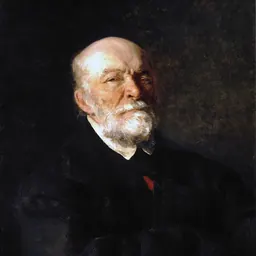
Portrait: Wikimedia Commons · author & licence
Page generated 2026-09-27 05:08 UTC