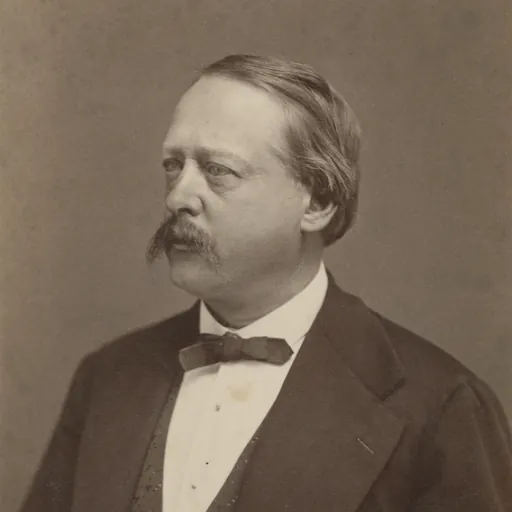
About Axel Key
Lived 1832 – 1901 (aged 69). Axel Key was a Swedish politician and pathologist.
Ernst Axel Henrik Key (25 October 1832 – 27 December 1901) was a Swedish pathologist, member of parliament, writer and rector at Karolinska Institute.
Biography
Upbringing and education Key was born in 1832 in Johannisberg in Flisby socken, Jönköping County, Sweden, to Henrik Key, a captain in the armed forces, and Caroline Vilhelmine Åberg. They were distantly related to the author Ellen Key. Key was a cousin of and uncle of and .
Key enrolled at Lund University in 1848, where he obtained a bachelor of medical sciences degree in 1855 and a in 1857. He received his doctor of medicine degree in 1862 after having defended his doctorate the previous year with the thesis ('On changes in the taste buds in the frog tongue'). During his time as a doctoral student, he spent some time in Berlin, where he was an assistant to the Darwinian and liberal Rudolf Virchow in his department of pathology at the Charité Hospital. From 1860 to 1861 he also studied under Max Schultze in Bonn.
The year before Key received his doctorate, he was appointed temporary professor of pathological anatomy at the Karolinska Institute, and in 1862 he was appointed full professor. Among his achievements was arranging for a pathological laboratory for the institution, and he introduced cellular pathology into Swedish medical science.
Family In 1863, he married Selma Charlotta Godenius, daughter of and Maria Charlotta Norbin.
In 1882–1885, Key wrote an 800-page medical and social science study of the state of health of Swedish schoolchildren. This is considered one of the most influential and elaborate works of its time, and for a long time was to form the basis for how hygienic investigations were to be carried out in Sweden. Key found that schoolchildren became sicker the older they got. He found that as many as 80 percent of the students had long-term illnesses. However, at that time myopia was also counted as a long-term illness, and when this is removed, the result is that up to 60% of schoolchildren suffered from some form of long-term illness. For his contribution to the study, he was awarded the Swedish Medical Society's annual prize in 1893 and became internationally known in the field of school hygiene. He also made a name for himself there through his speeches at the professorial inaugurations, which dealt with the history of Swedish medicine.
Key was also a pioneer as a writer and cultural figure. He founded Medicinskt Archiv (today Journal of Internal Medicine) in 1863 with colleagues at the Karolinska Institute, its successor in 1869,
Don’t just read it —
keep it.
Full-length biographies made to live with: read them, listen on the way to work, watch them tonight.
- E-book
- Audio
- Video
Instant download · yours to keep · every purchase keeps this site free
Important facts
People in Axel Key's life
Named in this biography and alive at the same time

Related people
Same field, nearest in time




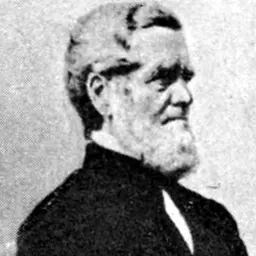
Contemporaries
People whose lives overlapped Axel Key's

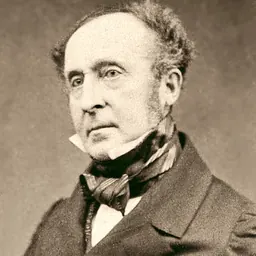
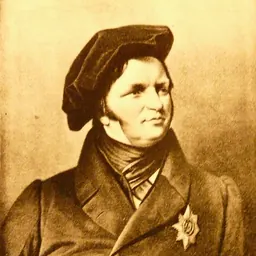
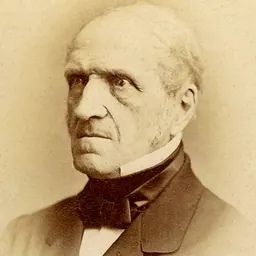


Frequently asked questions
Who was Axel Key?
Swedish pathologist and politician (1832–1901)
When was Axel Key born?
Axel Key was born on 25 October 1832.
When did Axel Key die?
Axel Key died on 27 December 1901 in Kungsholm parish.
What was Axel Key's occupation?
Axel Key was a politician and pathologist.
What nationality was Axel Key?
Axel Key was Swedish.
Sources & further reading
Cite this page
APA: Biography.guide. (2026). Axel Key. https://biography.guide/axel-key/
MLA: "Axel Key." Biography.guide, https://biography.guide/axel-key/.
Chicago: "Axel Key." Biography.guide. https://biography.guide/axel-key/.
Data last updated: 2026-09-22 · Spot an error? Report a correction.
Portrait: Wikimedia Commons · author & licence
Page generated 2026-09-27 05:03 UTC