
About Aureliano Blanquet
Lived 1848 – 1919 (aged 70). Aureliano Blanquet was a Mexican politician and military personnel.
Aureliano Blanquet Torres (31 December 1848 – 16 April 1919) was a Mexican general who served as secretary of war and navy from 1913 to 1914 during the presidency of Victoriano Huerta. Blanquet served in the Federal Army during the Mexican Revolution and was a key participant in the coup d'état during the Ten Tragic Days.
Blanquet was born in Morelia, Michoacán, and joined the Republican forces during the second French intervention in Mexico. During the Porfiriato, Blanquet rose through the ranks of the Federal Army, participating in the suppression of uprisings including the Garza Revolution and the Caste War of Yucatán. During the latter conflict, he became an ally of fellow general Victoriano Huerta. At the outbreak of the Mexican Revolution, Blanquet remained loyal to President Porfirio Díaz, and following the victory of revolutionary Francisco I. Madero in 1911, he retained his post. In 1913, Huerta and Blanquet led a coup against Madero known as the Ten Tragic Days, with Huerta becoming president and Blanquet secretary of war and the navy. He held the role until he went into exile in 1914.
He returned to Mexico in 1919 to support an uprising by Félix Díaz, but was killed and decapitated in Veracruz while retreating. In the historiography of Mexico, Blanquet is remembered as a traitor due to his role in the overthrow of Madero and is considered to be one of the primary villains of the revolution.
Early life Personal life Aureliano Blanquet Torres was born on 31 December 1848 in Morelia, in the state of Michoacán. He was the son of Antonio D. Blanquet and María Torres. Their son, also named Aureliano, served as an alternate federal deputy for Hidalgo from 1914 to 1915. Later, as a brigadier sergeant, he participated in the siege of Querétaro, which resulted in the capture of Maximilian von Habsburg. Afterwards, Maximilian was under Blanquet's custody.
Mexican Revolution In July 1911 Blanquet commanded federal troops stationed in Puebla. On July 12 a group of armed men fired shots at the rival Maderistas and fled into the federal army barracks. On the next day Madero publicly hugged Blanquet and cleared him of any wrongdoing; he ordered radical Maderistas to surrender arms to Blanquet's Federales and go home. The Puebla Incident also created international tension after the fleeing Maderistas killed German and Spanish expatriates who stood in their way.
During May 1912 Blanquet served under General Victoriano Huerta, leading the 29th Infantry Battalion in the successful suppression of the Pascual Orozco revolt against the Madero government. In June, Blanquet fought the Orozquista general Benjamín Argumedo in Nazas, Durango.
Ten Tragic Days
The Ten Tragic Days was a coup d'état against President Madero that began on 9 February 1913. Insurgent generals Félix Díaz and Manuel Mondragón unsuccessfully tried to take the National Palace, the president's residence, and subsequently took up refuge in , Mexico City's main garrison. Despite formally fighting them, General Huerta had secretly negotiated with Díaz and U.S. Ambassador Henry Lane Wilson to overthrow Madero. Blanquet was a key participant in this conspiracy.
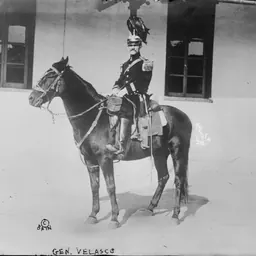
On 17 February, Blanquet and his 29th Battalion reunited with Huerta, and Blanquet ordered his troops to relieve the National Palace guard of their duties. He held the post until 1 July 1914. He was succeeded by José Refugio Velasco.
In July 1914, when the Huerta government collapsed, Blanquet resigned as vice president, and departed from Mexico with Huerta.
On August 19, 1914, General Blanquet, having returned from overseas, intervened in the disbandment process of Huerta's defeated Federal army. He led the 29th Battalion of 400 men, which he had formerly commanded, plus other remnants of Federal troops dissatisfied with their redundancy payments, against Carrancistas in Puebla. Blanquet captured the city and learned that two Carrancistas agents, brothers Ramon and Raphael Cabrera, were on their way to Puebla to assert the authority of the new government. Blanquet's federals captured the Cabreras and shot them on Blanquet's order. The two surviving Cabrera brothers, Luiz and Alfonso, avenged the dead with a campaign of terror, killing over sixty Federal prisoners. , Blanquet returned from exile in Cuba, disembarking at the port of Veracruz, to support the Félix Díaz rebellion against Venustiano Carranza. With only about six followers he moved inland from the Gulf Coast in an attempt to join up with Díaz. On April 16, 1919 , Blanquet was killed when his horse fell down a ravine after a skirmish with government troops near La Barranca de Chavaxtla, in Huatusco, Veracruz. The Constitutionalist commander General Guadalupe Sánchez had Blanquet's head taken to Veracruz for display and photographing.
Legacy Due to his role in the Ten Tragic Days, Blanquet became known as a traitor in Mexico. The historian Peter Henderson has identified Blanquet as "one of the major villains of the Mexican Revolution". Blanquet, along with other figures from the revolution, has also been featured in corridos, with the song "Tragedia compuesta a la revolución Maderista y a Torreón" comparing Blanquet to Saint Augustine.
Don’t just read it —
keep it.
Full-length biographies made to live with: read them, listen on the way to work, watch them tonight.
- E-book
- Audio
- Video
Instant download · yours to keep · every purchase keeps this site free
Important facts
People in Aureliano Blanquet's life
Named in this biography and alive at the same time


Related people
Same field, nearest in time






Contemporaries
People whose lives overlapped Aureliano Blanquet's




Frequently asked questions
Who was Aureliano Blanquet?
Mexican soldier (1848–1919)
When was Aureliano Blanquet born?
Aureliano Blanquet was born on 31 December 1848 in Morelia.
When did Aureliano Blanquet die?
Aureliano Blanquet died on 15 April 1919.
What was Aureliano Blanquet's occupation?
Aureliano Blanquet was a politician and military personnel.
What nationality was Aureliano Blanquet?
Aureliano Blanquet was Mexican.
Sources & further reading
· Wikipedia: Aureliano Blanquet
Cite this page
APA: Biography.guide. (2026). Aureliano Blanquet. https://biography.guide/aureliano-blanquet/
MLA: "Aureliano Blanquet." Biography.guide, https://biography.guide/aureliano-blanquet/.
Chicago: "Aureliano Blanquet." Biography.guide. https://biography.guide/aureliano-blanquet/.
Data last updated: 2026-09-20 · Spot an error? Report a correction.
Page generated 2026-09-27 05:27 UTC