
About Augusto Ponzio
Born 1942. Augusto Ponzio is an Italian philosopher and university teacher.
Augusto Ponzio (born 17 February 1942) is an Italian semiologist and philosopher.
Since 1980 is Full Professor of Philosophy of Language at Bari University, Italy and since 2015 is Professor Emeritus at the same university.
He has made a significant contribution as editor and translator to the dissemination of the ideas of Pietro Ispano, Mikhail Bakhtin, Emmanuel Lévinas, Karl Marx, , Adam Schaff and Thomas Albert Sebeok, in Italy and abroad.
Biography Augusto Ponzio has authored the first monographs ever at a world level on each of Emmanuel Lévinas, Mikhail Bakhtin and Adam Schaff : respectively, La relation interpersonal, 1967, dedicated to Levinas, Michail Bachtin. Alle origini della semiotic sovietica, 1980, and Persona umana, linguaggio e conoscenza in Adam Schaff, 1977. Each of these monographs has been translated and reworked over the years and presented in new enlarged editions.
He has promoted the Italian translation of numerous works by Mikhail Bakhtin and members of the Bakhtin Circle, including Valentin N. Voloshinov and Pavel N. Medvedev, but also the biologist I. I. Kanaev.
Augusto Ponzio has also contributed to Karl Marx studies in Italy and in 1975 published the Italian edition of his Mathematical Manuscripts.
Moreover, Ponzio has contributed significantly to the dissemination of Thomas Sebeok's work in Italy and of his global semiotics in particular. He has promoted the Italian translation of most of his books and has authored two monographs dedicated to his thought: Sebeok and the Signs of Life, published in 2001, and I segni e la vita. La semiotic globale di Thomas A. Sebeok, 2002.
Among Italian scholars Ponzio has focused particularly on the work of his master Giuseppe Semerari, on the semiotician Ferruccio Rossi-Landi and philosopher of language Giovanni Vailati.
At Bari University Ponzio has been teaching: Theoretical Philosophy and Moral Philosophy since 1966; Philosophy of language since 1970; Semiotics from 1995 to 1997; Text Semiotics from 1997 to 2001; Communication Theory from 1995 to 1998; General Linguistics and Semiotics of mass media since 1998;
From 1981 to 1999 Ponzio directed the Institute of Philosophy of Language, which he founded at the Faculty of Foreign Literature and Languages, in 1981. From 1999 to 2005 he acted as Head of the Department of Linguistic Practices and Text Analysis, which he founded in 1999. He directs the Doctoral Program in Language Theory and Sign Sciences, which he inaugurated in 1988.
With Claude Gandelman (University of Haifa), in 1989 he founded the annual book series Athanor. Arte, Letteratura, Semiotica, Filosofia of which now he directs the new series inaugurated with Meltemi publishers in Rome, in 1998. Athanor: this Arabic word evokes the alchemist in the laboratory mixing and transforming the elements.
Works
His principal research areas include philosophy of language, general linguistics, semiotics, and theory of literature.
The expression "philosophy of language" conveys the scope and orientation of his research as he addresses problems of semiotics from the perspective of philosophy of language, updated with references to the latest developments in the sign sciences, from linguistics to biosemiotics. As such his approach may be more properly described as pertaining to general semiotics.
Nonetheless, Ponzio practices general semiotics in terms of critique and the search for foundations, which derives from his work in philosophy of language. As critique of semiotics Ponzio's general semiotics overcomes the delusory separation between the humanities, on the one hand, and the logico-mathematical and the natural sciences, on the other.
His semiotic research relates to different disciplines proposing an approach that is transversal and interdisciplinary, or better, as he prefers to say, an approach that is ‘undisciplined’. Moreover, general semiotics as conceived by Ponzio against such a background continues its philosophical search for sense. This perspective evidences the interconnectedness of the sciences.
And most significantly the problem of their sense for the human being is also addressed.
Don’t just read it —
keep it.
Full-length biographies made to live with: read them, listen on the way to work, watch them tonight.
- E-book
- Audio
- Video
Instant download · yours to keep · every purchase keeps this site free
Important facts
People in Augusto Ponzio's life
Named in this biography and alive at the same time
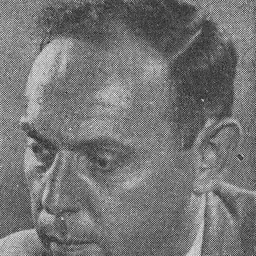
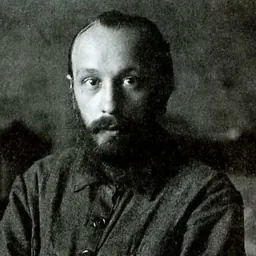



Related people
Same field, nearest in time
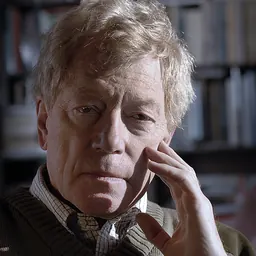



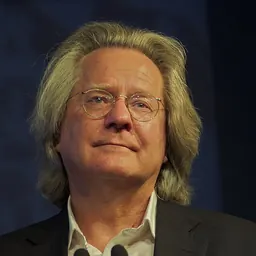
Contemporaries
People whose lives overlapped Augusto Ponzio's



Frequently asked questions
Who is Augusto Ponzio?
Italian philosopher
When was Augusto Ponzio born?
Augusto Ponzio was born on 17 February 1942 in San Pietro Vernotico.
What is Augusto Ponzio's occupation?
Augusto Ponzio is a philosopher and university teacher.
What nationality is Augusto Ponzio?
Augusto Ponzio is Italian.
Sources & further reading
Cite this page
APA: Biography.guide. (2026). Augusto Ponzio. https://biography.guide/augusto-ponzio/
MLA: "Augusto Ponzio." Biography.guide, https://biography.guide/augusto-ponzio/.
Chicago: "Augusto Ponzio." Biography.guide. https://biography.guide/augusto-ponzio/.
Data last updated: 2026-09-26 · Spot an error? Report a correction.
Page generated 2026-09-27 05:13 UTC