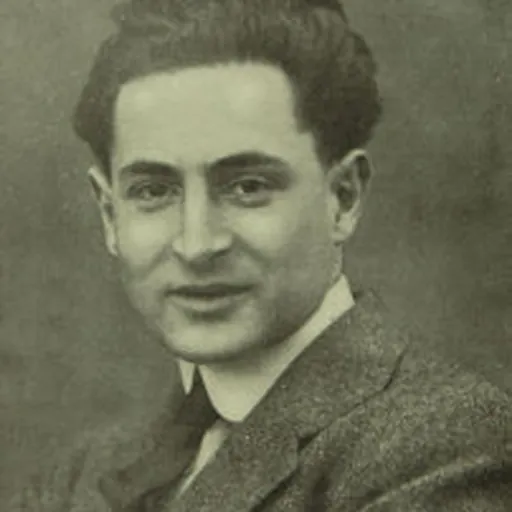
About Augusto Genina
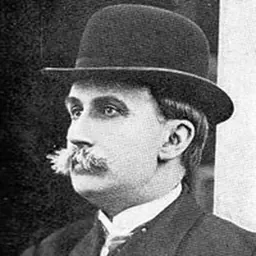
Lived 1892 – 1957 (aged 65). Augusto Genina was an Italian film director, screenwriter, playwright, film producer and director.
(28 January 1892 – 18 September 1957) was an Italian film pioneer. A prolific movie producer and director, he released 88 films during his four-decade career. He worked extensively in Italy, Germany, and France, particularly during the late silent and early sound eras.
Biography
Early life and career Augusto Genina was born in Rome on 28 January 1892 into an upper-middle-class family. While studying engineering at the Sapienza University of Rome, he began working as a drama critic for the Roman magazine Il Mondo. He also started writing comedies and submitted them to his friend, the playwright Aldo De Benedetti. De Benedetti suggested that Genina offer his works to the film production company Cines as film scripts.
Genina took De Benedetti's advice and soon began working in the emerging Italian film industry. In 1912, he wrote the screenplay for the historical drama Beatrice d'Este, starring Francesca Bertini and produced by Film d'Arte, an Italian subsidiary of the French company Pathé. He then started working for Baldassarre Negroni, the artistic director of Celio Film, who became his mentor. Alberto Fassini, the director of Cines, took an interest in Genina's work and hired him as an assistant to Giulio Antamoro on Uomini e belve. Genina made his directorial debut in 1913 with La moglie di sua eccellenza. The film was shot at the Spanish branch of Cines, La Film de Arte Española, in Barcelona.
In 1914, Genina directed several films for Cines, mostly adventure movies or historical dramas, starring renowned actors such as Ruggero Ruggeri (Lulù), Leda Gys (Il piccolo cerinaio) and Pina Menichelli (Giovinezza trionfa!). Towards the end of the year, he accepted an offer from Milano Films, directed by Paolo Airoli, and moved to Milan. During his time there, he shot around ten films, most notably the drama La doppia ferita, starring the French actress and singer Mistinguett (born Jeanne-Marie Bourgeois). At the end of 1915 he returned to Rome.
During World War I and the period immediately afterwards, Genina continued to work for various Italian film companies in Rome and Turin. In 1916, he worked with Medusa Film in Rome, and the following year he directed three films for the Turinese company Ambrosio Film. Between 1917 and 1918, he directed four films for Itala Film. Following the establishment of the Unione Cinematografica Italiana in the early 1920s, he was appointed manager of the Turin-based production company Photodromo.
Germany and France
In 1918 Genina directed the successful comedy Addio, Giovinezza!, based on a play by Nino Oxilia. In 1923, he returned to the adventure genre of his early days and produced two successful films: Cyrano de Bergerac and Il corsaro. Italian cinema was experiencing a period of crisis. The Unione Cinematografica Italiana closed in 1923, and Italian production virtually came to a halt from 1924 to 1928. In an attempt to address this situation, Genina tried to sell his films abroad, where he was already well known. The silent drama The Hearth Turned Off, loosely based on a short story by Edmondo De Amicis, enjoyed particular success in Germany. In 1924, Genina directed in The Beautiful Wife, starring the young actress Carmen Boni. Genina and Boni married that same year and she became his muse, appearing in most of his films throughout the course of their marriage
Genina started a series featuring Boni in the lead role, which enjoyed success abroad during the final years of the silent era, primarily in Germany and France. The situation in Italy was so dire that Genina worked exclusively abroad for the next ten years. The last film he shot in Italy was a remake of Addio, Giovinezza!, also starring Boni, in 1927.
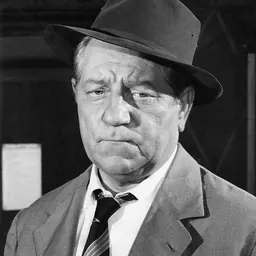
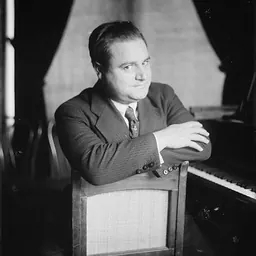
In Germany Genina directed several movies starring Boni in the lead role, most notably Sprung ins Glück (1928); Das Mädchen der Strasse (1928); Liebeskarneval (1928); and Quartier Latin (1929). In 1929 moved to France. While there, he directed Louise Brooks in the early French talkie Miss Europe, which was her only French film. The story follows a young typist whose life is turned upside down after she wins a beauty contest, ultimately being murdered by her former boyfriend who she had left. The film was a success, followed by other hits including The Lovers of Midnight (1931), The Darling of Paris (1931) starring Jean Gabin and Fernandel, The Woman Dressed as a Man (1932) and We Are Not Children (1934) starring Gaby Morlay. in these years Genina also directed two German movies: Vergiss mein nicht! (1935), a musical starring Beniamino Gigli, and Blumen aus Nizza (1936).
Return to Italy
In 1935, Genina returned to Italy, where cinema was regaining its footing thanks yo the intervention of the Fascist government. Despite having worked almost exclusively abroad for the previous seven years, he had maintained his connections with the Italian film industry. In 1927, he was among the founding members of the Italian Directors' Association (ADIA). In 1936, Genina directed Lo squadrone bianco, which won the Mussolini Cup for Best Italian Film at that year's Venice Film Festival, marking his triumphant return to Italy.
In 1940, Genina directed The Siege of the Alcazar, which won the Biennale Cup Award at the Venice Film Festival that same year. Two years later, he directed Bengasi, which won the Mussolini Cup for Best Italian Film. Both films were highly accomplished, showcasing Genina's refined sense of visual construction, skilful screenwriting, and narrative pacing.
Last years After the end of World War II, Genina did not make another film for several years. He returned to filmmaking in 1949 with the historical drama Heaven over the Marshes. Characterised by striking realism, the film was presented at the Venice Film Festival, where Genina won the International Award for Best Director and the Award of the Presidency of the Council of Ministers. Genina was also awarded the Nastro d'Argento for Best Director for the film.
In 1953, he filmed Three Forbidden Stories, another version of the real accident depicted by one year before in Rome 11:00 . Genina's last film, Frou Frou, a sentimental comedy set in the Belle Époque, was released in 1955. After that, the endocarditis that the director had been suffering from for some time worsened. He died in Rome on 28 September 1957.
Selected filmography
Silent films Year Title Preservation status 1913 La moglie di sua eccellenza Lost 1914 Il segreto del castello di Monroe Lost Il piccolo cerinaio Cineteca Nazionale La parola che uccide Lost La fuga dei diamanti Cineteca Nazionale Dopo il veglione Lost L'anello di Siva Lost 1915 Lulu Lost Gelosia Public domain; National Museum of Cinema La farfalla dalle ali d'oro Lost Mezzanotte Lost Doppia ferita Lost Cento H.P. Lost La conquista dei diamanti Lost L'ultimo travestimento Lost 1916 Il sopravvissuto Cineteca di Bologna Il sogno di un giorno Lost La signorina Ciclone Cineteca di Bologna and Archives françaises du film 1917 Il siluramento dell'Oceania Centre national du cinéma et de l'image animée Maschiaccio Lost Lucciola Cineteca di Bologna and Lobster Films 1918 Il trono e la seggiola Lost The Prince of the Impossible Filmoteca de la UNAM Goodbye Youth Public domain; Cineteca di Bologna, National Museum of Cinema and National Film Archive of Japan 1919 La maschera e il volto Filmoteca de la UNAM 1925 The Beautiful Wife Lost Cirano de Bergerac Public domain The Hearth Turned Off Lost 1926 The Last Lord Lost 1927 The Prisoners of Shanghai Lost Goodbye Youth Cineteca di Bologna The White Slave Lost 1928 Scampolo Cineteca di Bologna and German Federal Archives The Story of a Little Parisian Public domain Love's Masquerade Lost 1929 Latin Quarter Lost
Sound films
Don’t just read it —
keep it.
Full-length biographies made to live with: read them, listen on the way to work, watch them tonight.
- E-book
- Audio
- Video
Instant download · yours to keep · every purchase keeps this site free
Important facts
Family & relationships
People in Augusto Genina's life
Named in this biography and alive at the same time




Related people
Same field, nearest in time


Contemporaries
People whose lives overlapped Augusto Genina's

Frequently asked questions
Who was Augusto Genina?
Italian film director and producer (1892-1957)
When was Augusto Genina born?
Augusto Genina was born on 28 January 1892 in Rome.
When did Augusto Genina die?
Augusto Genina died on 18 September 1957 in Rome.
What was Augusto Genina's occupation?
Augusto Genina was a film director, screenwriter, playwright, film producer and director.
What nationality was Augusto Genina?
Augusto Genina was Italian.
Sources & further reading
Cite this page
APA: Biography.guide. (2026). Augusto Genina. https://biography.guide/augusto-genina/
MLA: "Augusto Genina." Biography.guide, https://biography.guide/augusto-genina/.
Chicago: "Augusto Genina." Biography.guide. https://biography.guide/augusto-genina/.
Data last updated: 2026-09-22 · Spot an error? Report a correction.
Portrait: Wikimedia Commons · author & licence
Page generated 2026-09-27 04:58 UTC