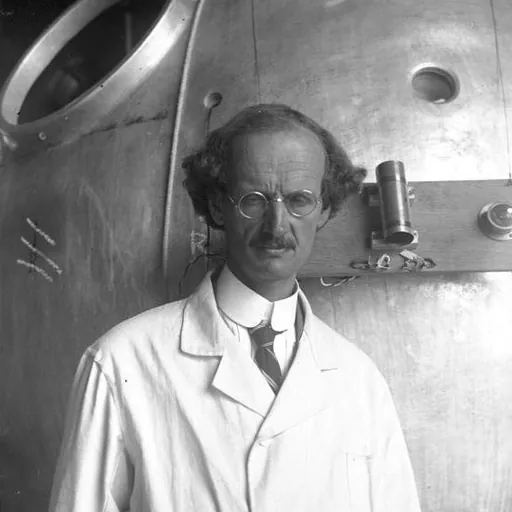
About Auguste Piccard
Lived 1884 – 1962 (aged 78). Auguste Piccard was a Swiss physicist, explorer, balloonist, privatdozent, university teacher and inventor, known for Bathyscaphe and Magnetocaloric effect.
Auguste Antoine Piccard (28 January 1884 – 24 March 1962) was a Swiss physicist, inventor and explorer known for his record-breaking hydrogen balloon flights, with which he studied the Earth's upper atmosphere and became the first person to enter the stratosphere. Piccard was also known for his invention of the first bathyscaphe, FNRS-2, with which he made a number of unmanned dives in 1948 to explore the ocean's depths.
Piccard's twin brother Jean Felix Piccard is also a notable figure in the annals of science and exploration, as are a number of their relatives, including Jacques Piccard, Bertrand Piccard, Jeannette Piccard and Don Piccard.
Biography Piccard and his twin brother Jean Felix Piccard were born in Basel, Switzerland, on 28 January 1884.
On 27 May 1931, Auguste Piccard and Paul Kipfer took off from Augsburg, Germany, in a hydrogen balloon, and reached a record altitude of (FAI Record File Number 10634). During this flight, they became the first human beings to enter the stratosphere, and were able to gather substantial data on the upper atmosphere, as well as measure cosmic rays.
In the mid-1930s, Piccard's interests shifted when he realized that a modification of his high-altitude balloon cockpit would allow descent into the deep ocean. By 1937, he had designed the bathyscaphe, a small steel gondola built to withstand great external pressure. Construction began, but was interrupted by the outbreak of World War II. Resuming work in 1945, he completed the bubble-shaped cockpit that maintained normal air pressure for a person inside the capsule even as the water pressure outside increased to over . Above the heavy steel capsule, a large flotation tank was attached and filled with a low density liquid for buoyancy. Liquids are relatively incompressible and can provide buoyancy that does not change as the pressure increases. And so, the huge tank was filled with gasoline, not as a fuel, but as flotation. To make the now floating craft sink, tons of iron were attached to the float with a release mechanism to allow resurfacing. This craft was named FNRS-2 and made a number of unmanned dives in 1948 before being given to the French Navy in 1950. There, it was redesigned, and in 1954, it took a man safely down . thumb
Piccard and his son, Jacques, built a second bathyscaphe and together they dove to a record-breaking depth of in 1953.
Piccard family
Jules Piccard (professor of chemistry) Auguste Piccard (physicist, aeronaut, balloonist, hydronaut) Jacques Piccard (hydronaut, engineer, oceanographer) Bertrand Piccard (aeronaut, psychiatrist, balloonist) Jean Felix Piccard (organic chemist, aeronaut, and balloonist) Jeannette Piccard (wife of Jean Felix) (aeronaut and balloonist) Don Piccard (balloonist)
References in popular culture
Auguste Piccard was the inspiration for Professor Cuthbert Calculus in The Adventures of Tintin by Belgian cartoonist Hergé.
Gene Roddenberry named Captain Jean-Luc Picard in Star Trek after one or both of the twin brothers Auguste and Jean Felix Piccard, and derived Jean-Luc Picard from their names. Will Gregory's opera, Piccard in Space, premiered at the Queen Elizabeth Hall in London on 31 March 2011. The libretto, by Hattie Naylor, focuses on Auguste Piccard's first balloon ascent with his assistant Paul Kipfer, and on the theories of Albert Einstein and Isaac Newton, who both appear as characters in the drama. In 2016, the exploits of Piccard and his son Jacques were featured in an American television commercial for Hennessy cognac.
Don’t just read it —
keep it.
Full-length biographies made to live with: read them, listen on the way to work, watch them tonight.
- E-book
- Audio
- Video
Instant download · yours to keep · every purchase keeps this site free
Important facts
Family & relationships
People in Auguste Piccard's life
Named in this biography and alive at the same time




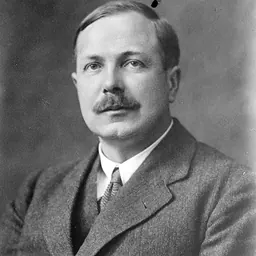
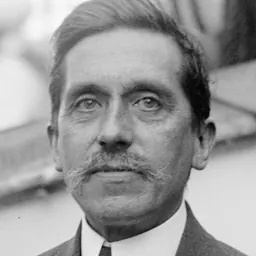
Related people
Same field, nearest in time


Contemporaries
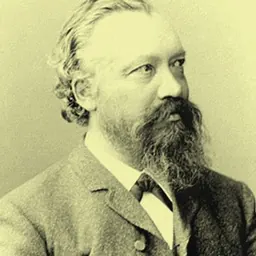
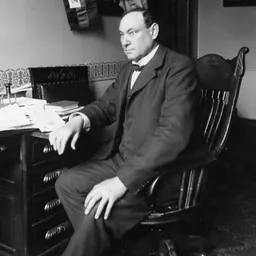
People whose lives overlapped Auguste Piccard's
Frequently asked questions
Who was Auguste Piccard?
Swiss physicist (1884–1962)
When was Auguste Piccard born?
Auguste Piccard was born on 28 January 1884 in Basel.
When did Auguste Piccard die?
Auguste Piccard died on 24 March 1962 in Chexbres.
What was Auguste Piccard's occupation?
Auguste Piccard was a physicist, explorer, balloonist, privatdozent, university teacher and inventor.
What was Auguste Piccard known for?
Auguste Piccard was known for Bathyscaphe and Magnetocaloric effect.
What nationality was Auguste Piccard?
Auguste Piccard was Swiss.
Sources & further reading
Cite this page
APA: Biography.guide. (2026). Auguste Piccard. https://biography.guide/auguste-piccard/
MLA: "Auguste Piccard." Biography.guide, https://biography.guide/auguste-piccard/.
Chicago: "Auguste Piccard." Biography.guide. https://biography.guide/auguste-piccard/.
Data last updated: 2026-09-24 · Spot an error? Report a correction.
Portrait: Wikimedia Commons · author & licence
Page generated 2026-09-27 05:09 UTC