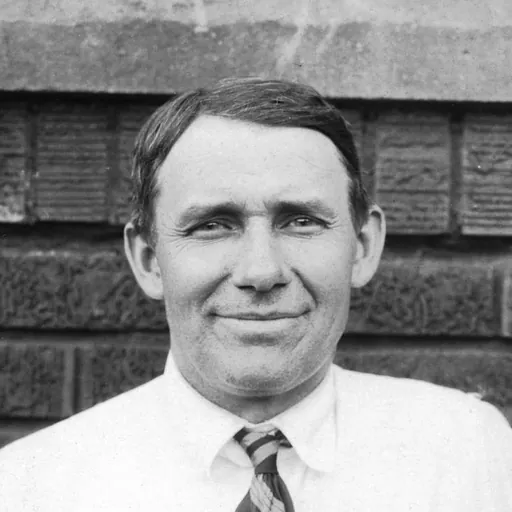
About August Duesenberg
Lived 1879 – 1955 (aged 75). August Duesenberg was an entrepreneur and mechanic, known for Duesenberg.
Marriage and family August Duesenberg married Gertrude Pike of Garner, Iowa, in 1906. They had two children, a son, Frederick P. "Fritz" Duesenberg, and a daughter, Dorothy Duesenberg. Fritz Duesenberg died in 1974 and is buried at Crown Hill Cemetery in Indianapolis, Indiana.
Career Early years In the 1890s, Augie Duesenberg began building and racing bicycles in Iowa with his older brother Fred. Around 1900, they began experimenting with designing and building internal-combustion, gasoline-powered engines and installing them on bicycles to create motorcycles. Augie and Fred operated a bicycle repair shop in Rockford, but the business went bankrupt in 1903. A short time later the two brothers established another bicycle and motorcycle shop in Garner, Iowa, but Fred left the business in 1903 to pursue other mechanical and auto manufacturing training in Wisconsin and in Iowa.
In 1906, Augie's brother, Fred, met Edward Mason, an Iowa lawyer who provided the brothers with financing to manufacture cars. The business was incorporated the Mason Motor Car Company in April 1906 and began manufacturing cars four months later.
Early auto racing The Duesenberg brothers began racing bicycles and motorcycles in the 1890s and turned to auto racing after the turn of the twentieth century. Along with other automobile makers, they used the Indianapolis Motor Speedway as a test track for their cars. Duesenberg entries participated in Indianapolis 500-mile auto races for nearly twenty years, and were especially active between 1912 and 1932, when Augie served as the team's supervisor and chief mechanic. The first Duesenberg entry in the Indianapolis 500-mile race occurred in 1912. Although their Mason Motor Company-owned racer practiced for the race, it had a mechanical failure and did not compete.
Between 1913 and 1916, the Duesenberg racing team gradually improved its standings in the annual Indianapolis 500-mile race. In the 1913 race, the team took ninth place in the race. In the 1914 race, Eddie Rickenbacker, the future World War I aviation ace, drove a Duesenberg-powered racecar to a tenth-place finish and US$1,400 in prize money. The Duesenberg team also had a twelfth-place finisher that year. In the 1915 race the team took fifth and seventh places, and in the 1916 race rookie driver Wilbur D'Alene finished in second place. Racing at the Indianapolis 500-mile race went on hiatus in 1917 and 1918, when efforts focused on wartime production during World War I. When Indianapolis 500-mile auto races resumed in 1919, the Duesenberg team had mechanical and fuel issues and its entries did not finish the race that year, but the team had better success in the 1920s.
During the war, the Duesenberg brothers' experience with the Bugatti aircraft engine changed many of their own engineering ideas and led to refinements in their design of the Duesenberg straight eight, At the end of the war the brothers stopped building aviation and marine engines in Elizabeth, New Jersey, to focus their efforts on development of race cars from a rented space in Newark, New Jersey.
1920s-era carmaker
Duesenberg Automobile Company Factory building No. 1, 1501 West Washington Street, Indianapolis, Indiana
While continuing to develop the racing engines in Indianapolis, Augie and Fred Duesenberg along with other financial backers established the Duesenberg Automobile & Motors Company in March 1920. Augie Duesenberg was the plant manager; his brother, Fred, was the chief design engineer who later in the 1920s served as the company's president. Beginning with the Duesenberg Model A in 1921, Duesenberg passenger cars were built with advanced racing-car features at a new manufacturing plant in Indianapolis. The factory at the corner of Washington and Harding Streets was near the Indianapolis Motor Speedway, which was used as a test track. Although the Model A was technologically advanced, the Duesenberg brothers had difficulty selling their first mass-produced vehicle because of its high cost (US$8,500 for the chassis alone) and unstylish exterior design. Production ended on the Model A in 1927. Fred Duesenberg served as vice president of engineering for the company, but Augie Duesenberg was responsible for running the separate Duesenberg Brothers racing business, established in August 1920. Augie Duesenberg was not involved in the development of Duesenberg luxury cars, which included models X, S, and J.
Racing team supervisor
Augie Duesenberg supervised and directed the Duesenberg Brothers racing team from a shop across the street from the company's factory, while Fred focused on designing high-end passenger cars for Duesenberg, now a subsidiary of the Cord Corporation. However, the two brothers continued to work together in the development of their American-built racing car business. In April 1920 a Duesenberg racecar driven by Tommy Milton set a land speed record of for a measured mile on the sands at Daytona Beach, Florida, although the attempt was not recognized as an official world record because Milton "had not made the required return run within the hour." In 1921 Jimmy Murphy drove a Duesenberg racer to become the first American car to win the prestigious Grand Prix at Le Mans, France. Augie traveled to France to present the team's credentials prior to the race and also witnessed the historic event. The Indianapolis 500 in 1923 was a low point for the Duesenberg team. Wade Morton, the Duesenberg team driver, started twenty-fourth in the field, but finished in tenth place. Duesenberg-built racers won three out of the four Indianapolis 500-mile races between 1924 and 1927. Driver Lora L. Corum and relief driver Joe Boyer won the race in 1924; driver Pete DePaolo and relief driver Norman Batten won the race in 1925; Driving a Duesenberg racer in 1925, DePaolo became the first Indianapolis 500-mile winner to average more than . Augie was also the designer and builder of a Duesenberg chassis for an entry in the 1931 race that was powered by a diesel engine from the Cummins Engine Company. Dave Evans, who became the first person to complete the race without making any pit stops, drove the car to a thirteenth-place finish. Joe Russo drove the Duesenberg-built "Wonder Bread Special" to a seventeenth-place finish in the 1933 Indianapolis 500. Russo's Duesenberg-built racer for the 1934 Indianapolis 500, the last year that the Duesenbergs were major contenders, finished in fifth place.
Beginning in 1934 Augie Duesenberg built the first of three speed-setting racers with Ab Jenkins. Between August 6 and August 30, 1935, Jenkins set a 24-hour speed record of in the "Mormon Meteor", a Duesenberg-based racer, on the Bonneville Salt Flats in Utah. Jenkins and the racer also set a one-hour speed record of .
Later years During the tough economic times of the Great Depression, Duesenberg began working in 1934 for E. L. Cord as a consultant to the Auburn Automobile Company at its factories in Auburn and Connersville, Indiana. With dwindling numbers of buyers for its luxury cars, Duesenberg auto production ended in 1937,
Death and legacy
Duesenberg died of a heart attack at his rural home near Indianapolis on January 18, 1955, at the age of seventy-five.
Augie Duesenberg and his brother, Fred, were cofounders of the Duesenberg Motor Company in 1913, and the Duesenberg Automobiles and Motor Company in 1920; however, Augie was not involved in the Indianapolis-based automaker's production of luxury passenger cars. Inducted into the National Sprint Car Hall of Fame in 1990. Inducted into the Motorsports Hall of Fame of America in 2019.
Don’t just read it —
keep it.
Full-length biographies made to live with: read them, listen on the way to work, watch them tonight.
- E-book
- Audio
- Video
Instant download · yours to keep · every purchase keeps this site free
Important facts
People in August Duesenberg's life
Named in this biography and alive at the same time


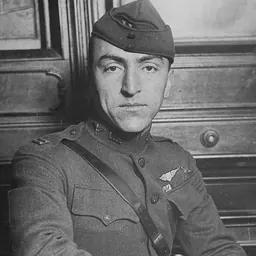
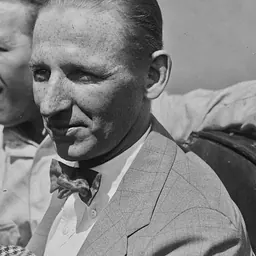
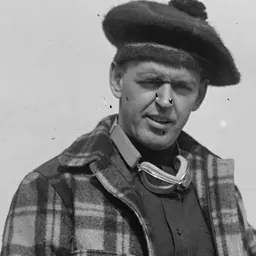
Related people
Same field, nearest in time


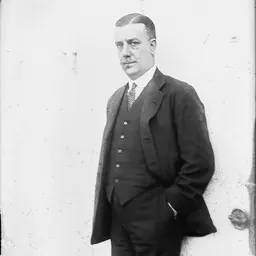

Contemporaries
People whose lives overlapped August Duesenberg's


Frequently asked questions
Who was August Duesenberg?
American pioneer automobile manufacturer (1879–1955)
When was August Duesenberg born?
August Duesenberg was born on 12 December 1879 in Lippe District.
When did August Duesenberg die?
August Duesenberg died on 18 January 1955 in Indianapolis.
What was August Duesenberg's occupation?
August Duesenberg was an entrepreneur and mechanic.
What was August Duesenberg known for?
August Duesenberg was known for Duesenberg.
Sources & further reading
· Wikipedia: August Duesenberg
Cite this page
APA: Biography.guide. (2026). August Duesenberg. https://biography.guide/august-duesenberg/
MLA: "August Duesenberg." Biography.guide, https://biography.guide/august-duesenberg/.
Chicago: "August Duesenberg." Biography.guide. https://biography.guide/august-duesenberg/.
Data last updated: 2026-09-22 · Spot an error? Report a correction.
Portrait: Wikimedia Commons · author & licence
Page generated 2026-09-27 04:58 UTC