
About Audrey Dimond
Lived 1921 – 2018 (aged 97). Audrey Dimond was an American film producer and nurse.
Audrey Grace Florine Stone Geisel (August 14, 1921 – December 19, 2018) was the second wife of American children's book author Theodor Geisel (Dr. Seuss), to whom she was married from 1968 until his death in 1991. She founded Dr. Seuss Enterprises in 1993, and was president and CEO of the company until her death in 2018.
Early life and education Audrey Grace Florine Stone was the daughter of Norman Alfred Stone, an English medical furniture salesman, and Ruth Benson, a nurse whose family was from Norway. She was baptized at the Ravenswood Covenant Church in Chicago, Illinois, United States. She grew up in and around Queens, New York, moving around as often as an "army brat". Her parents' marriage was "off and on" and her father left early in her life. When she was five, her mother moved into a nurses' dormitory at the Manhattan Eye, Ear and Throat Hospital and sent her to live with a friend in New Rochelle, New York. However, her mother did visit her on weekends. and at the Coleman Obstetrical and Gynecological Hospital at the Indiana University Medical Center. Long after she finished working as a nurse, she continued renewing her credentials, refusing to "hang up the whites” officially.
Marriage to Edmunds Dimond In 1945 she married fellow student Edmunds Grey Dimond. He became a resident physician at Indiana University Medical Center and later Dean of Cardiology at the University of Kansas. The family moved to La Jolla, San Diego, in 1960 for Dimond to join Scripps Clinic, while Audrey volunteered in cancer wards.
Marriage to Ted Geisel (a.k.a. Dr. Seuss) Audrey met Seuss and his first wife, Helen Palmer, at a party in La Jolla. The two couples became friends and later Audrey and Theodor began an affair, about which she said, "The feeling was that at his age you grab for the gusto. You don't wait. You don't think you have that much time." Palmer died by suicide on October 23, 1967. In May 1968 Seuss wrote to friends, "Audrey and I are going to be married […] I am acquiring two daughters, aged nine and fourteen. I am rebuilding the house to take care of the influx. I am 64 years old. I am marrying a woman seventeen years younger… I have not flipped my lid. This is not a sudden nutty decision… This is an inevitable, inescapable conclusion […] All I can ask you is to try to believe in me." Audrey divorced Edmunds Dimond on 21 June 1968. They lived in a "Mount Soledad aerie" in La Jolla, where Seuss had previously lived with Palmer. It had an "old stucco observatory and elegant, helter-skelter maze of rooms they have built around it." When she moved in with Seuss, Geisel sent her daughters to boarding school of which she said "They wouldn't have been happy with Ted, and Ted wouldn't have been happy with them." Her daughters later disputed this statement and said that Seuss had been a warm and loving father.
When Seuss started losing his sight to glaucoma in 1975, Geisel served as his "eyes and driver". It was in part to make Seuss's life easier as he began to lose his sight. She nursed Seuss during his final illness. He died of cancer in 1991.
Springfield, MA Geisel first visited Seuss' birthplace, Springfield, Massachusetts, soon after their wedding. In 1997 she initiated fundraising to create a Dr. Seuss National Memorial Sculpture Garden in the town, by donating $1m. The garden includes bronze sculptures created by Geisel's daughter, Lark Grey Dimond-Cates. Fifteen years later, with Geisel's approval, Springfield opened The Amazing World of Dr. Seuss Museum.
Working with Seuss In her introduction to The Complete Cat in the Hat Geisel wrote about Seuss's writing process and how she was responsible for collecting "as many paperback thrillers as I could find, bring them home, stash them in a secret location and bring them out one at a time" when he was stuck for ideas and needed a break. Of her relationship with Seuss, she said, "The idea was to keep the body there so it could take that mind as far as it wanted to go. I kept the Band-Aids going."
Geisel was "credited with reinvigorating her husband's creative output". He published 20 books during their 25-year marriage, including The Lorax, You're Only Old Once! and Oh, the Places You'll Go!. She was proud of her contributions to Seuss's work. His editors at Random House told her "His juices were getting diluted, and he needed something to start him again."
She was also credited with "encouraging her husband to address more social issues" in his books, specifically The Lorax and the anti-war The Butter Battle Book. When Seuss was stuck while trying to write a book about conservation issues, Geisel suggested a trip to Kenya to get his mind off his work. While there, Seuss saw a herd of elephants. Of the sight, he said he "grabbed a laundry list that I had beside me and wrote the whole book The Lorax in 45 minutes." On the same trip, Seuss saw people cutting down acacia trees, and "he thought, 'they can't cut down my Dr. Seuss trees' – which he renamed Truffula trees." Geisel "accepted credit" for Seuss's change of colour palette for The Lorax. Seuss also said Geisel was "the only adult who could read [his stories] aloud."
After Seuss's death In 1991, in response to the anti-abortion movement's adopting of a line from Horton Hears a Who! – "A person's a person no matter how small" – in support of its cause, Geisel stated she "doesn't like people to hijack Dr. Seuss characters or material to front their own points of view."
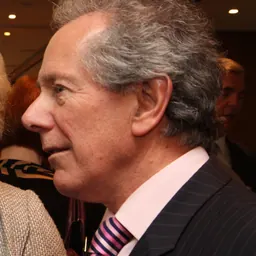
In the early 2000s Geisel dated Alexander Butterfield.
She received a star on the Hollywood Walk of Fame on behalf of Seuss in 2004.
Dr. Seuss Enterprises Before Seuss died, Geisel had "the impression that I was going to be fairly involved in everything, […] it began to dawn on me that there was going to be a tremendous transition after his loss – I was going to do everything!" Seuss left behind "drawers, closets and files of unsorted, uncatalogued material". and would "hold court each morning with aides at a La Valencia Hotel's restaurant in San Diego […] arriving in a 1984 Cadillac with licence plate that said GRINCH." Geisel was the prima inter pares on the board of three directors.
Of her role, in 1994 she said, "My absolute desire, creed, intent is to carry forth from this day Ted's books, the sharing and ongoingness of those books, generation by generation, for all the reasons they were written in the first place. They're in our language." Of looking after Seuss's characters she said "You keep firm control as if they really were your children. I don't want the Cat in the Hat in a bad part of town, so to speak."
In 1994, she signed a deal with Living Books, a joint venture between Broderbund Software and Random House, for the multimedia rights to Seuss's work.
By 1996, there was concern that Geisel had been over-saturating the market with too many Seuss-related products, with Brian Henson of Jim Henson Productions saying, "it is an unusual situation where there are different people working with the same characters on different sorts of projects all over the place. That makes it a little confusing." However, on one point Geisel was firm: "I don't want to go into the food business. I don't want one of our little people poking out from a box of Wheat Chex."
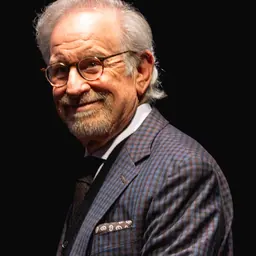
In 1996, Steven Spielberg secured the rights to The Cat in the Hat for a live-action film. However, in 1999 Geisel reclaimed the rights, saying, "They just couldn't get it right."
After an aborted deal with TriStar Pictures had been cleared up, "one of Hollywood's biggest-ever book auctions" took place in 1998, with Universal Pictures paying $5 million for the rights to How The Grinch Stole Christmas and up to $4 million for Oh, The Places You'll Go. (As of 2020 it was slated for a 2027 release as part of Warner Bros.' new Seuss universe.) As part of the bidding process, which included Tom Shadyac, the Farrelly brothers, Gary Ross and John Hughes, each interested party needed to pay $3 million to secure a meeting with Geisel.
In 2004, she presided over Seusstennial: A Century of Imagination marking the centenary of Seuss's birth. In 2015 she curated The Art of Dr. Seuss, an exhibition of paintings and sculptures.
Books Geisel was involved in the following Seuss-related publications:
Year Title Publisher Notes1994 Daisy-Head Mayzie by Dr. Seuss Random House Geisel found the manuscript "buried at the bottom of a drawer" in the home she had shared with Seuss. Of the discovery she said "To find something like that after I no longer had him was just wonderful for me." 1995 The Secret Art of Dr. Seuss by Dr. Seuss Random House Produced in conjunction with Chase Art Group 1996 Theodor Seuss Geisel: Reminiscences & Tributes by Edward Connery Lathem Continuum Geisel wrote the introduction My Many Colored Days by Dr. Seuss Random House Seuss wrote the text in 1973. Geisel brought it to the attention of his publishers after his death in 1992. When it was published four years later she wrote, "Ted had a panoramic view of ocean and land from his study, and he found the constantly changing patterns of light and color fascinating. He liked to compare the 'mood', or color, of the day to his own emotional barometer setting. Though his inspiration for this book was personal, he felt that someone else should bring his or her own vision to it". The illustrations were made by Steve Johnson and Lou Fancher.1997 Seuss-isms: Wise and Witty Prescriptions for Living from the Good Doctor Random House Geisel wrote the introduction. Containing Seuss aphorisms, about which Geisel said, "Seuss's books contain more sane, sensible, and just plain hilarious advice for living than most of the self-help books crowding bookstores today." 1999 Green Eggs and Ham by Dr. Seuss Living Books An interactive storybook made in consultation with Geisel 2004 The Complete Cat in the Hat by Dr. Seuss Collins Geisel wrote the introduction. Your Favorite Seuss: 13 stories Written and Illustrated by Dr. Seuss with 13 Introductory Essays Random House Contributed the article Living with the Cat 2008 America's New Future: 100 New Answers: A Glimpse of the Future by 100 American Decision Makers by Doris Lee McCoy Morgan James Publishing Contributor 2011 The Bippolo Seed and Other Lost Stories by Dr. Seuss Random House Geisel "worked with Random House" to publish seven 'lost' Dr Seuss stories from the 1950s about which she said "I totally, wonderfully approve of anything that comes to light at this time of Ted's work" 2015 What Pet Should I Get? by Dr. Seuss Random House Geisel found the manuscript during a house renovation. Oh, the Things You Can Do that are Good for You! All about Staying Healthy by Tish Rabe Random House Oh, the Places You'll Go 25th Anniversary Portfolio by Dr. Seuss Random House Geisel wrote the introduction 2019 Dr. Seuss's Horse Museum Random House Geisel found 80% of this book in a folder marked 'Noble Failures' after Seuss's death. It was completed by Andrew Joyner, an Australian illustrator.
Seuss dedicated the following books to Geisel and her daughters: Fox in Socks (1965) – dedicated to "Mitzi Long and Audrey Dimond of the Mt. Soledad Lingual Laboratories" The Cat in the Hat Songbook (1967) – dedicated to "Lark and Lea of Luddington Lane", Geisel's daughters I Can Lick 30 Tigers Today! and Other Stories (1969) – dedicated to Geisel.
Film and TV Geisel was involved in the following in her role as CEO of Dr. Seuss Enterprises:
Year Title Distributor Geisel's role and notes 1994 Daisy-Head MayzieHanna-BarberaProducer. Won CableACE award for best children's special He described Geisel as "Very sharp, somewhat reserved, and tough." Actor Jim Carrey had to "literally convince Geisel of his ability to play the part". 2003The Cat in the HatUniversal PicturesDreamWorks PicturesOf Mike Myers' performance Geisel said, "I never saw Austin Powers but I knew 'Yeah, baby!' and I didn't want that at all." 2012 The Lorax Universal PicturesExecutive producer and "benevolent overseer" 2018 The GrinchExecutive producer 2019–22 Green Eggs and HamNetflix Screenwriter Jared Stern said, "I had to pitch the story to her, and it was incredibly scary. Once it was over, she said something to the effect of 'I wondered what you were going to do to this. But I think you captured it, and you have our blessing.
Theatre 1998 – Dr. Seuss How the Grinch Stole Christmas. Premiered at The Old Globe, San Diego. Geisel gifted them the rights, about which the former artistic director said, it was "a gift that has continued giving to our theatre and the community long after both of our individual departures." Geisel had a walk-on part in the 2006 production. Of the production she said, "I was completely captivated."
Dr. Seuss Foundation Geisel became president of the Dr. Seuss Foundation, which was established in 1958. A portion of all sales of Dr. Seuss books is donated to the Foundation which supports the arts, civic and public affairs, education, health, international relief, social services and religious welfare with a focus on California.
In 1993, together with Kellogg's Corporation, the Foundation donated 500,000 books to nearly 2,000 schools which served disadvantaged children. In 1998 Geisel waived royalties to How the Grinch Stole Christmas! and donated $100,000 from the Foundation to help cover the costs of free tickets for San Diego's children who would be unable to afford to pay otherwise.
Dr. Seuss Fund The fund supported (and continues to support) dozens of charitable organisations in San Diego through the donation of "millions of dollars". In 2000 she said, "I'm kind of the safety net under San Diego." Charter 100 Ida Green Cancer Center March of Dimes La Jolla Playhouse Mental Health Association Mingei International Museum Museum of Contemporary Art San Diego Museum of Photographic Arts Old Globe Theatre Salk President's Club, founding donor San Diego Council on Literacy San Diego Museum of Art San Diego Opera San Diego Symphony Vista Hill Voices for Children
Through the Association for Library Service to Children (ALSC) the fund established the Theodor Seuss Geisel Award for the "most distinguished American book for beginning readers". In 2012 the Dartmouth Medical School was renamed the Geisel School of Medicine, to reflect the couple's generosity over many years. Geisel was involved in many aspects of the university's activities. Of her relationship with UCSD she said "I feel so much part of this university. I just do." "drawings, sketches, notebooks and other memorabilia dating from the 1970s to 1990s" to UCSD library with a value of $2.3 million 1993 – she opened the Geisel Room in a wing of the University's library.
1995 – gave $20 million, the single largest donation to UCSD, "believed to be the largest single donation ever made to any San Diego institution." The main library was renamed Geisel Library in recognition of the gift. 2007 – donated $1 million to establish the Audrey Geisel University Librarianship. The endowed position provides discretionary funding — in perpetuity — to continually enhance and expand the staff, resources and services of the library. Board of Visitors of the School of Medicine Geisel's La Jolla home was donated to UCSD. It was put up for sale in 2022 with the net proceeds put into a Geisel Fund.
Board memberships Chancellor's Associates Silver Circle Million Dollar Leadership Circle of Vista Hill National Hospice Foundation, founding trustee Old Globe Theatre, honorary director San Diego Council on Literacy, board member San Diego History Society, Curator's Circle
Awards, honours and nominations Geisel received the following:
1994 National Hospice Organization Champion Award 2001 Indiana University IUPUI Spirit of Philanthropy Award 2007 Indiana University Honorary Doctor of Humane Letters (LHD) 2010 University of California, San Diego Chancellor's Medal The Old Globe, San Diego Honored Geisel at its annual gala in recognition of her "significant contributions"
Scripps Research Institute Reception in Geisel's honour by in recognition of her donation to upgrade the auditorium San Diego Symphony Honored Geisel at a performance of The Sneetches 2013 UC San Diego Sulpizio Cardiovascular Center Honoree of the Heart of San Diego Gala UC San Diego Library café named Audrey's in her honour San Diego Legendary Women of the Heart Unknown Hospice of San Diego Sixth Annual Humanitarian Award Audrey Geisel Endowed Chair in Innovation, Indiana University School of Nursing Audrey Geisel University Librarian Audrey Geisel Chair in Biomedical Sciences, Salk Institute for Biological Studies Audrey Geisel Cancer Foundation Audrey S Geisel Managing Director, The Old Globe Theatre, San Diego
Don’t just read it —
keep it.
Full-length biographies made to live with: read them, listen on the way to work, watch them tonight.
- E-book
- Audio
- Video
Instant download · yours to keep · every purchase keeps this site free
Important facts
People in Audrey Dimond's life
Named in this biography and alive at the same time




Related people
Same field, nearest in time

Contemporaries
People whose lives overlapped Audrey Dimond's


Frequently asked questions
Who was Audrey Dimond?
American film producer
When was Audrey Dimond born?
Audrey Dimond was born on 14 August 1921 in Chicago.
When did Audrey Dimond die?
Audrey Dimond died on 19 December 2018 in La Jolla.
What was Audrey Dimond's occupation?
Audrey Dimond was a film producer and nurse.
What nationality was Audrey Dimond?
Audrey Dimond was American.
Sources & further reading
Cite this page
APA: Biography.guide. (2026). Audrey Dimond. https://biography.guide/audrey-dimond/
MLA: "Audrey Dimond." Biography.guide, https://biography.guide/audrey-dimond/.
Chicago: "Audrey Dimond." Biography.guide. https://biography.guide/audrey-dimond/.
Data last updated: 2026-09-20 · Spot an error? Report a correction.
Page generated 2026-09-27 05:08 UTC