
About Atish Dabholkar
Born 1963. Atish Dabholkar is an Indian theoretical physicist, known for Black holes, Quantum gravity and String theory.
Atish Dabholkar (Marathi अतीश दाभोलकर) is an Indian theoretical physicist. He is currently the Director of the Abdus Salam International Centre for Theoretical Physics (ICTP) with the rank of Assistant Director-General, UNESCO. Prior to that, he was head of ICTP's High Energy, Cosmology and Astroparticle Physics section, and also Directeur de Recherche at the Centre National de la Recherche Scientifique (CNRS) at Sorbonne University in the "Laboratoire de Physique Théorique et Hautes Énergies" (LPTHE).
Biography Atish Dabholkar earned his master's degree in physics from the Indian Institute of Technology, Kanpur in 1985 and his PhD in theoretical physics from Princeton University in 1990 under the guidance of Jeffrey A. Harvey. Subsequently, he worked at Rutgers University and then at Harvard University as a post-doctoral associate. After spending two years at California Institute of Technology as a senior research fellow, he returned to India in 1996 to take up the position of a professor of theoretical physics at Tata Institute of Fundamental Research till 2010. In November 2019, Dabholkar was appointed as Director of the Abdus Salam International Centre for Theoretical Physics (ICTP). Prior to that, he was head of ICTP's High Energy, Cosmology and Astroparticle Physics section International Centre for Theoretical Physics (ICTP) and a Directeur de Recherche of the Centre National de la Recherche Scientifique (CNRS) at Association Sorbonne Université in the Laboratoire de Physique Théorique et Hautes Énergies (LPTHE) since 2007. Dabholkar was a visiting professor at Stanford University during 2003–04 and at CERN during 2012. and initiated the study of supersymmetric solitons in string theory which played an important role in the discovery of duality symmetries in string theory and later in the study of quantum entropy of black holes. The Bhatnagar prize cites Dabholkar's "outstanding contributions for establishing how quantum theory modifies the entropy of black holes and his pioneering studies of supersymmetric solitons in string theory". introduced by Ramanujan a century ago . In his subsequent work with Pavel Putrov and Edward Witten he showed that mock modularity is generic and essential for exhibiting the duality symmetries of quantum gauge theories and M-theory and is a consequence of non-compactness in field space.
Dabholkar was the co-organizer of the Strings 2001 Conference held at Tata Institute of Fundamental Research in Mumbai, India, for the first time outside of the US and Europe. A partial list of his publications is at the online article repository of the Indian Academy of Sciences.
ICTP Leadership
The year 2024 marked ICTP's 60th anniversary, which was celebrated with a series of global events, including events held at the UNESCO headquarters in Paris in April 2024, at the IAEA in Vienna in November 2024, and at the United Nations headquarters in New York in May 2025.
On these different fora, Dabholkar advocated the new strategic vision for ICTP in the coming decades as the '''Lighthouse for Global Science ', emphasizing “the need to think anew the mission of ICTP responding to the changing scientific and geopolitical landscape while remaining true to our foundational inspiration”. The new Strategic Plan 2025 for 'ICTP 2.0' was adopted starting with his second mandate emphasizing three strategic priorities: International Science Alliance: Build collaborations with national agencies, foundations and private donors around the globe in “equal partnerships” to expand the reach of the ICTP network. International Consortium for Scientific Computing (ICOMP): Incorporate 'Open Computing' as an essential component of 'Open Science' to make advances in computational sciences accessible to the broader scientific community. ICTP Core: Reinforce existing scientific competencies of ICTP in the core areas of research and programs, modernize both scientific and physical infrastructure, and build upon these assets to enhance ICTP’s overall impact. Progress toward these strategic priorities includes several new partnerships. In 2024 ICTP signed agreements with the Ministry of Science, Technology and Innovation of Brazil and South Africa's National Institute for Theoretical and Computational Sciences.
In 2024 ICTP also signed a five-year partnership with IBM, including the creation of a new prize for excellence in AI research, and in 2025 a prize for excellence in quantum computing.
In 2024 the Simons Foundation International made available a major grant to ICTP to create an International Science Complex to cater to the several thousand scientific visitors coming to ICTP each year.
During Dabholkar’s directorship ICTP instituted new prizes and chairs to honor the scientific contributions from the global South exemplifying the core belief of the founding director Abdus Salam that 'scientific thought and its creation is a common and shared heritage of all humankind '. These include the Srinivasa Ramanujan International Chair in Mathematics and the Miguel Virasoro Visiting International Chair in Physics. The ICTP-IBM Brahmagupta AI Prize for Early Career Scientists was established in collaboration with IBM in 2024 to recognize excellence in AI research.
Awards and honors Well known for his research on string theory, black holes and quantum gravity, Dabholkar is an elected fellow of the Indian Academy of Sciences. The Council of Scientific and Industrial Research, the apex agency of India for scientific research, awarded him the Shanti Swarup Bhatnagar Prize for Science and Technology, the highest Indian science prize awarded by the Prime Minister of India, for his contributions to physical sciences in 2006. Dabholkar was awarded the Chaire d'Excellence of the Agence Nationale de la Recherche in France in 2007. He is also a recipient of the National Leadership award from the President of India in 2008. The letter protested against the use of religion as a legal criterion for determining Indian citizenship as being fundamentally inconsistent with the basic structure of the constitution of India.
Dabholkar participated in the movement of the Maharashtra Andhashraddha Nirmoolan Samiti to get the Anti Superstition Act passed in the Maharashtra Legislature. He co-organized the signature campaign that collected the signatures of 3000 scientists and 100000 citizens in support. The law was successfully enacted in 2013.
Selected publications
Lecture Notes and Books
Don’t just read it —
keep it.
Full-length biographies made to live with: read them, listen on the way to work, watch them tonight.
- E-book
- Audio
- Video
Instant download · yours to keep · every purchase keeps this site free
Important facts
People in Atish Dabholkar's life
Named in this biography and alive at the same time

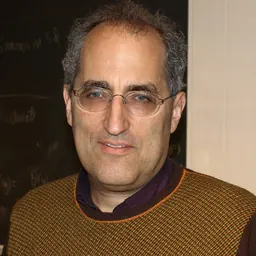
Related people
Same field, nearest in time


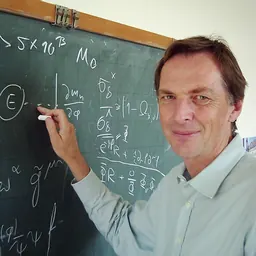


Contemporaries
People whose lives overlapped Atish Dabholkar's





Frequently asked questions
Who is Atish Dabholkar?
Indian theoretical physicist
When was Atish Dabholkar born?
Atish Dabholkar was born on 16 September 1963 in Kolhapur.
What is Atish Dabholkar's occupation?
Atish Dabholkar is a theoretical physicist.
What is Atish Dabholkar known for?
Atish Dabholkar is known for Black holes, Quantum gravity and String theory.
What nationality is Atish Dabholkar?
Atish Dabholkar is Indian.
Sources & further reading
Cite this page
APA: Biography.guide. (2026). Atish Dabholkar. https://biography.guide/atish-dabholkar/
MLA: "Atish Dabholkar." Biography.guide, https://biography.guide/atish-dabholkar/.
Chicago: "Atish Dabholkar." Biography.guide. https://biography.guide/atish-dabholkar/.
Data last updated: 2026-09-20 · Spot an error? Report a correction.
Page generated 2026-09-27 05:19 UTC