
About Astrid Henning-Jensen
Lived 1914 – 2002 (aged 87). Astrid Henning-Jensen was a Danish film director, screenwriter, film editor and actor.
Astrid Henning-Jensen (born Astrid Smahl; 10 December 1914 – 5 January 2002) was a Danish film director, actress, editor and screenwriter.
Early life
Henning-Jensen was born in the Copenhagen district of Frederiksberg in 1914, to parents Ferdinand Smahl and Ruth Hanner. She graduated from secondary school (realskole) and began working as an actress in the theatre. She acted from 1935 to 1938 in theatres such as Alléscenen and Riddersalen in Copenhagen. On 10 August 1938, she married Danish film director Bjarne Henning-Jensen.
Henning-Jensen worked as a filmmaker in multiple capacities; writing, editing and directing. In her career spanning more than 50 years she made a large number of short films, films for Danish television, documentaries as well as feature films.
In 1981, Henning-Jensen was a member of the jury at the 31st Berlin International Film Festival and, in 1996, she was awarded with the Berlinale Camera award at the 46th Berlin International Film Festival
Notable works and themes
Ditte, Child of Man (1946)
Ditte, Child of Man is a feature film adaptation of Martin Andersen Nexø's novel Ditte Menneskebarn (1921). Henning-Jensen worked on the film as assistant director along with her husband. The film marks the international breakthrough of the Henning-Jensen duo.
The film was part of the 2004 Danish Culture Canon (Kulturkanonen), an initiative from then Minister of Culture Brian Mikkelsen, which displays a selection of 108 "cultural works of excellence". The film is also an example of a theme that has been addressed numerous times throughout Henning-Jensen's career: that of childhood. In an article written to present the duo with "the most esteemed Danish children's film prize" (Unibank og Danske Børnefilmklubbers filmpris 1990) they are praised as pioneers of Danish children's cinema. The article views Ditte, Child of Man (1946) as the start of a flourishing tradition, and Those Damned Kids (1947) as the first real Danish children's film. These films—as well as Paw (1959), Early Spring (1986), and a number of Henning-Jensen's other films—deal with the emotional lives of children in a realist fashion. Two major styles are used in the way of portraying children in Henning-Jensen's films: one being that of a humanitarian dichotomy between the welfare of the few and the social impotence of the many, the other of children's drive to play versus lack of opportunities for expression. Another major style is the portrayal of children's imagination free of adult restriction. At the same time, many of these films deal with the importance of security from parents and adults; there needs to be restrictions to dream them away. Ditte, Child of Man is noted as the film where children were given their own voice in Danish cinema for the first time.
Paw, Boy of Two Worlds (1959)
Paw, Boy of Two Worlds is the story of a young boy who is brought to Denmark from the West Indies after his Danish father dies. The film deals with Paw's introduction to a new way living, and was noted for being one of the first in Denmark to openly discuss racism in society. The film was nominated for Best Foreign Language Film at the 32nd Academy Awards in 1959, as well as being awarded the Grand Prix Technique at the 1960 Cannes Film Festival. In addition, it was awarded the Council of Europe Film Award at the Venice Film Festival and received a diploma of honor at the Edinburgh Film Festival.
Humanitarianism and realism Paw, and especially its portrayal of racism, is an example of one of the most important aspects of Henning-Jensen's career: her themes of humanitarianism, as well as social issues and justice, in which she gave center place to children and women. This is also the case in her 1978 adaptation of Dea Trier Mørch's bestseller. The film follows a series of women experiencing difficulties with their pregnancies and explores the bond that forms between them at a hospital.
Another important part of Henning-Jensen's films is realism. In her career, she made a substantial amount of documentaries dealing with the lives of people in different environments, such as ballet children in Ballettens børn (1954), or the recovery of torture victims in Trods alt (1990). But realism also plays a part in her fictional works. While Still Young (1943)—the feature film debut of husband Bjarne Henning-Jensen on which Henning-Jensen was co-writer and assistant—deals with the life of young artists in the Copenhagen art scene, and was regarded as neo-realist.
Autobiography In 1999, Henning-Jensen published an autobiography—written with Danish author Barbara Gress—in which she tells stories about her life and career. In a very open and intimate manner, she talks about her experiences making movies, meetings with others, and her personal life. The book was compiled and edited by Barbara Gress.
Filmography
Selection of Astrid Henning-Jensen filmography.
Henning-Jensen's son Lars played the lead character Palle.
Received special prize Priz pour le sujet for its story at the 1949 Cannes Film Festival. 1950 North Sea Boys (Versterhavsdrenge) Director Film adaptation of A. Chr. Westergaard novel Klit Per.1951 Kranens Konditori Director, Writer Film adaptation of 1946 Cora Sandel novel Kranens konditori.1959 Paw, Boy of Two Worlds (Paw) Director, Co-Writer Nominated for the Best Foreign Language Film at the 32nd Academy Awards in 1959. 1961 Een blandt mange Director, Writer, Producer 1962 Pan (Kort Är Sommeren) Writer Film adaptation of Knut Hamsun novel Pan.1966 Unfaithful (Utro) Director, Co-Writer, Co-Producer Film adaptation of 1960 Tove Ditlevsen novel To som elsker hinanden.1969 Me and You (Mig og Dig) Director, Writer 1978 Winterborn Director, Writer, Co-Editor Film adaptation of 1976 Dea Trier Mørch novel . Won the Silver Bear for Best Director at the 1979 Berlin International Film Festival. 1980 The Moment (Øjeblikket) Director, Writer 1984 The Element of Crime (Forbrydelsens element) Actress Directed by Lars von Trier.1985 Hodja from Pjort(Hodja fra Pjort) Actress 1986 Early Spring(Barndommens Gade) Director Film adaptation of 1943 Tove Ditlevsen novel Barndommens Gade. Was entered into the 15th Moscow International Film Festival. 1996 Bella, min Bella Director, Writer Henning-Jensen's last feature film.
Awards and nominations
In addition to receiving numerous special prizes and nominations for her films, Henning-Jensen was named Årets Æreskunstner (Honorary Artist of the Year) at the 1995 Copenhagen Film Festival.
Don’t just read it —
keep it.
Full-length biographies made to live with: read them, listen on the way to work, watch them tonight.
- E-book
- Audio
- Video
Instant download · yours to keep · every purchase keeps this site free
Important facts
People in Astrid Henning-Jensen's life
Named in this biography and alive at the same time




Related people
Same field, nearest in time


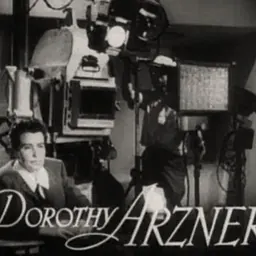

Contemporaries
People whose lives overlapped Astrid Henning-Jensen's

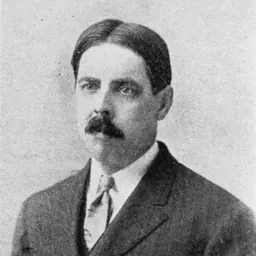


Frequently asked questions
Who was Astrid Henning-Jensen?
film director, screenwriter (1914-2002)
When was Astrid Henning-Jensen born?
Astrid Henning-Jensen was born on 10 December 1914 in Frederiksberg.
When did Astrid Henning-Jensen die?
Astrid Henning-Jensen died on 5 January 2002 in Copenhagen.
What was Astrid Henning-Jensen's occupation?
Astrid Henning-Jensen was a film director, screenwriter, film editor and actor.
What nationality was Astrid Henning-Jensen?
Astrid Henning-Jensen was Danish.
Sources & further reading
· Wikipedia: Astrid Henning-Jensen
· DBpedia: Astrid Henning-Jensen
Cite this page
APA: Biography.guide. (2026). Astrid Henning-Jensen. https://biography.guide/astrid-henning-jensen/
MLA: "Astrid Henning-Jensen." Biography.guide, https://biography.guide/astrid-henning-jensen/.
Chicago: "Astrid Henning-Jensen." Biography.guide. https://biography.guide/astrid-henning-jensen/.
Data last updated: 2026-09-22 · Spot an error? Report a correction.
Page generated 2026-09-27 05:23 UTC