
About Ashraf Marwan
Lived 1944 – 2007 (aged 63). Ashraf Marwan was an Egyptian businessperson, spy and politician.
Mohamed Ashraf Abu El Wafa Marwan, His grandfather was the chief of the Sharia courts in Egypt, and his father, a military officer, reached the rank of major general in the Egyptian military, with a final assignment as deputy commander of the Republican Guard. In 1965, Marwan graduated from Cairo University, where he was part of a military officer training program; after graduating with a degree in chemical engineering, he began working in Egypt's military industry with the rank of second lieutenant. Nasser agreed to the marriage, which took place in July 1966, under her pressure.
Career Marwan's service at the Presidential Office lasted eight years (1968–1976). Although he held only a junior position under Nasser, the president occasionally used him for sensitive missions, such as calming the crisis that erupted after the resignation of General Saad el-Shazly from the army in response to his rival's nomination as chief of staff.
Lead-up to the 1973 Arab-Israeli War Egypt had begun preparing a war to retake the Sinai Peninsula, which it had lost to Israel during the Six-Day War in 1967. Marwan became an intelligence asset to Israel, offering his services as a "walk-in" to the Israeli embassy in London in 1969. Initially turned down, Israeli intelligence recruited him as a source in 1970. Mossad referred to him as "the source" and gave him the codenames Angel and Babylon.
Marwan continued to provide information to Israeli intelligence in London after Nasser's death and the rise of Anwar Sadat. The information that Marwan provided made its way to the desks of Israeli Prime Minister Golda Meir, Defense Minister Moshe Dayan, and Israeli Defense Force Chief of Staff Chaim Bar-Lev in raw form. Despite the valuable information provided by Marwan over several years, some within Israeli intelligence questioned the truth of the information he provided; Zvi Zamir, the director of Mossad, reassured Meir that Marwan was legitimate. Uri Bar-Joseph, a scholar of the Yom Kippur War, While the Israelis had other intelligence sources in Egypt at the time, Marwan was apparently the most highly placed. (Bregman wrote a book on his relationship with Marwan, The Spy Who Fell to Earth). However, subsequent work by Bar-Joseph in the 2010s established that Marwan was a genuine spy for Mossad.
According to the report, Marwan attended meetings from late August 1973 in which Egyptian President Anwar Sadat and Syrian President Hafez al-Assad finalized plans for Operation Badr. Rather than relaying this information to his Israeli handlers, he allegedly provided false reports suggesting alternative dates and downplaying the likelihood of war. The report further stated that even the warning he delivered on the eve of the conflict was imprecise and arrived too late to be of operational value. Former Israeli intelligence chief Maj. Gen. Shlomo Gazit was quoted posthumously as saying Marwan had been planted deep within Israeli intelligence where he manipulated Mossad chief Zvi Zamir and acted as "the central cog" in Egypt’s deception plan. By that stage, however, Marwan had accumulated a considerable number of personal enemies who accused him of using his closeness to Sadat to gain personal wealth. When the accusations gained momentum, Sadat had to yield to the pressure and, in March 1976, ended Marwan's service in the Presidential Office.
Marwan was nominated to head the Arab Organization for Industrialization, an arms production complex in Cairo that was financed by Saudi Arabia, the UAE, and Qatar. Following additional political pressures, Marwan had to be relieved of that position in October 1978.
Activities in London Following Sadat's assassination in October 1981, Marwan and his family moved to London, where he became an arms dealer and, according to The Guardian, a billionaire. In the early 1990s, Marwan owned a 20% stake in the property firm Cabra, which then owned Chelsea F.C.'s Stamford Bridge grounds and the grounds of Fulham F.C.; his stake was later bought by Ken Bates.
Death in London Marwan died on 27 June 2007 outside his flat in Carlton House Terrace, London. The cause of death was traumatic aortic rupture following a fall from the balcony of his fifth-floor apartment. Press reports indicated that the Metropolitan Police Service, as well as Marwan's elder son, Gamal, believed he had been murdered. Marwan's funeral in Egypt was led by Egypt's highest-ranked religious leader, Muhammad Sayyid Tantawy, and attended by, amongst others, Gamal Mubarak, son of the then-current Egyptian President Hosni Mubarak, and intelligence chief Omar Suleiman. According to President Mubarak, "Marwan carried out patriotic acts which it is not yet time to reveal." Following a case review in January 2008, the investigation was transferred to the Metropolitan Police Specialist Crime Directorate, both because of its public nature and because the shoes Marwan was wearing when he fell, key evidence in the case, had been lost. One witness, who was on the third floor of a nearby building, told police that he saw two men "wearing suits and of Mediterranean appearance" appear on the balcony moments after Marwan's fall, look down, and then return inside the apartment. Police are also reported to have lost Marwan's shoes, which could hold clues on whether or not Marwan jumped from the balcony.
A coroner's inquest by William Dolman did not reach a verdict, finding insufficient evidence of either suicide or murder. The inquest found no evidence that Marwan suffered from a psychiatric disorder. Like Marwan, the two others—Soad Hosny (June 2001) and El-Leithy Nassif (August 1973), had ties to the Egyptian security services and were either writing or planning to write memoirs. However, an analysis in The Guardian found this scenario to be unlikely: "For one thing, killing a former agent after his name is revealed would seem to be a major disincentive for new recruits. Even if Israel believed that Marwan was a double agent, working for the Egyptians, better to do nothing and, through their silence, imply he was faithful to their cause." Bar-Joseph, who wrote a biography of Marwan, believes that the Mukhabarat (Egyptian intelligence) under the Mubarak government pushed Marwan or forced him to jump to his death after learning of his betrayal.
Personal life One of Marwan's sons was married to the daughter of former Arab League Secretary General Amr Moussa. His son, Gamal, is a close friend of Gamal Mubarak, the son of former Egyptian President Hosni Mubarak.
Don’t just read it —
keep it.
Full-length biographies made to live with: read them, listen on the way to work, watch them tonight.
- E-book
- Audio
- Video
Instant download · yours to keep · every purchase keeps this site free
Important facts
People in Ashraf Marwan's life
Named in this biography and alive at the same time

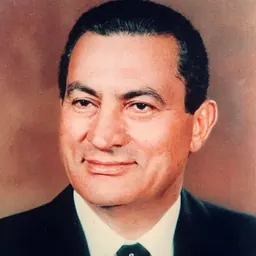
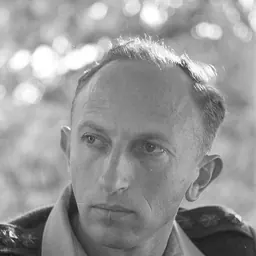


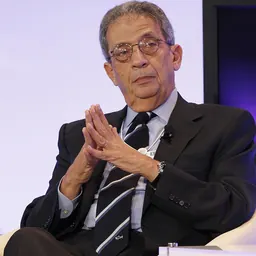
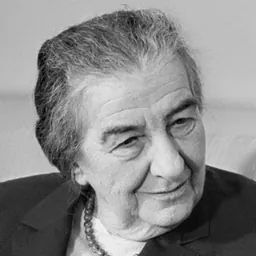

Related people
Same field, nearest in time

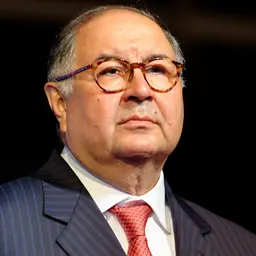


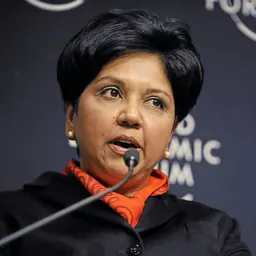
Contemporaries
People whose lives overlapped Ashraf Marwan's

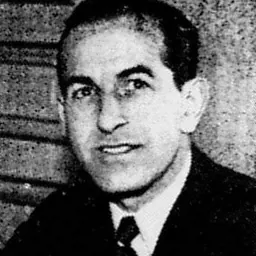


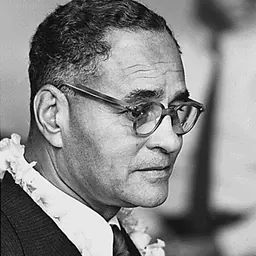

Frequently asked questions
Who was Ashraf Marwan?
Egyptian businessman
When was Ashraf Marwan born?
Ashraf Marwan was born on 2 February 1944 in Cairo.
When did Ashraf Marwan die?
Ashraf Marwan died on 27 June 2007 in London.
What was Ashraf Marwan's occupation?
Ashraf Marwan was a businessperson, spy and politician.
What nationality was Ashraf Marwan?
Ashraf Marwan was Egyptian.
Sources & further reading
Cite this page
APA: Biography.guide. (2026). Ashraf Marwan. https://biography.guide/ashraf-marwan/
MLA: "Ashraf Marwan." Biography.guide, https://biography.guide/ashraf-marwan/.
Chicago: "Ashraf Marwan." Biography.guide. https://biography.guide/ashraf-marwan/.
Data last updated: 2026-09-26 · Spot an error? Report a correction.
Page generated 2026-09-27 05:14 UTC