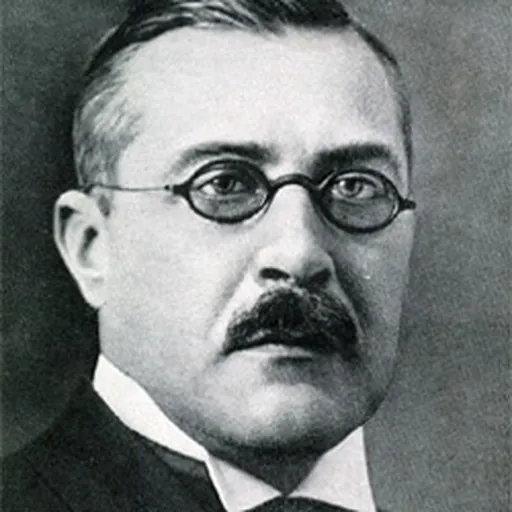
About Artur Kapp
Lived 1878 – 1952 (aged 73). Artur Kapp was an Estonian and Russian conductor, composer and music teacher.
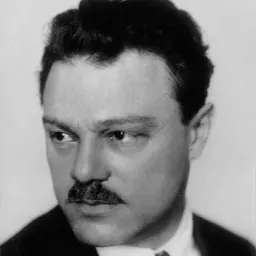
Artur Kapp (28 February 1878 – 14 January 1952) was an Estonian composer.
Early life and career Born in Suure-Jaani, Estonia, then part of the Governorate of Livonia, Russian Empire, he was the son of Joosep Kapp, who was also a classically trained musician. Kapp began his musical career studying organ at the Saint Petersburg Conservatory as a student of both Louis Homilius and composition with Nikolai Rimsky-Korsakov in 1891. Kapp graduated from the Conservatory in 1900 as a composer and from 1904 until 1920 worked as a music director in the southern Russian city of Astrakhan, then returning to Estonia as a professor and conductor at the Tallinn Conservatory where he counted among his students such future notable Estonian composers as Evald Aav, Edgar Arro, Gustav Ernesaks, Helen Tobias-Duesberg, Riho Päts and Enn Võrk. He is, along with Rudolf Tobias (1873-1918), generally considered to be one of the founders of Estonian symphonic music.
Kapp's son Eugen (1908–1996) and nephew Villem (1913–1964) became notable composers as well, having studied at the Tallinn Conservatory under direction of the elder Kapp.
Some of Kapp's most enduring works are the 1899 overture Don Carlos and the 1900 cantata Paradiis ja Peri ("Paradise and Peri"), both of which are large scale works that prominently feature the organ. He is possibly best recalled for his oratorio Hiiob ("Job") and Metsateel ("On A Road Through The Woods"), a piece for solo voice. Kapp's work is abundant and diverse and covers many classical genres. He wrote five symphonies, five concertos, overtures, four orchestral suites, in addition to the above.
After the Soviet invasion of Estonia during World War II, Kapp was forced to resign his position as a composer and retired to Suure-Jaani. He died there in 1952 at the age of 73. His professional career spanned more than five decades. His last two major works were the overture "To the Party" (1947), the Symphony No. 4 (dedicated to the 30th anniversary of the Soviet Young Communist League, 1948), and the Symphony (Cantata-Symphony) No. 5 (Peace Symphony).
Legacy In 1998, the annual Suure-Jaani Music Days festival was founded to celebrate Artur Kapp's musical legacy, as well as that of his sons and fellow composer Mart Saar (1882-1963), who was also from the area. The Festival is organized by the Eesti Kontsert in conjunction with the town of Suure-Jaani and the International Artur Kapp Society. The venues for performances include Lutheran and Orthodox churches, the Kapp Museum, and the song festival stage.
Don’t just read it —
keep it.
Full-length biographies made to live with: read them, listen on the way to work, watch them tonight.
- E-book
- Audio
- Video
Instant download · yours to keep · every purchase keeps this site free
Important facts
People in Artur Kapp's life
Named in this biography and alive at the same time





Related people
Same field, nearest in time


Contemporaries
People whose lives overlapped Artur Kapp's




Frequently asked questions
Who was Artur Kapp?
Estonian composer (1878-1952)
When was Artur Kapp born?
Artur Kapp was born on 28 February 1878 in Suure-Jaani.
When did Artur Kapp die?
Artur Kapp died on 14 January 1952 in Suure-Jaani Rural Municipality, Suure-Jaani.
What was Artur Kapp's occupation?
Artur Kapp was a conductor, composer and music teacher.
What nationality was Artur Kapp?
Artur Kapp was Estonian and Russian.
Sources & further reading
Cite this page
APA: Biography.guide. (2026). Artur Kapp. https://biography.guide/artur-kapp/
MLA: "Artur Kapp." Biography.guide, https://biography.guide/artur-kapp/.
Chicago: "Artur Kapp." Biography.guide. https://biography.guide/artur-kapp/.
Data last updated: 2026-09-21 · Spot an error? Report a correction.
Portrait: Wikimedia Commons · author & licence
Page generated 2026-09-27 05:00 UTC