
About Arthur Woolf
Lived 1766 – 1837 (aged 70–71). Arthur Woolf was a British inventor.
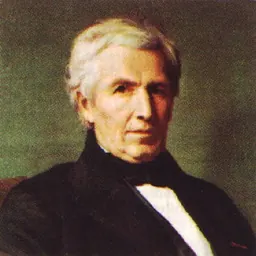
Arthur Woolf (1766, Camborne, Cornwall – 16 October 1837, Guernsey) was a Cornish engineer, most famous for inventing a high-pressure compound steam engine. In this way he made an outstanding contribution to the development and perfection of the Cornish engine.
Woolf left Cornwall in 1785 to work for Joseph Bramah's engineering works in London. He worked there and at other firms as an engineer and engine builder until 1811 experimenting with high pressure steam and a much improved boiler. He then returned to Cornwall. Michael Loam, who introduced the man engine to the UK, was trained by him.
When he returned to Cornwall, beam engine designs were crude, shackled by outdated Watt patents and poor engineering, struggling to compete with large water wheels, even used underground. He learned from Bramah that to move forward meant adopting much improved engineering techniques, for it was Bramah who invented quality control. Woolf was chief engineer to Harvey & Co of Hayle, the leading engineering and foundry works, at this time the largest in the world. They eventually swallowed up the rival Copperhouse Foundry run by Sandys, Carne and Vivian. For very many years they were the leading firm worldwide for drainage engines, even supplying three eight-beamed pumping engines to the Dutch government to drain the Haarlemmermeer (see Museum De Cruquius). By the time Woolf retired in 1836 the Cornish engine, owing largely to his efforts, was a thing of magnificent beauty and efficiency.
In 1803, Woolf obtained a patent on an improved boiler for producing high pressure steam. In 1804, he patented his best-known invention, a compound steam engine.
Woolf's compound engine
Woolf's engine was a parallel compound engine with two cylinders in which the steam worked in succession. These were both coupled to the same end of the beam of the engine. The operation of the engine can be described as being a high-pressure cylinder of Trevithick's high-pressure simple expansion engine, followed by a condensing cylinder of Watt's design. Woolf engines were also built with paired single-acting cylinders.
Examples of Woolf compound rotative beam engines may be seen at Abbey Pumping Station, Blagdon Lake, Claymills Pumping Station, The Hamilton Museum of Steam & Technology, and the Western Springs Pumphouse, now part of the Museum of Transport and Technology Auckland, New Zealand.
Don’t just read it —
keep it.
Full-length biographies made to live with: read them, listen on the way to work, watch them tonight.
- E-book
- Audio
- Video
Instant download · yours to keep · every purchase keeps this site free
Important facts
People in Arthur Woolf's life
Named in this biography and alive at the same time


Related people
Same field, nearest in time

Contemporaries
People whose lives overlapped Arthur Woolf's





Frequently asked questions
Who was Arthur Woolf?
Cornish engineer
When was Arthur Woolf born?
Arthur Woolf was born in 1766 in Camborne.
When did Arthur Woolf die?
Arthur Woolf died on 26 October 1837 in Guernsey.
What was Arthur Woolf's occupation?
Arthur Woolf was an inventor.
What nationality was Arthur Woolf?
Arthur Woolf was British.
Sources & further reading
Cite this page
APA: Biography.guide. (2026). Arthur Woolf. https://biography.guide/arthur-woolf/
MLA: "Arthur Woolf." Biography.guide, https://biography.guide/arthur-woolf/.
Chicago: "Arthur Woolf." Biography.guide. https://biography.guide/arthur-woolf/.
Data last updated: 2026-09-20 · Spot an error? Report a correction.
Page generated 2026-09-27 05:22 UTC