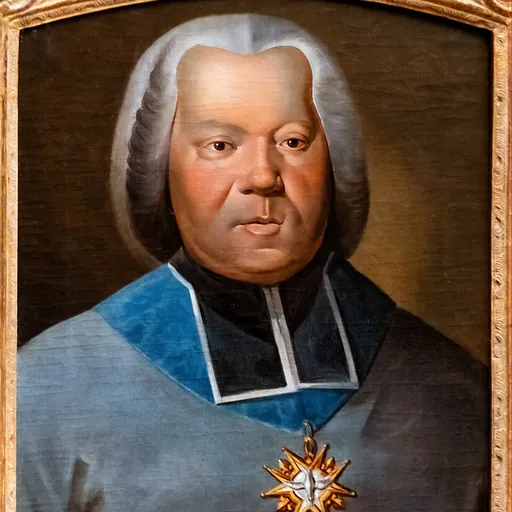
About Arthur Richard Dillon
Lived 1721 – 1806 (aged 84). Arthur Richard Dillon was a French catholic priest, catholic bishop and bishop.
Arthur Richard Dillon (1721–1806) was archbishop of Narbonne in France. He was the youngest son of Arthur Dillon, Count Dillon, who came to France with Mountcashel's Irish Brigade. At the French Revolution he refused the civil constitution of the clergy and fled first to Coblenz and then to London.
Birth and origins Arthur Richard was born on 15 September 1721 at the Château de Saint-Germain-en-Laye in France. He was the youngest of the five sons of Arthur Dillon and his wife Christina Sheldon. His father was born in 1670 in Ireland, had fought for the Jacobites in the Williamite War and had gone to France as the colonel of Dillon's Regiment with the Irish Brigade in April 1690 when Irish troops were sent to France in exchange for French troops sent to Ireland with Lauzun. He was a younger son of the 7th Viscount Dillon. His father's family was Old English Irish and descended from Sir Henry Dillon who came to Ireland with Prince John in 1185.
Henry's mother was a daughter of Ralph Sheldon, whereas Dominic Sheldon, the English Catholic Jacobite, was her uncle. She was a maid of honour to Queen Mary of Modena, wife of James II. Both parents were thus Jacobites and Catholics.
Arthur had four brothers and several sisters, who are listed in his father's article.
Dillon's coat of arms. Above the escutcheon the green galero with fifteen tassels (as primate of Gallia narbonensis) and around the escutcheon is the cordon bleu of the Order of the Holy Spirit.
Career Arthur Richard entered the priesthood and was successively curé of Elan near Mézières, vicar-general of Pontoise (1747), Bishop of Evreux (1753), Archbishop of Toulouse (1758), and Archbishop of Narbonne (1763). In that latter capacity, he also was both the Primate of the ecclesiastical region of Gallia narbonensis and ex officio president of the estates of Languedoc.
He devoted himself less to the spiritual direction of his diocese than to the temporal welfare of its inhabitants, carrying out many works of public utility, bridges, canals, roads, harbours, etc.; he had chairs of chemistry and of physics created at the universities of Montpellier and Toulouse, and tried to reduce poverty, especially in Narbonne.
From about the age of fifty he lived with his wealthy, widowed niece, Madame de Rothe. She was born Lucy Cary and was the child of his sister Laura, who had married Lucius Cary, 6th Viscount Falkland. Madame de Rothe had been widowed in 1766. Dillon and Madame de Rothe were lovers, an arrangement considered scandalous even by the jaded standards of the day. They maintained a household primarily at the château de Hautefontaine, where Dillon kept an extravagant hunt. Madame de Rothe brought her daughter Thérèse-Lucy de Dillon, a favourite of Marie Antoinette, the French queen, and her granddaughter Henriette-Lucy, who would become the memoirist Henriette-Lucy, Marquise de La Tour du Pin Gouvernet.
In 1787 and in 1788 he was a member of the Assembly of Notables called together by Louis XVI, and in 1788 presided over the assembly of the clergy.
Exile and death Having refused to accept the civil constitution of the clergy, Dillon had to leave Narbonne in 1790. He was replaced by Guillaume Besaucèle, who was the constitutional bishop of Aude. Dillon then emigrated, accompanied by Madame de Rothe, to Coblenz in 1791. Soon afterwards both went to London, where he was visited in 1797 at his home in Thayer Street, Marylebone, by Henriette-Lucy, Marquise de La Tour du Pin Gouvernet.
On 15 July 1801, at Paris, Napoleon and Pope Pius VII signed the Concordat of 1801 and most of the French clergy that had gone into exile or hiding returned to take up again their normal duties. Dillon however disobeyed the pope and rejected the Concordat, probably because it suppressed his see at Narbonne, or because he wanted to avoid paying his debts in France.
On 7 February 1804, Madame de Rothe, his partner, died in London. He survived her by two years and died on 5 July 1806 in London. He was buried in St Pancras churchyard, which was the burial place favoured by the émigré community, as there was no official Catholic cemetery available.
Born, at the Château de Saint-Germain-en-Laye in preparation for the London terminus of the Channel Tunnel Rail Link. During the archaeological investigation, Dillon's body was found to have been buried wearing a set of porcelain dentures. It is believed that he purchased them from a Parisian dentist named Nicholas de Chemant.
In March 2007 the body of Archbishop Dillon was returned to France and now lies in Narbonne Cathedral. On 19 May 2008, the porcelain dentures were accessioned into the Cobbe Museum (currently housed at Hatchlands, East Clandon).
Notes and references
Don’t just read it —
keep it.
Full-length biographies made to live with: read them, listen on the way to work, watch them tonight.
- E-book
- Audio
- Video
Instant download · yours to keep · every purchase keeps this site free
Important facts
People in Arthur Richard Dillon's life
Named in this biography and alive at the same time




Related people
Same field, nearest in time


Contemporaries
People whose lives overlapped Arthur Richard Dillon's




Frequently asked questions
Who was Arthur Richard Dillon?
Catholic archbishop
When was Arthur Richard Dillon born?
Arthur Richard Dillon was born on 14 September 1721 in Saint-Germain-en-Laye.
When did Arthur Richard Dillon die?
Arthur Richard Dillon died on 5 July 1806 in London.
What was Arthur Richard Dillon's occupation?
Arthur Richard Dillon was a catholic priest, catholic bishop and bishop.
What nationality was Arthur Richard Dillon?
Arthur Richard Dillon was French.
Sources & further reading
· Wikipedia: Arthur Richard Dillon
· DBpedia: Arthur Richard Dillon
Cite this page
APA: Biography.guide. (2026). Arthur Richard Dillon. https://biography.guide/arthur-richard-dillon/
MLA: "Arthur Richard Dillon." Biography.guide, https://biography.guide/arthur-richard-dillon/.
Chicago: "Arthur Richard Dillon." Biography.guide. https://biography.guide/arthur-richard-dillon/.
Data last updated: 2026-09-23 · Spot an error? Report a correction.
Portrait: Wikimedia Commons · author & licence
Page generated 2026-09-27 05:07 UTC