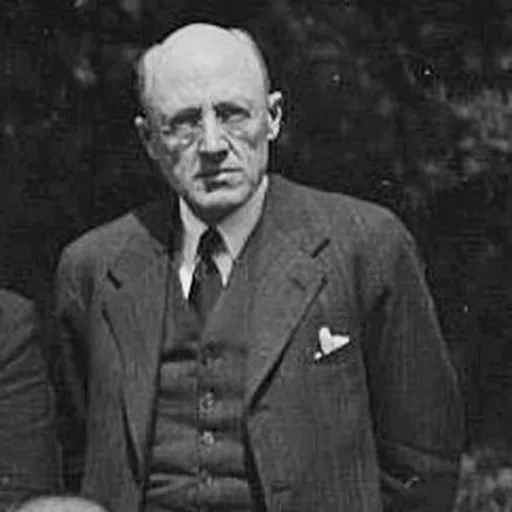
Arthur Ponsonby, 1st Baron Ponsonby of Shulbrede
British Liberal and later Labour politician and pacifist
About Arthur Ponsonby, 1st Baron Ponsonby of Shulbrede
Lived 1871 – 1946 (aged 75). Arthur Ponsonby, 1st Baron Ponsonby of Shulbrede was a British politician and writer.
Arthur Augustus William Harry Ponsonby, 1st Baron Ponsonby of Shulbrede (16 February 1871 – 23 March 1946), was a British politician, writer, and social activist. He was the son of Sir Henry Ponsonby, Private Secretary to Queen Victoria, and Mary Elizabeth Bulteel, daughter of John Crocker Bulteel. He was also the great-grandson of The 3rd Earl of Bessborough, The 3rd Earl of Bathurst and The 2nd Earl Grey. The 1st Baron Sysonby was his elder brother.
Ponsonby is often quoted as the author of the dictum "When war is declared, truth is the first casualty", published in his book Falsehood in War-time, Containing an Assortment of Lies Circulated Throughout the Nations During the Great War (1928). However, he uses this phrase in quotation marks as an epigram at the start of the book and does not present it as his own words. Its likely origin is the almost identical line spoken in 1917 by the United States Senator Hiram Johnson: "The first casualty when war comes is truth".
Education and early career Ponsonby was a Page of Honour to Queen Victoria from 1882 to 1887. From an Anglo-Irish family, he was educated at Eton College. While at Eton, Ponsonby was whipped for organising a steeplechase in his dormitory.
Ponsonby studied at Balliol College, Oxford, before joining the Diplomatic Service and taking assignments in Constantinople and Copenhagen.
Politics At the 1906 general election, Ponsonby stood unsuccessfully as Liberal candidate for Taunton. He was elected as Member of Parliament for Stirling Burghs at a by-election of 1908, succeeding former Prime Minister Henry Campbell-Bannerman, who had died a few weeks earlier.
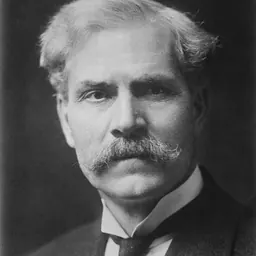
In Parliament, Ponsonby opposed the British involvement in the First World War and, with George Cadbury, Ramsay MacDonald, E. D. Morel, Arnold Rowntree, and Charles Trevelyan, he was a member of the Union of Democratic Control, which became a prominent antiwar organisation in Britain.
Ponsonby was defeated at the 1918 general election in which he stood as an "Independent Democrat" in the new Dunfermline Burghs constituency. He then joined the Labour Party and returned to the House of Commons at the 1922 general election as member for the Brightside division of Sheffield.
From 1935 to 1937, he was Chair of the International Council of the War Resisters' International. Ponsonby as the leader of the antiwar wing of the Labour Party was opposed to all wars in principle as evil, which led him to oppose British rearmament in the 1930s. During the Danzig crisis, he spoke out against the British "guarantee" of Poland as likely to cause another world war.
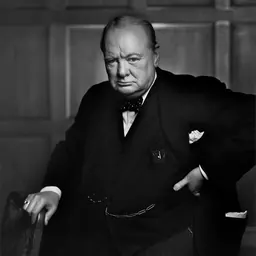
Resignation In May 1940, Ponsonby resigned from the Labour Party, opposing its decision to join the new coalition government of Winston Churchill.
He wrote a biography of his father which won the James Tait Black Memorial Prize in 1942: Henry Ponsonby, Queen Victoria's Private Secretary: His Life and Letters.
Death Ponsonby died on 23 March 1946 and was succeeded by his son Matthew Henry Hubert Ponsonby.
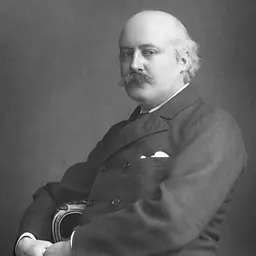
Personal life and family On 12 April 1898, he married Dorothea Parry, daughter of Hubert Parry and Elizabeth Maude Herbert (1851–1933), a daughter of Sidney Herbert, 1st Baron Herbert of Lea. They had a daughter, Elizabeth (1900–1940), who during the 1920s became well known as a leading figure of the Bright Young People, and a son, Matthew (1904–1976), who became the 2nd Baron.
Arms
Works Rebels and Reformers: Biographies for Young People, with Dorothea Ponsonby. New York: H. Holt and Company (1919). . The Priory and Manor of Lynchmere and Shulbrede. Taunton: Barnicott and Pearce, and Wessex Press (1920). . A Conflict of Opinion, a Discussion on the Failure of the Church. London: Swarthmore Press (1919). . The Camel and the Needle's Eye (1910). The Decline of the Aristocracy (1912). Democracy and Diplomacy (1915) Wars And Treaties (1918) A Conflict of Opinion: A Discussion on the Failure of the Church (1922) English Diaries: A review of English diaries from the sixteenth to the twentieth century with an introduction on diary writing (1923) Now Is The Time: An Appeal For Peace (1925) More English diaries; further reviews of diaries from the sixteenth to the nineteenth century with an introduction on diary reading, (1927) Scottish and Irish Diaries: From the sixteenth to the nineteenth century (1927) Falsehood in War-Time (1928). Samuel Pepys (1928) British diarists (1930) (80-page booklet in the "Benn's Sixpenny Library" series, no. 70) Casual Observations (1930) John Evelyn: Fellow of the Royal Society: author of "Sylva" (1933) Life Here And Now: conclusions derived From an examination of the sense of duration (1936) The little torch: Quotations from diaries of the past for every day of the year (1938) Henry Ponsonby, Queen Victoria's Private Secretary: His Life from his Letters (1942)
Don’t just read it —
keep it.
Full-length biographies made to live with: read them, listen on the way to work, watch them tonight.
- E-book
- Audio
- Video
Instant download · yours to keep · every purchase keeps this site free
Important facts
more
1st Baron Ponsonby of ShulbredeFamily & relationships
People in Arthur Ponsonby, 1st Baron Ponsonby of Shulbrede's life
Named in this biography and alive at the same time


Related people
Same field, nearest in time

Contemporaries
People whose lives overlapped Arthur Ponsonby, 1st Baron Ponsonby of Shulbrede's


Frequently asked questions
Who was Arthur Ponsonby, 1st Baron Ponsonby of Shulbrede?
British Liberal and later Labour politician and pacifist (1871-1946)
When was Arthur Ponsonby, 1st Baron Ponsonby of Shulbrede born?
Arthur Ponsonby, 1st Baron Ponsonby of Shulbrede was born on 16 February 1871 in Windsor Castle.
When did Arthur Ponsonby, 1st Baron Ponsonby of Shulbrede die?
Arthur Ponsonby, 1st Baron Ponsonby of Shulbrede died on 23 March 1946 in Hindhead.
What was Arthur Ponsonby, 1st Baron Ponsonby of Shulbrede's occupation?
Arthur Ponsonby, 1st Baron Ponsonby of Shulbrede was a politician and writer.
What nationality was Arthur Ponsonby, 1st Baron Ponsonby of Shulbrede?
Arthur Ponsonby, 1st Baron Ponsonby of Shulbrede was British.
Sources & further reading
· Wikipedia: Arthur Ponsonby, 1st Baron Ponsonby of Shulbrede
· DBpedia: Arthur Ponsonby, 1st Baron Ponsonby of Shulbrede
Cite this page
APA: Biography.guide. (2026). Arthur Ponsonby, 1st Baron Ponsonby of Shulbrede. https://biography.guide/arthur-ponsonby-1st-baron-ponsonby-of-shulbrede/
MLA: "Arthur Ponsonby, 1st Baron Ponsonby of Shulbrede." Biography.guide, https://biography.guide/arthur-ponsonby-1st-baron-ponsonby-of-shulbrede/.
Chicago: "Arthur Ponsonby, 1st Baron Ponsonby of Shulbrede." Biography.guide. https://biography.guide/arthur-ponsonby-1st-baron-ponsonby-of-shulbrede/.
Data last updated: 2026-09-28 · Spot an error? Report a correction.
Portrait: Wikimedia Commons · author & licence
Page generated 2026-10-05 02:24 UTC