
Arthur Lyman
American jazz vibraphone and marimba player group popularized a faux-Polynesian musical style that became known as exotica
About Arthur Lyman
Lived 1932 – 2002 (aged 70). Arthur Lyman was an American musician.
Arthur Hunt Lyman (February 2, 1932 – February 24, 2002) was a Hawaiian jazz vibraphone and marimba player. His group popularized a style of faux-Polynesian music during the 1950s and 1960s which later became known as exotica. His albums became favorite stereo-effect demonstration discs during the early days of the stereophonic LP album for their elaborate and colorful percussion, deep bass and 2-dimensional recording soundstage. Lyman was known as "the King of Lounge music."
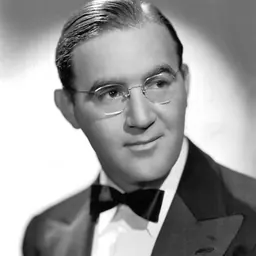
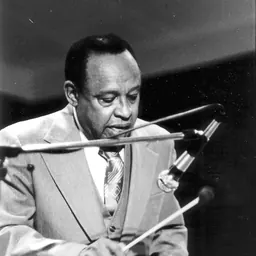
Biography Arthur Lyman was born on the island of Kauai in the U.S. territory of Hawaii, on February 2, 1932. He was the youngest of eight children of a Hawaiian mother and a father of Hawaiian, French, Belgian and Chinese descent. When Arthur's father, a riveter, lost his eyesight in an accident on Kauai, the family settled in Makiki, a subdistrict of Honolulu. Arthur's father was very strict with him, each day after school locking him in a room with orders to play along to a stack of Benny Goodman records "to learn what good music is." "I had a little toy marimba," Lyman later recalled, "a sort of bass xylophone, and from those old 78 rpm disks I learned every note Lionel Hampton recorded with the Goodman group." Lyman joined his father and brother playing USO shows on the bases at Kaneohe and Pearl Harbor.
Exotica After graduating from McKinley High School in 1951, he put music on hold to work as a desk clerk at the Halekulani hotel. It was there in 1954 that he met pianist Martin Denny, who, after hearing him play, offered the 21-year-old a spot in his band. Initially wary, Lyman was persuaded by the numbers: he was making $280 a month as a clerk, and Denny promised more than $100 a week. Denny had been brought to Hawaii in January on contract by Don the Beachcomber, and stayed in Hawaii to play nightly in the Shell Bar at the Hawaiian Village. Other members of his band were Augie Colon on percussion and John Kramer on string bass. Denny, who had traveled widely, had collected numerous exotic instruments from all over the world and liked to use them to spice up his jazz arrangements of popular songs. The stage of the Shell Bar was very exotic, with a little tropical garden pool of water right outside the bandstand, and rocks & palm trees growing around. One full moon night Lyman had "had a little too many Mai-Tais to drink," and when they began playing the theme from Vera Cruz, Lyman let out a few bird calls. "The next thing you know, the audience started to answer me back with all kinds of weird cries. It was great." These bird calls became a trademark of Lyman's sound.
When Denny's Exotica album was released on record in 1957 it became a smash hit, igniting a national mania for all things South Pacific during the lead-up to Hawai'i becoming a state, including the South Pacific stage play, the film by that name, tiki-themed restaurants like Don the Beachcomber's and Trader Vic's, luaus, Oceanic art, exotic drinks, aloha shirts, and straw hats.
Later career That same year, Lyman was persuaded by Henry J. Kaiser to leave The Martin Denny Group to form his own group, continuing in much the same style but even more flamboyant. For decades Arthur and Martin did not speak to each other, but eventually came together (with many of their former bandmates) on Denny's 1990 CD Exotica '90 and remained friends since. Although the Polynesian craze faded as music trends changed, Lyman's combo continued to play to tourists nearly every Friday and Saturday night at the New Otani Kaimana Beach Hotel in Honolulu throughout the 1970s. Lyman continued to play as a solo act at the New Otani in the 1980s and 1990s. He also performed for years at Don the Beachcomber's Polynesian Village, the Shell Bar, the Waialae Country Club and the Canoe House at the Ilikai Hotel at Waikiki, the Bali Hai in San Diego and at the Edgewater Beach Hotel in Chicago. During the peak of his popularity Lyman recorded more than 30 albums and almost 400 singles, earning three gold albums. Taboo peaked at number 6 on Billboard'''s album chart and stayed on the chart for over a year, eventually selling more than two million copies. The title song peaked at number 55 on the Billboard Hot 100 in July 1959. Lyman's biggest pop single was "Yellow Bird," originally a Haitian song, which peaked at No. 4 in July 1961. His last charting single was "Love For Sale" (reaching number 43 in March 1963), but his music enjoyed a new burst of popularity in the 1990s with the lounge music revival and CD reissues.
Death Lyman died from esophageal cancer in February 2002.
Arthur Lyman Group personnel 1957–1965 Arthur Lyman – vibraphone, marimba, xylophone, bird calls, congas, bongos, guitar, percussion (including wind chimes, ankle spurs, timbali, cocktail drums, boobams, jawbone, guiro, conch shell, tambourine, snare drums, wood block, finger cymbals, cowbells, castanets, samba percussion, Chinese gong and sleigh bells) Alan Soares – piano, celeste, glockenspiel, guitar, clavietta, marimba, percussion John Kramer – string bass, bass guitar, percussion, ukulele, guitar, bird calls, flute, clarinet Harold Chang – percussion, marimba, xylophone, bass 1965–1966 Arthur Lyman – vibraphone, marimba, xylophone, bird calls, congas, percussion Alan Soares – piano, celeste, glockenspiel, guitar, percussion Archie Grant – bass, flute, guitar, ukulele Harold Chang – percussion, marimba, xylophone 1966–1975 Arthur Lyman – vibraphone, marimba, xylophone, percussion Clem Low – piano Archie Grant – bass Harold Chang – percussion, marimba, xylophone Kapiolani Lyman (his daughter) – percussion, marimba, flute, hula, vocals 1975–1978 Arthur Lyman – vibraphone, marimba, ukulele, percussion Paul Reid – piano Randy Aton – bass Pat Sombrio – drums Kapiolani Lyman – percussion, marimba, flute, hula, vocals Neil Norman – guest guitarist
Recording details Most of Lyman's albums were recorded in the aluminum Kaiser geodesic dome auditorium on the grounds of the Kaiser Hawaiian Village Hotel on Waikiki in Honolulu. This space provided unique acoustics and a natural 3-second reverberation. His recordings also benefited from being recorded on a one-of-kind Ampex 3-track 1/2" tape recorder designed and built by engineer (and Hi-Fi Records label owner) Richard Vaughn. All of Lyman's albums were recorded live, without overdubbing. He recorded after midnight, to avoid the sounds of traffic and tourists, and occasionally you can hear the aluminum dome creaking as it settles in the cool night air. Lyman noted that he did not like recording in the dome because of the echo and the outside noise but did so because it was free. At night, after playing in the lounge the band would wheel their instruments over to the dome and record all night. They knew their recording session was over when morning came and the trash trucks started making noise. The quality of these recordings became even more evident with the advent of CD reissues, when the digital mastering engineer found he didn't have to do anything to them but transfer the original 3-track stereo masters to digital. The recordings remain state-of-the-art nearly 50 years later.
Discography Original LPs Taboo, Hi-Fi Records SR806, 1958 Hawaiian Sunset, Hi-Fi Records SR807, 1958 Bwana A, Hi-Fi Records SR808, 1958 Legend of Pele, Hi-Fi Records SR813, 1958 Leis of Jazz, Hi-Fi Records SR607, 1959 Bahia, Hi-Fi Records SR815, 1959 Arthur Lyman on Broadway, Hi-Fi Records SR818, 1959 Taboo 2, Hi-Fi Records SR822, 1959 Percussion Spectacular! (reissued as Yellow Bird), Hi-Fi Records L-1004, 1960 The Colorful Percussions of Arthur Lyman, Hi-Fi Records L-1005, 1962 Many Moods of Arthur Lyman, Hi-Fi Records L-1007, 1962 I Wish You Love (reissued as Love for Sale), Hi-Fi Records L-1009, 1963 Cotton Fields, Hi-Fi Records L-1010, 1963 Blowin' in the Wind, Hi-Fi Records L-1014, 1963 At the Crescendo, Crescendo GNP 605, 1963 Paradise (reissued as Pearly Shells), Crescendo GNP 606, 1964 Cast Your Fate to the Wind, Crescendo GNP 607 (reissue of At the Crescendo), 1965 Mele Kalikimaka (Merry Christmas), Hi-Fi Records L-1018, 1964 Isle of Enchantment, Hi-Fi Records L-1023, 1964 Call of the Midnight Sun, Hi-Fi Records L-1024, 1965 Hawaiian Sunset Vol. II, Hi-Fi Records L-1025, 1965 (compilation) Polynesia, Hi-Fi Records L-1027, 1965 Arthur Lyman's Greatest Hits, Hi-Fi Records SL-1030, 1965 (compilation) Lyman '66, Hi-Fi Records SL-1031, 1966 The Shadow of Your Smile, Hi-Fi Records SL-1033, 1966 Aloha, Amigo, Hi-Fi Records SL-1034, 1966 Ilikai, Hi-Fi Records SL-1035, 1967 At The Port of Los Angeles, Hi-Fi Records SL-1036, 1967 (compilation) Latitude 20, Hi-Fi Records SL-1037, 1968 Aphrodisia, Hi-Fi Records SL-1038, 1968 The Winners Circle, Hi-Fi Records SL-1039, 1968 Today's Greatest Hits, Hi-Fi Records SL-1040, 1968 Puka Shells, Crescendo GNPS-2091, 1975 Authentic Hawaiian Favorites, Olympic Records 6161, 1979 (compilation) Song of the Islands, Piccadilly ASI 5436, 1980 (compilation) Island Vibes, Broad Records BRS-1009, 1980 (solo vibes with surf sounds)
Appears as a guest Exotica '90 by Martin Denny, Toshiba EMI/Insideout TOCP-6160 (1990)
CD reissues Music of Hawaii, Legacy/DNA CD 323, 1990 (compilation) Taboo: The Exotic Sounds of the Arthur Lyman Group, DCC Compact Classics CD DJZ-613, 1991 (compilation) Pearly Shells, GNP-Crescendo CD GNPD 606, 1993 (reissue with bonus tracks) The Exotic Sounds Of Arthur Lyman, Legacy/DNA CD 417 (reissue of Taboo and Yellow Bird), 1996 Music for a Bachelor's Den, Vol. 5: The Best of the Arthur Lyman Group, DCC Compact Classics CD DZS 095, 1996 (compilation) Music for a Bachelor's Den, Vol. 6: More of the Best of the Arthur Lyman Group, DCC Compact Classics CD DZS 096, 1996 (compilation) Sonic Sixties, Ryko TCD 1031 CD, 1996 (compilation) With a Christmas Vibe, Ryko CD 50363 (reissue of Mele Kalikimaka), 1996 Taboo, Ryko CD 50364, 1996 (reissue with bonus tracks) Hawaiian Sunset, Ryko CD 50365, 1996 (reissue with bonus tracks) Taboo, Vol.2, Ryko CD 50430, 1998 (reissue with bonus tracks) Leis of Jazz, Ryko CD 50431, 1998 (reissue with bonus tracks) The Legend of Pele, Ryko CD 50432, 1998 (reissue with bonus tracks) Yellow Bird, Ryko CD 50433, 1998 (reissue with bonus tracks) The Very Best of Arthur Lyman, Varèse Sarabande, 2002 (compilation) Music of Hawaii, Arc Music, 2002 (compilation) Taboo: The Greatest Hits of Arthur Lyman, Empire Musicwerks, 2004 (compilation) Songs of Hawaii, Grammercy, 2004 (compilation) Puka Shells, BCI Eclipse, 2005 (reissue) The Singles Collection, Acrobat, 2007 (compilation) Merry Christmas, Essential Media Group, 2007 (reissue of Mele Kalikimaka) Hits Anthology, Essential Media Group, 2007 (compilation) Essential Gold, Essential Media Group, 2008 (compilation) Bwana A / Bahia, Collectors' Choice Music CCM8912, 2008 Arthur Lyman On Broadway / The Colorful Percussions of Arthur Lyman, Collectors' Choice Music CCM8922, 2008 The Many Moods of Arthur Lyman / Love For Sale, Collectors' Choice Music CCM8932, 2008 Cottonfields / Blowin' In The Wind, Collectors' Choice Music CCM8942, 2008 Isle of Enchantment / Polynesia, Collectors' Choice Music CCM8952, 2008 Lyman '66 / The Shadow of Your Smile, Collectors' Choice Music CCM8962, 2008 Ilikai / At The Port of Los Angeles, Collectors' Choice Music CCM8972, 2008 Latitude 20 / Aphrodesia, Collectors' Choice Music CCM8982, 2008 Winner's Circle / Today's Greatest Hits, Collectors' Choice Music CCM8992, 2008 Return to Paradise, Classic Records, 2011 (compilation) Eight Classic Albums, Real Gone Jazz RGJCD310, 2012 (compilation of first 8 LPs onto 4 CDs) Christmas in Hawaii, Holiday Classic Records, 2012 (re-issue of Mele Kalikimaka, re-sequenced) Isle of Golden Dreams, Broken Audio, 2012 (compilation) Isle of Enchantment, Essential Media Group, 2013 Caravan, Digital 45, 2013 (compilation) Yellow Bird, Digital 45, 2013 (compilation) Taboo, Digital 45, 2013 (compilation) Magic-Islands, Broken Audio, 2014 (compilation) Hilawe, Vintage Music, 2014 (compilation) Vibin' On The Sixties, Essential Media Group, 2015 (compilation) Totally Taboo, Jasmine Records, 2021 (Taboo & Taboo Tu reissue on 1-CD) Autumn Moon, Kosma, 2022 (compilation) Lush Exotica, Righteous 114D, 2023 (Taboo, Leis of Jazz, Bahia, & Bwana Á reissue on 2-CDs)
Related In May 2014, Alika Lyman, the great-nephew of Arthur Lyman, released a tribute album titled Leis of Jazz, Vol. 2 which featured songs and cover art that paid homage to Arthur Lyman's original Leis of Jazz'' album.
Don’t just read it —
keep it.
Full-length biographies made to live with: read them, listen on the way to work, watch them tonight.
- E-book
- Audio
- Video
Instant download · yours to keep · every purchase keeps this site free
Important facts
People in Arthur Lyman's life
Named in this biography and alive at the same time






Related people
Same field, nearest in time


Contemporaries
People whose lives overlapped Arthur Lyman's

Frequently asked questions
Who was Arthur Lyman?
American jazz vibraphone and marimba player group popularized a faux-Polynesian musical style that became known as exotica (1932-2002)
When was Arthur Lyman born?
Arthur Lyman was born on 2 February 1932 in Kauaʻi.
When did Arthur Lyman die?
Arthur Lyman died on 24 February 2002 in Honolulu.
What was Arthur Lyman's occupation?
Arthur Lyman was a musician.
What nationality was Arthur Lyman?
Arthur Lyman was American.
Sources & further reading
Cite this page
APA: Biography.guide. (2026). Arthur Lyman. https://biography.guide/arthur-lyman/
MLA: "Arthur Lyman." Biography.guide, https://biography.guide/arthur-lyman/.
Chicago: "Arthur Lyman." Biography.guide. https://biography.guide/arthur-lyman/.
Data last updated: 2026-09-20 · Spot an error? Report a correction.
Page generated 2026-09-27 05:32 UTC